

Returning to Native Plants
The majority of Elysian Park is home to 19th century horticultural decisions. Most of Elysian Park was landscaped in 1886-1890. This was an era before the concepts of native and invasive species were popularly known. Benefactors funding these collections weren’t aware of the dangers to our ecosystem.
The idea that introducing non-native plants would be detrimental started to be considered in the 1910s. But it wasn’t until the 1958 book by Charles Elton “The Ecology of Invasions” was published that modern invasion biology began to enter the mainstream. By the 1990s the results of long-term ecological impact studies proved how devastating non-native species could be. These periods in history were not that long ago. Sadly even today many people are unaware of the problems caused by planting non-natives. Big corporate retailers continue to sell plants we should not be using in our yards. But conscientous ecological circles are bringing the errors of the past to light.
We are joining with other naturalists to spread the word about “planting native.” We want to share information on native trees, plants and environmental stewardship. The plants listed here are only the first step of sharing our collection of resources. Hopefully it will help you identify Southern California natives found in Elysian Park, and beyond. Check back - we will be making additions frequently!
Climate Classifications:
Elysian Park is part of the Southern California Chaparral ecosystem.
USDA Hardiness Zone 10b. (90026 on the west side, 90012 on the east.)
Sunset climate Zone 21 which is a thermal belt in Southern California's ocean-influenced interior valleys, featuring alternating marine air and dry interior winds, and rare mild frosts
(The list below is organized alphbetically, and by bloom time.)
Winter Blooming
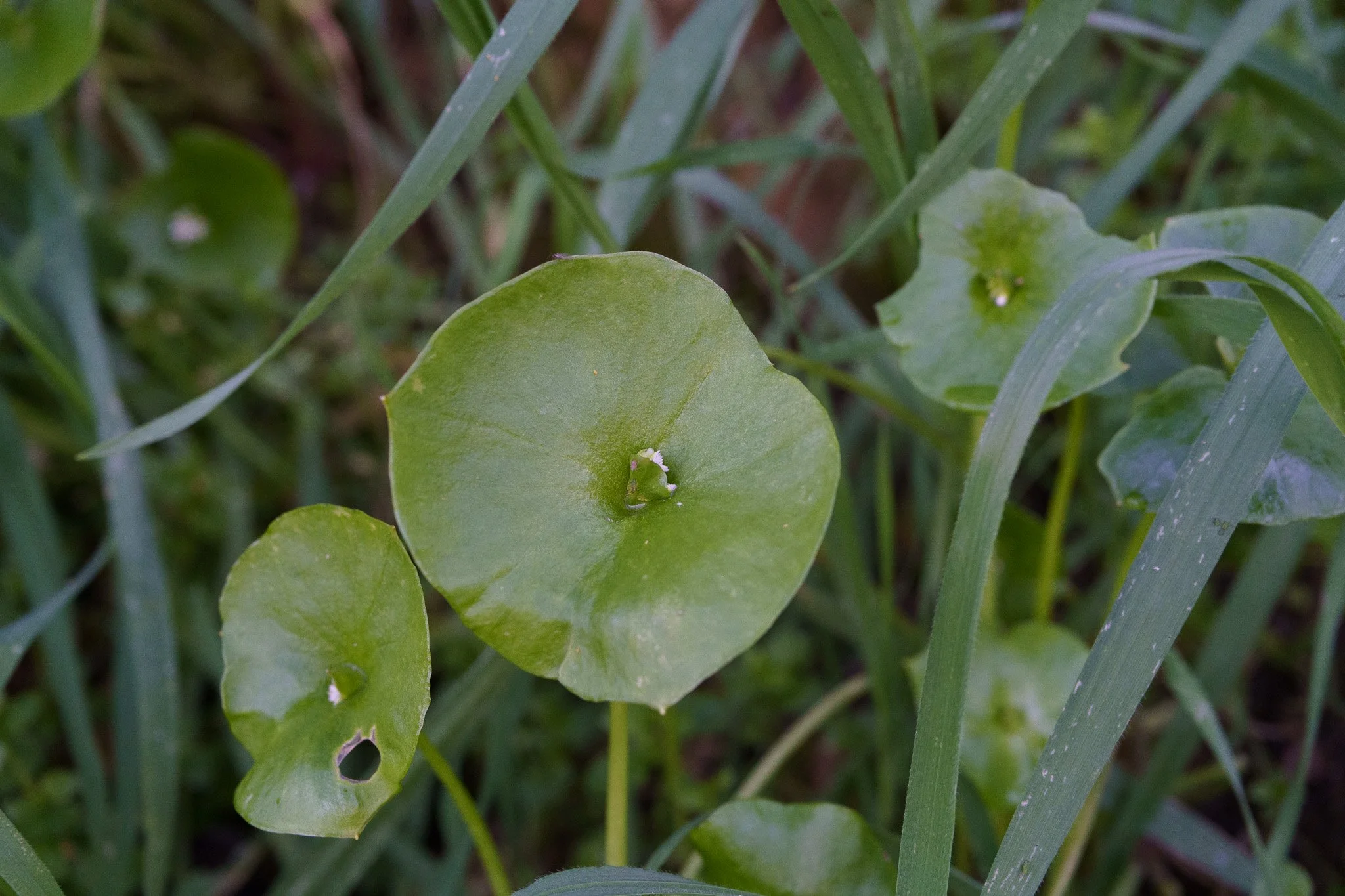
Miner’s Lettuce
Claytonia perfoliata
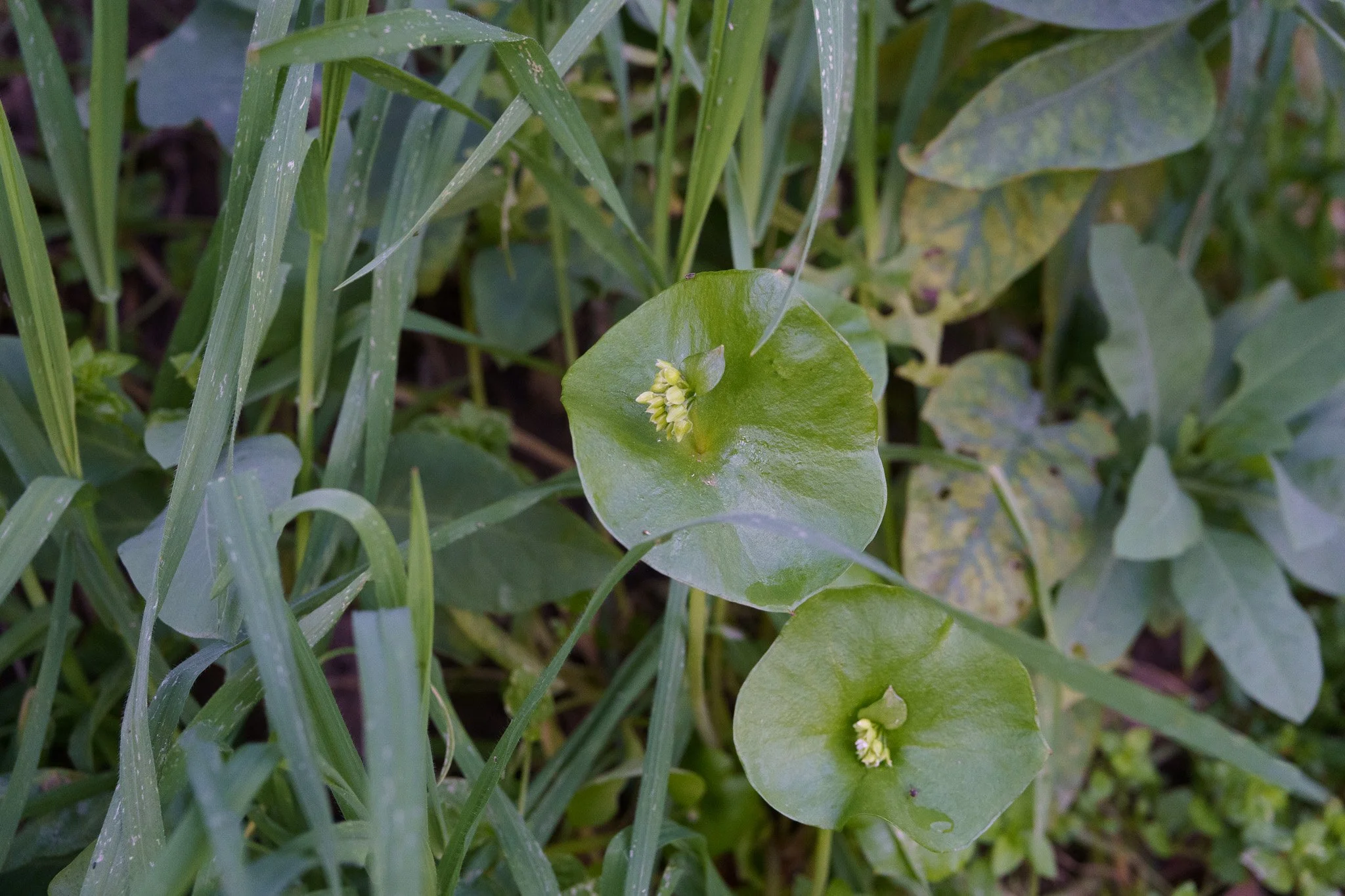
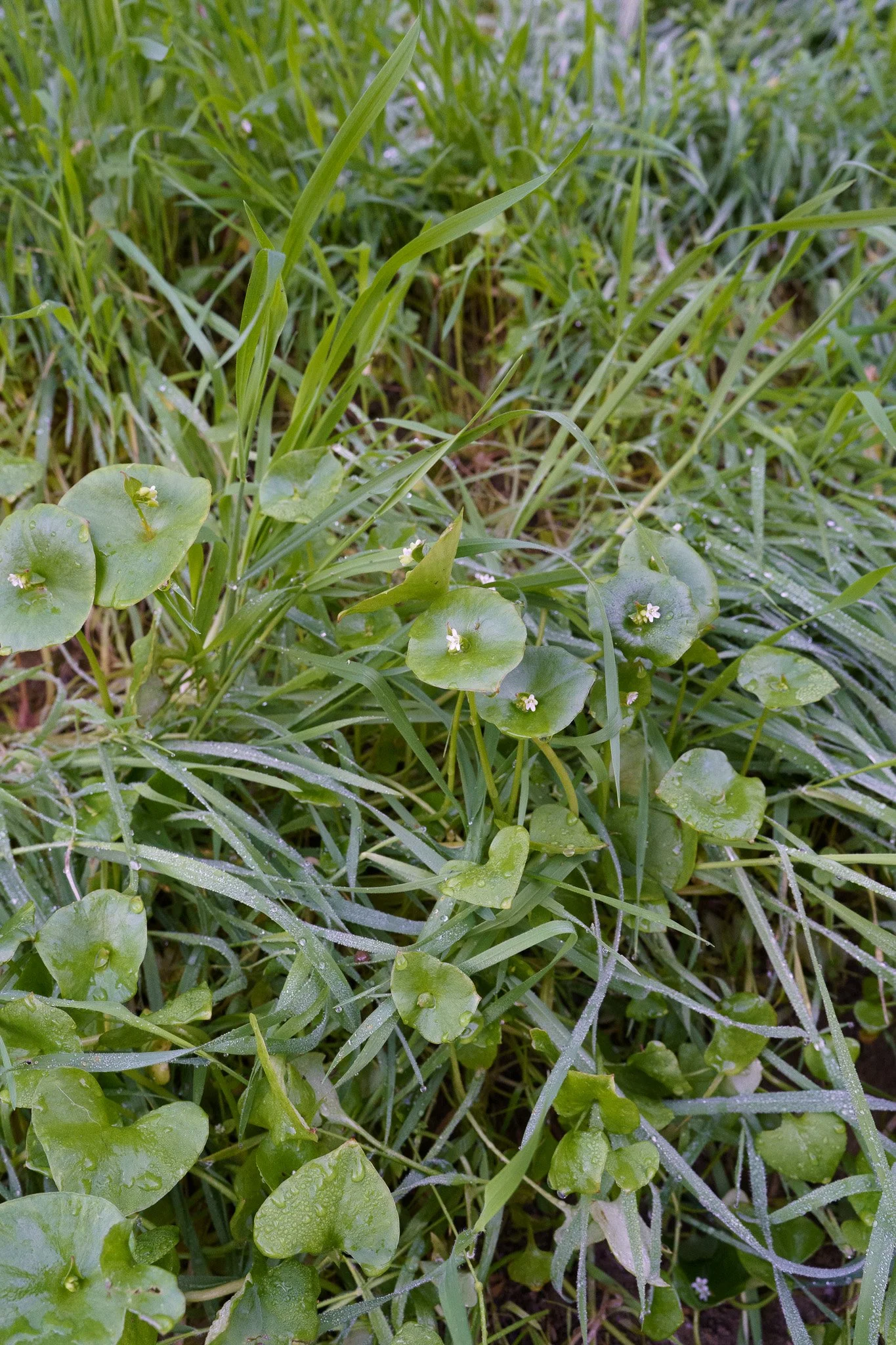
Edible salad greens - they’re good even after they flower! Or like spinach, stir fried or boiled. Because of its high vitamin C content this plant was eaten by miners during the California Gold Rush to keep scurvy at bay. The source of its common name.
Found all over moist parts of California. It’s called winter purslane as it even grows in dry Elysian Park during the winter. During early spring Elysian Park you’ll find these along northern slopes like the bottom of Douglas Hill at Scott, and trails that run along the 5 freway like the West Loop Trail and the Frogtown (Elysian Valley) Trail.
Winter Blooming: February - May
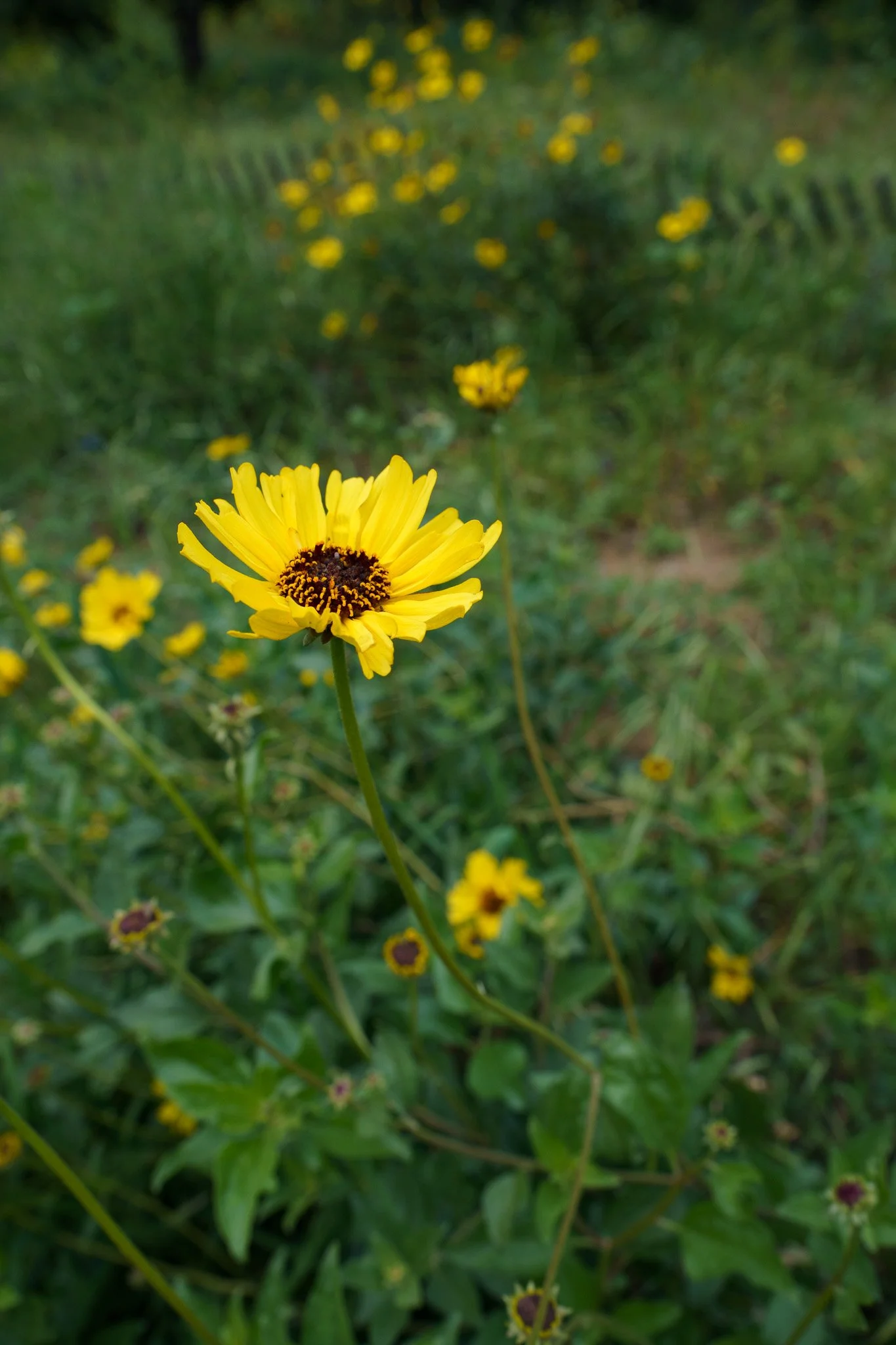
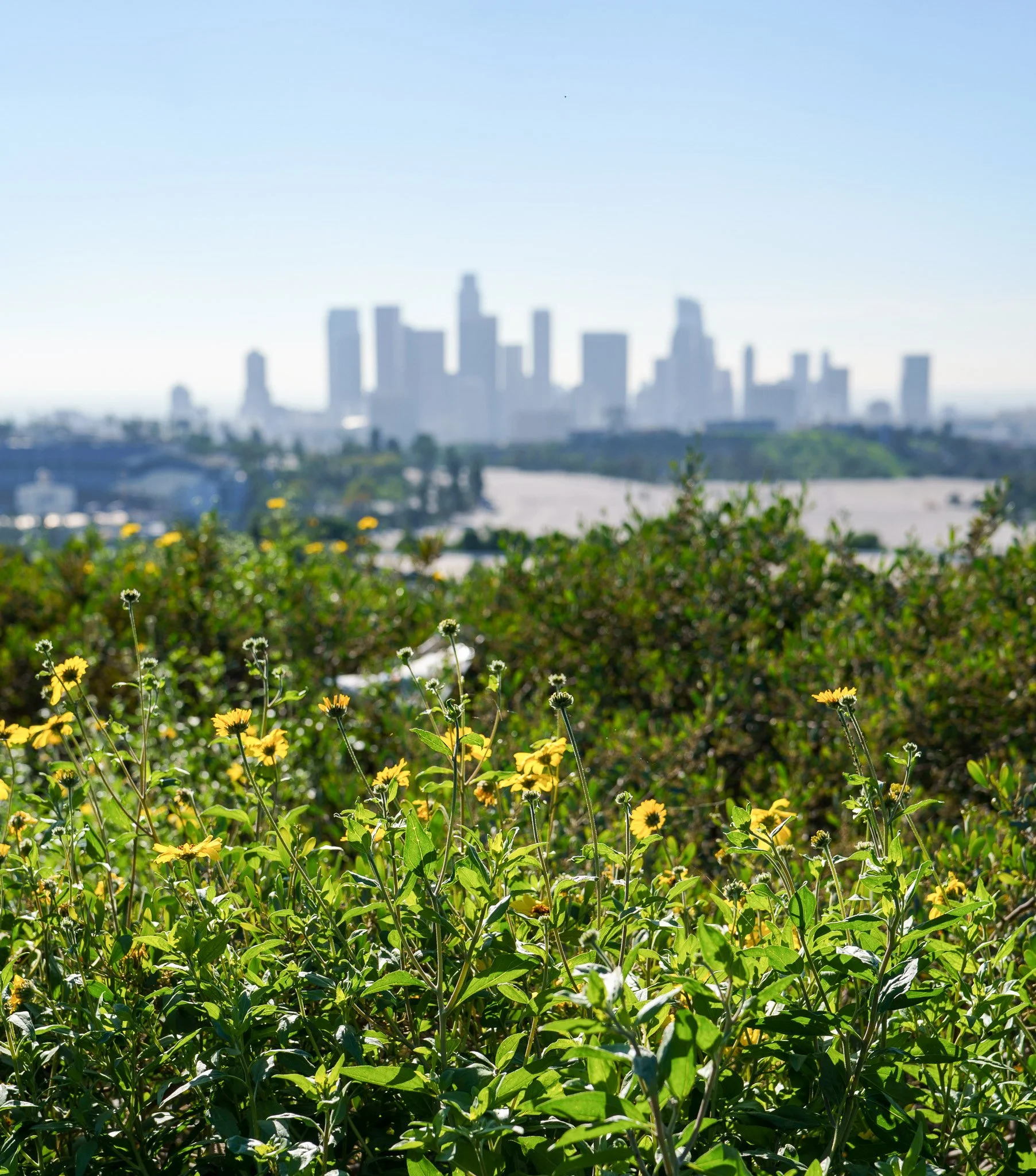
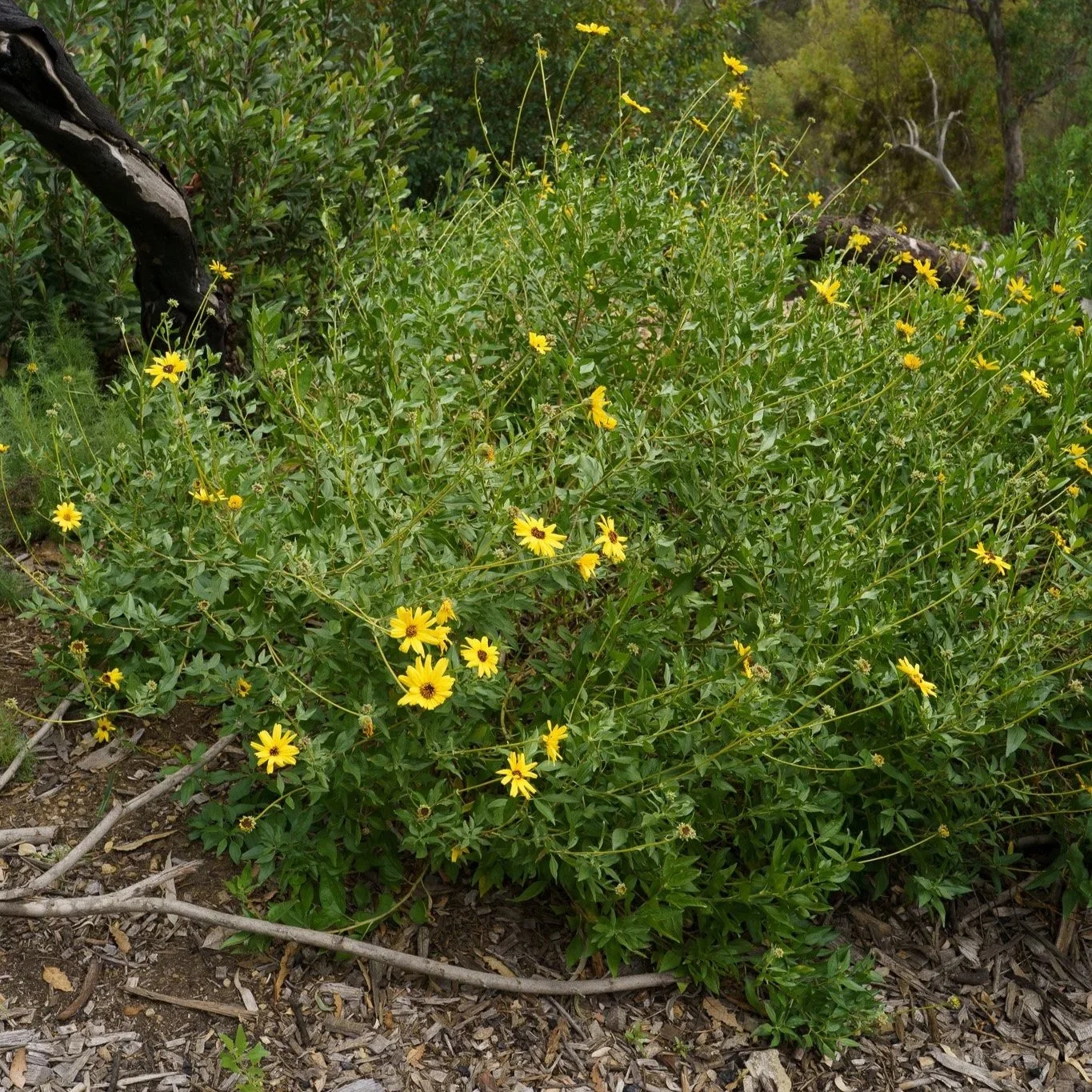
California Brittlebush
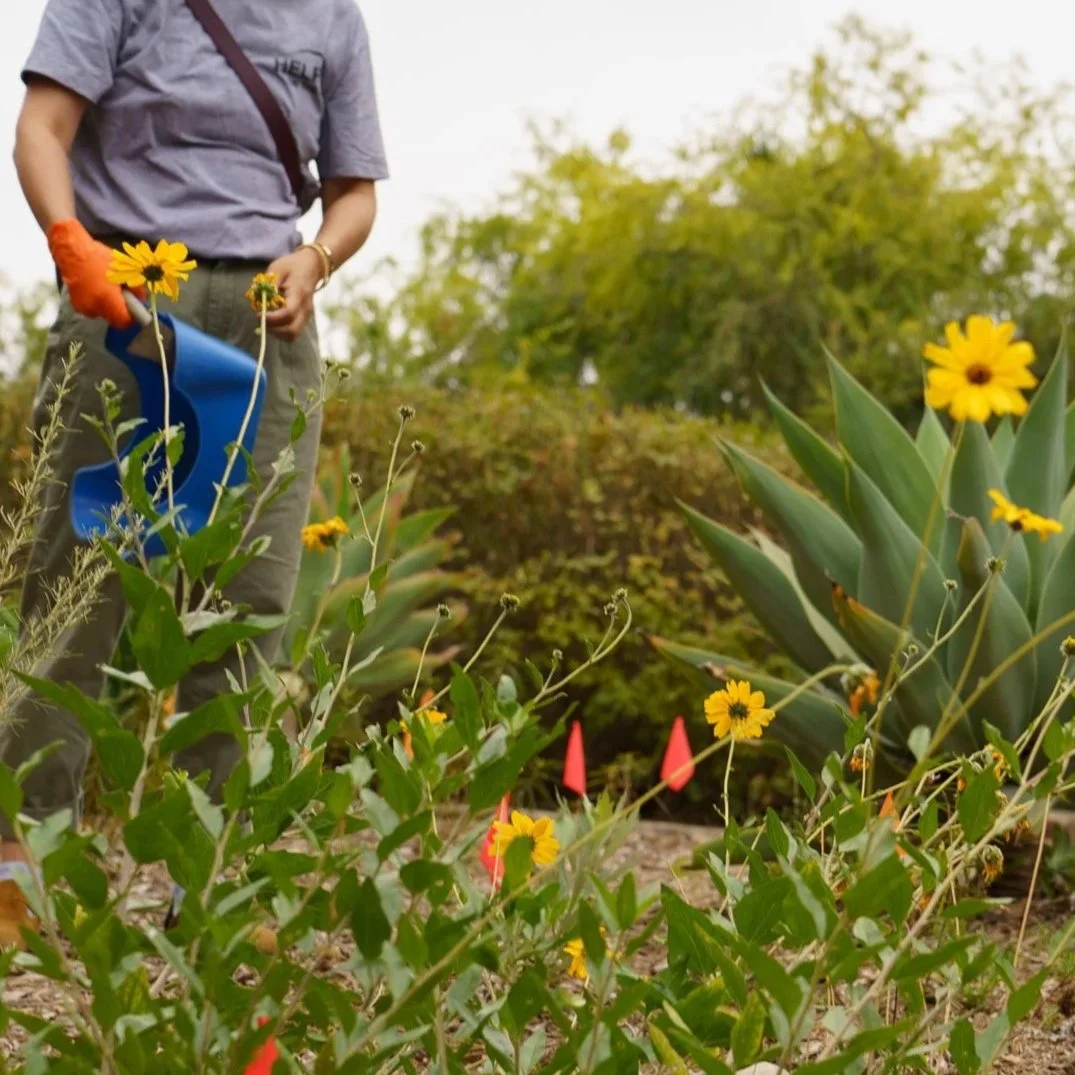
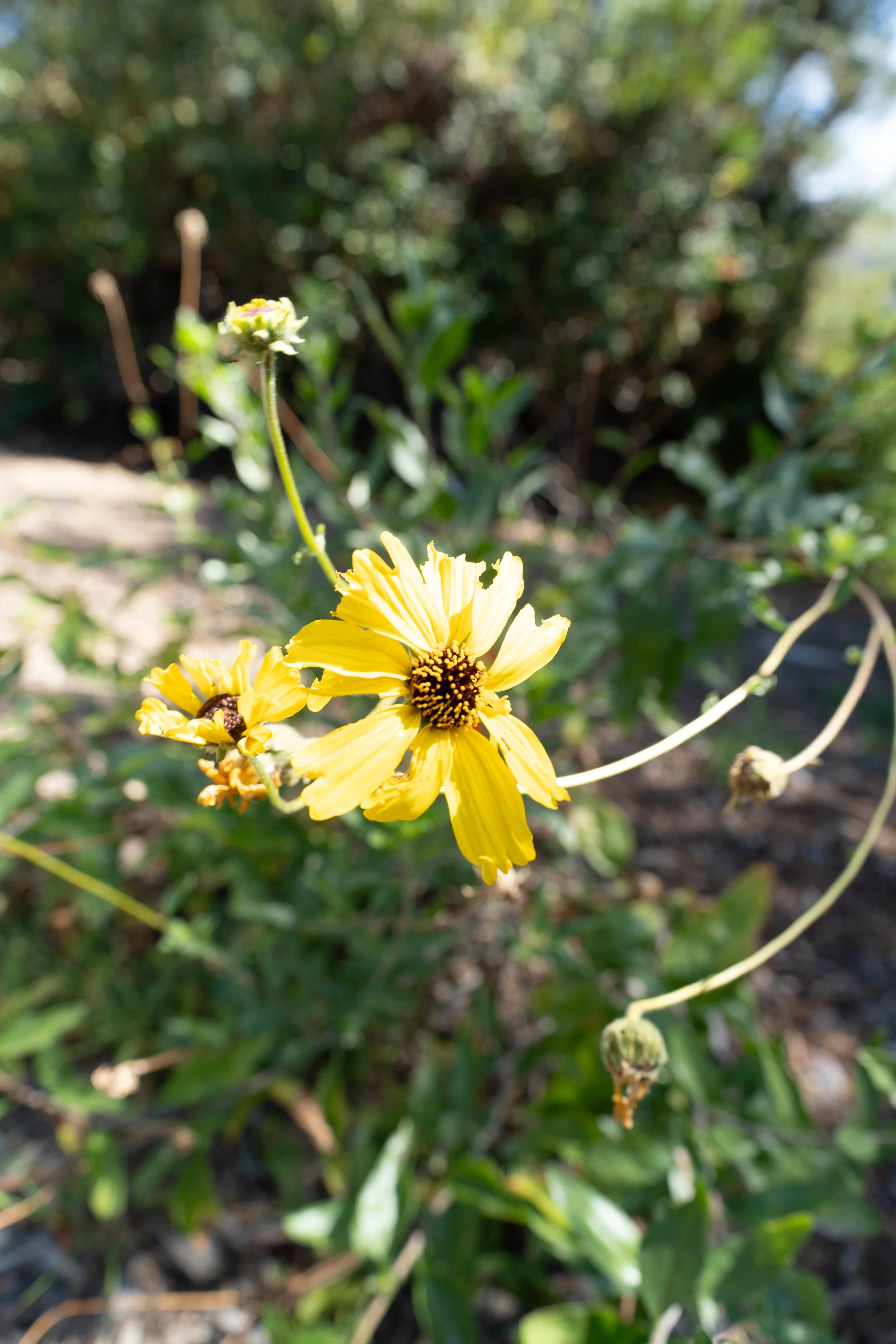
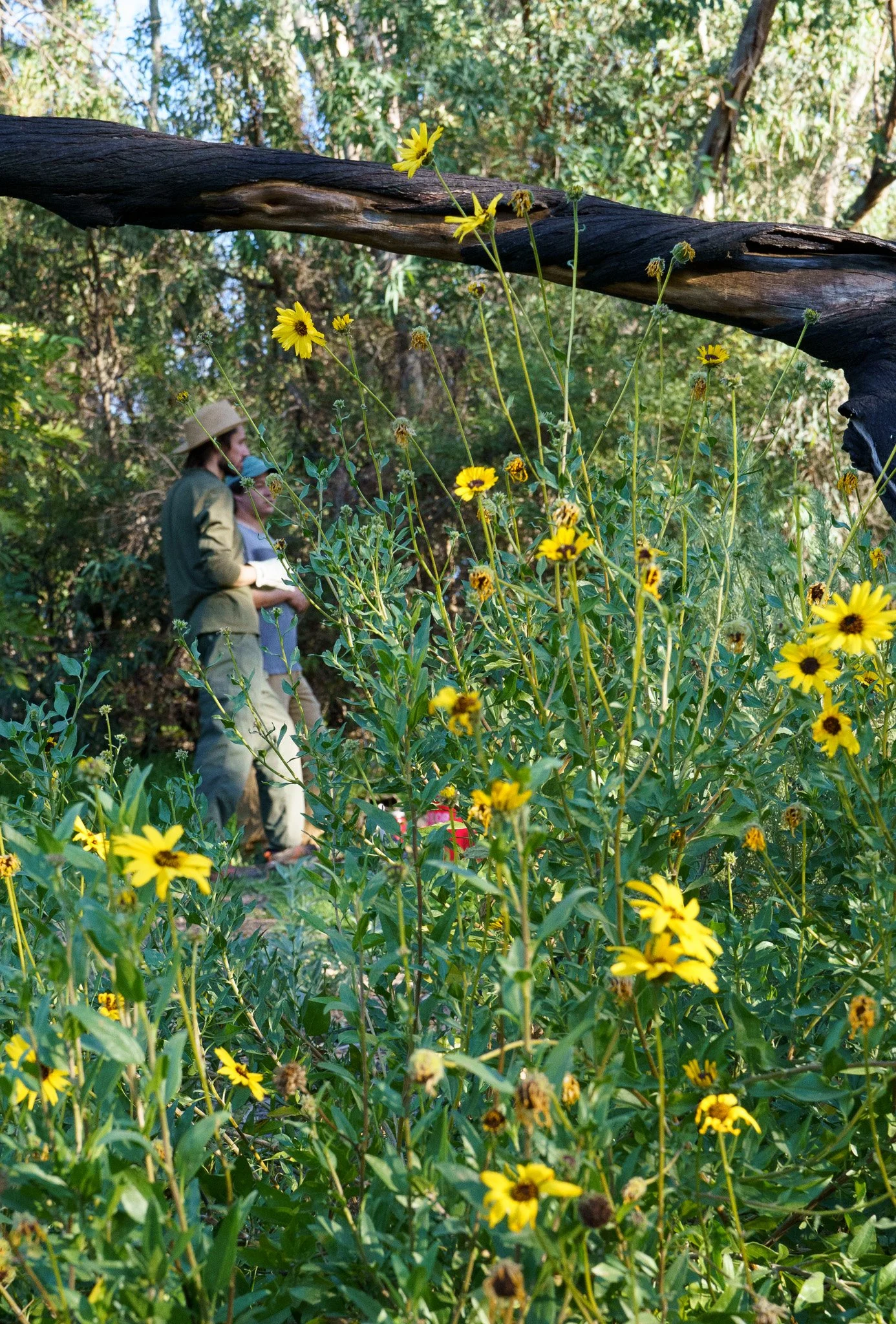
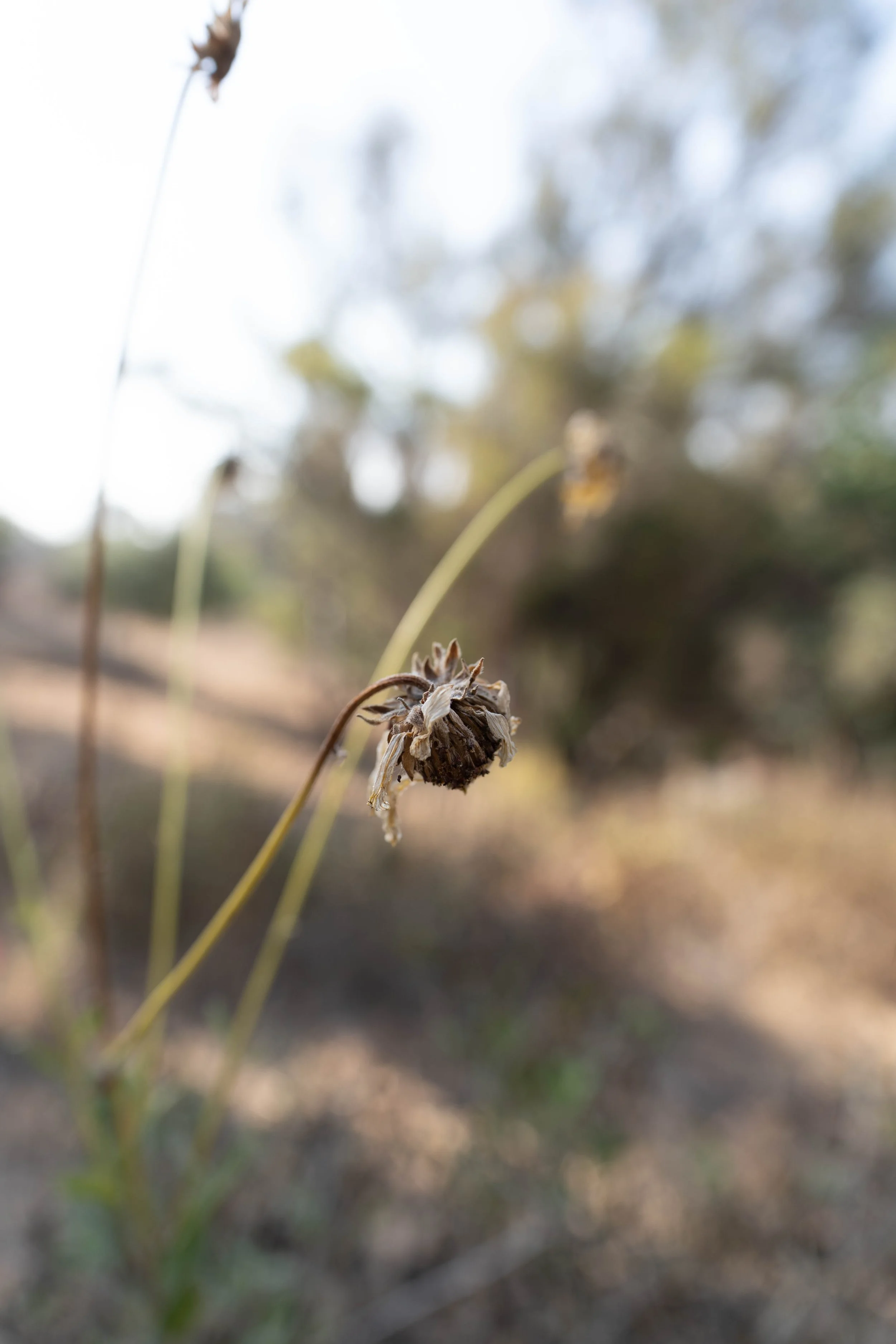
Encelia californica
Patches bloom across the park in January and February and last a strikingly long time. This native is heavily used in ecological restoration because it’s fire-resistant, drought tolerant, sun-loving and has a dense root system for slope stabilization. Its a pollinator-attractor, larval host for the Fatal Metalmark butterfly and its seeds supply food for small birds.
As with other California natives, historical use was in pain relief, as spiritual incence and the aromatic leaves were chewed as a breath freshener.
Winter Blooming: February - June
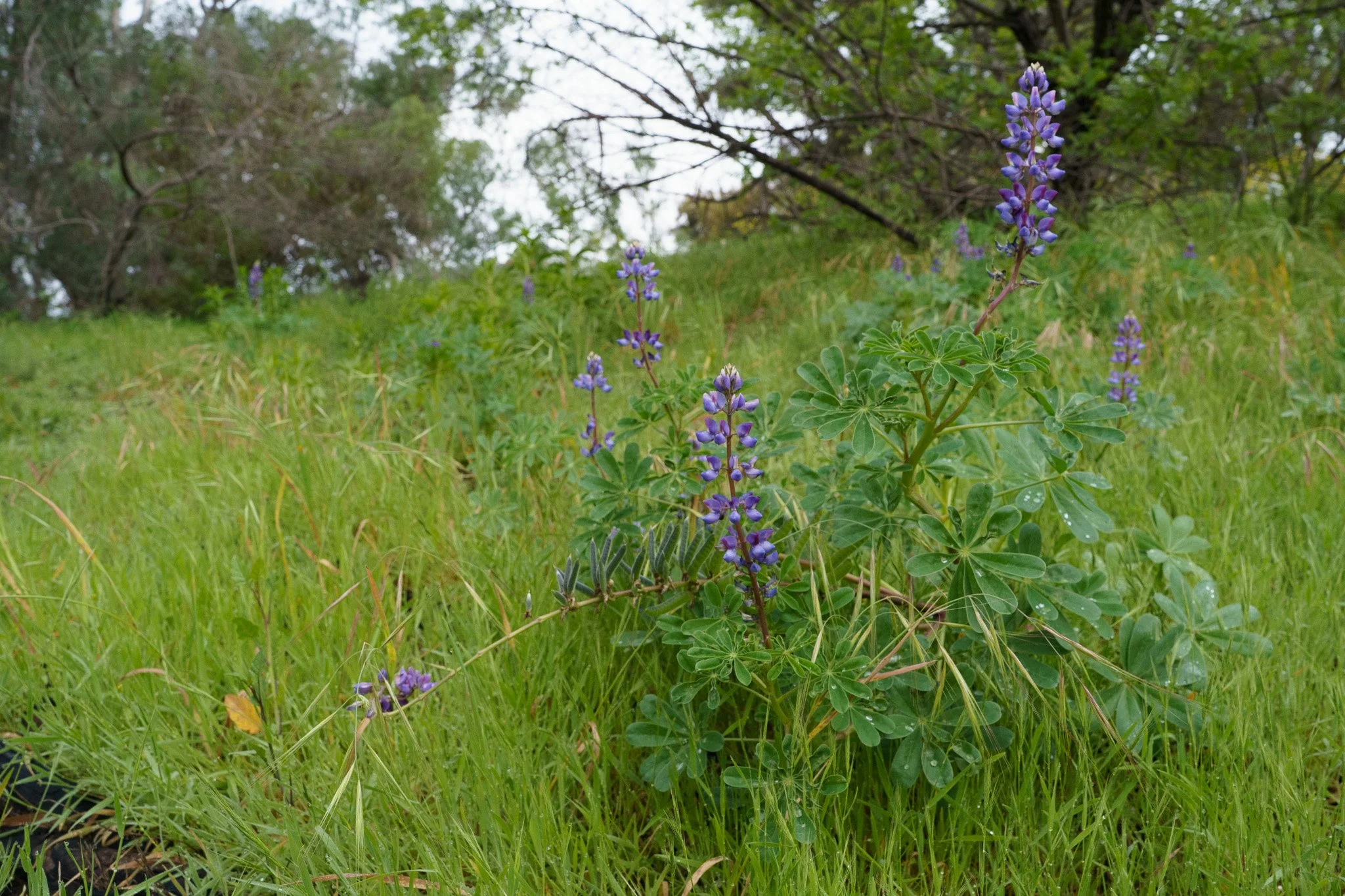
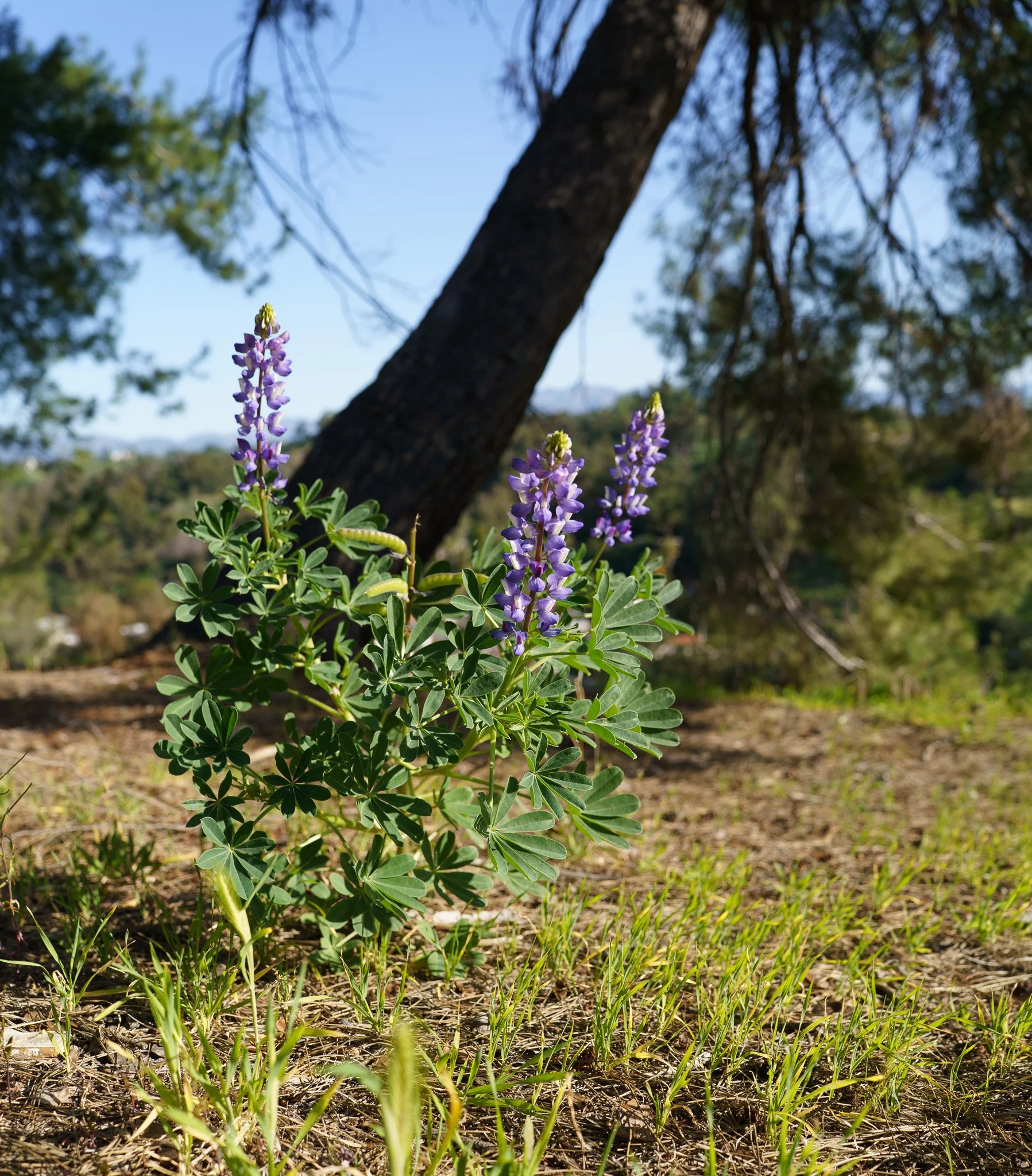
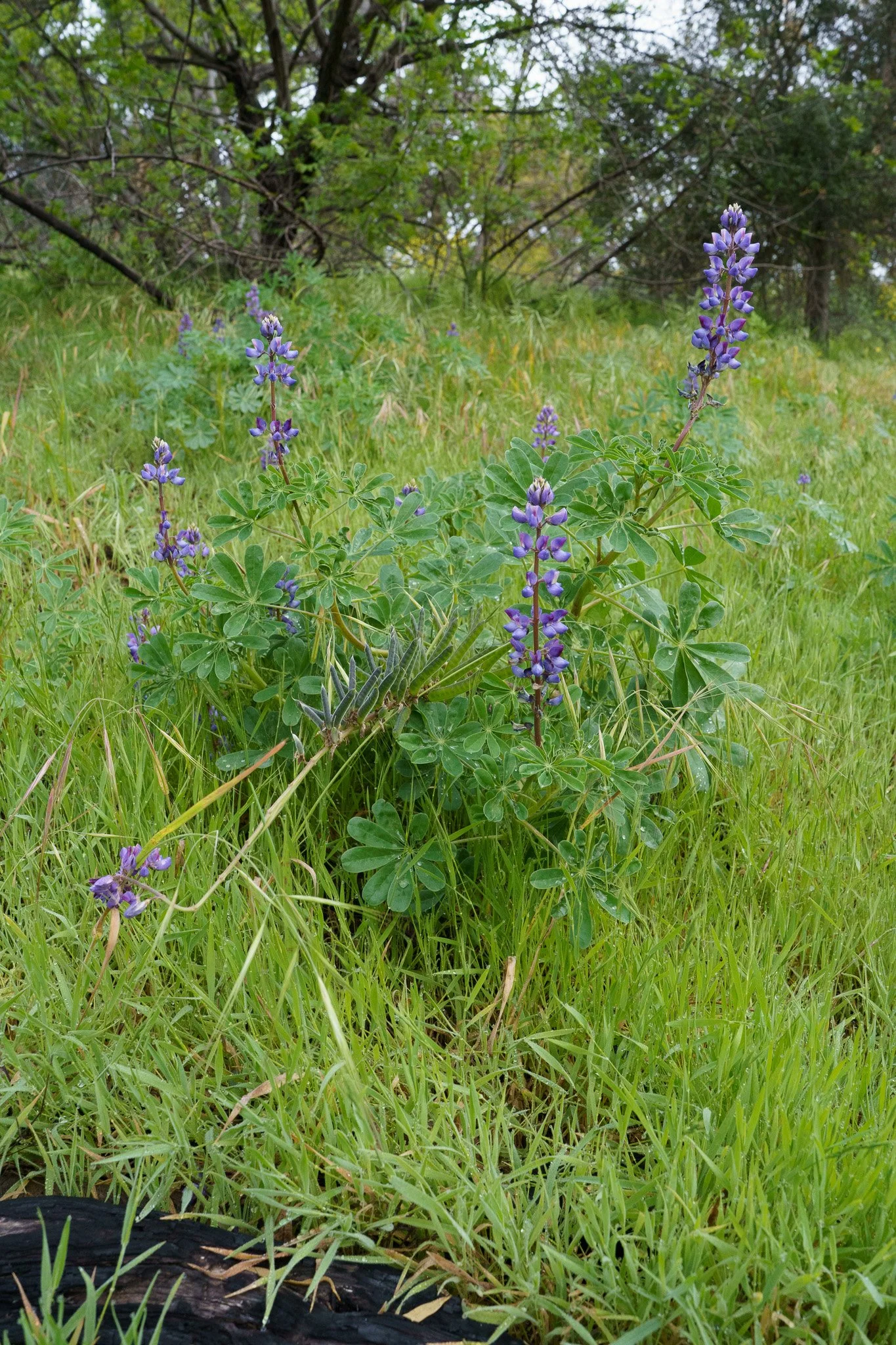
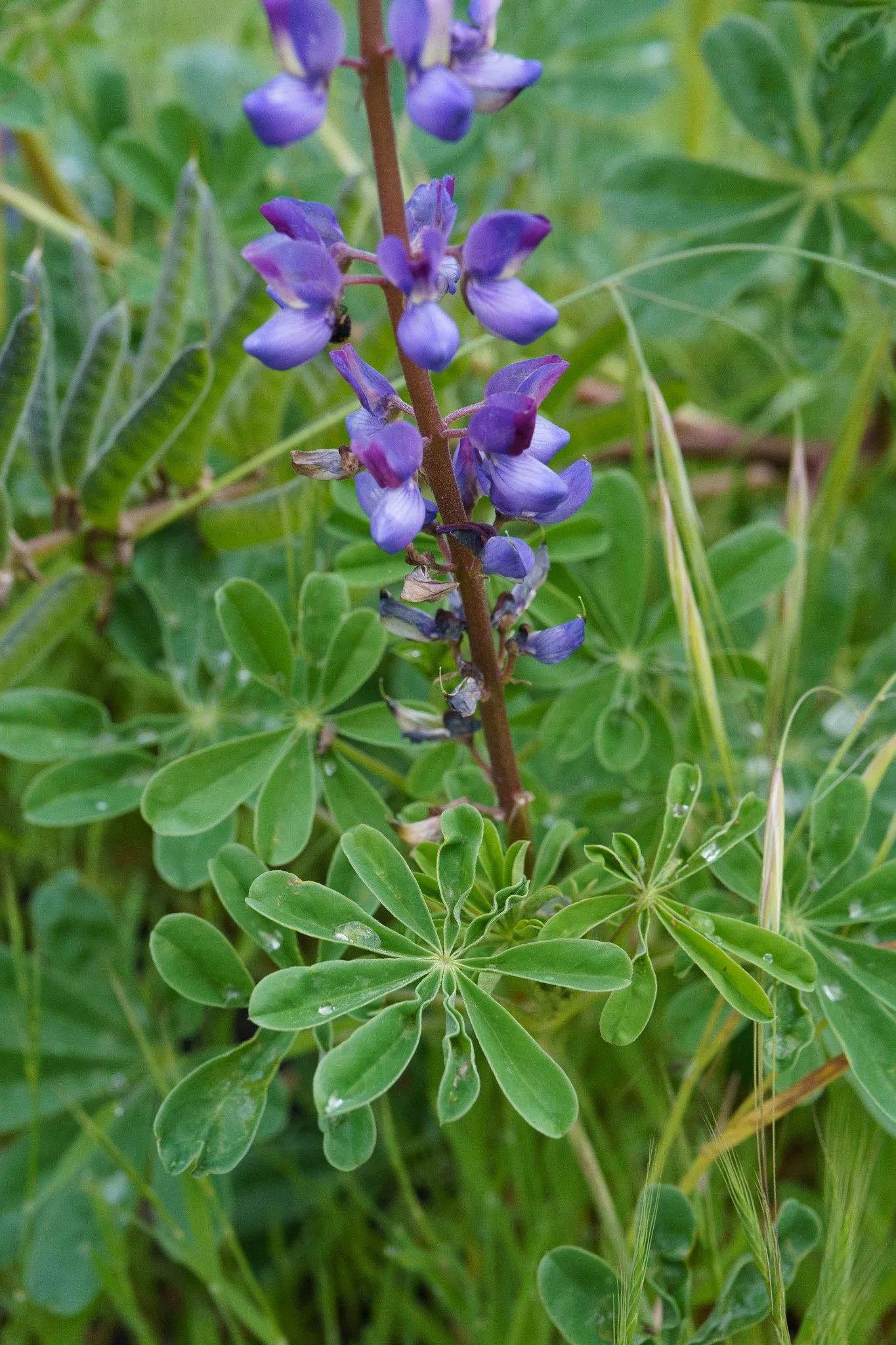
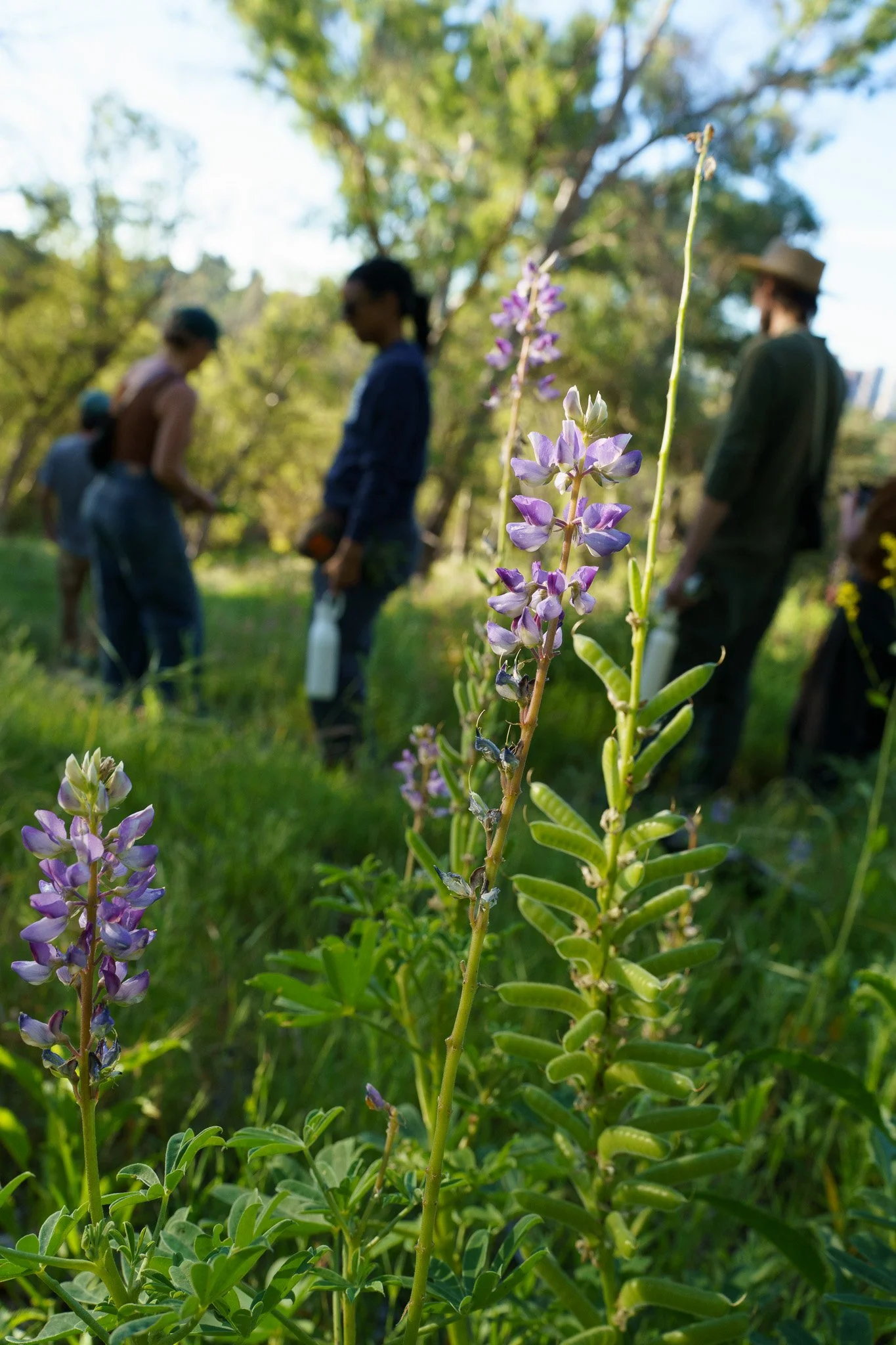
Arroyo Lupine
Lupinus succulentus
Beautiful but toxic, the Arroyo Lupine produces a hairy legume-like pod containing high levels of toxic alkaloids. All parts of the plant are poisonous to humans and animals.
The Arroyo Lupine grows quickly, reaching heights of 3-4 feet and widths of the same size, depending on moisture levels. Its largest population is in Southern California, but it can also be found in central and northern regions. This plant is beneficial as it competes with weeds and adds nitrogen to the soil.
Winter Blooming: February - July
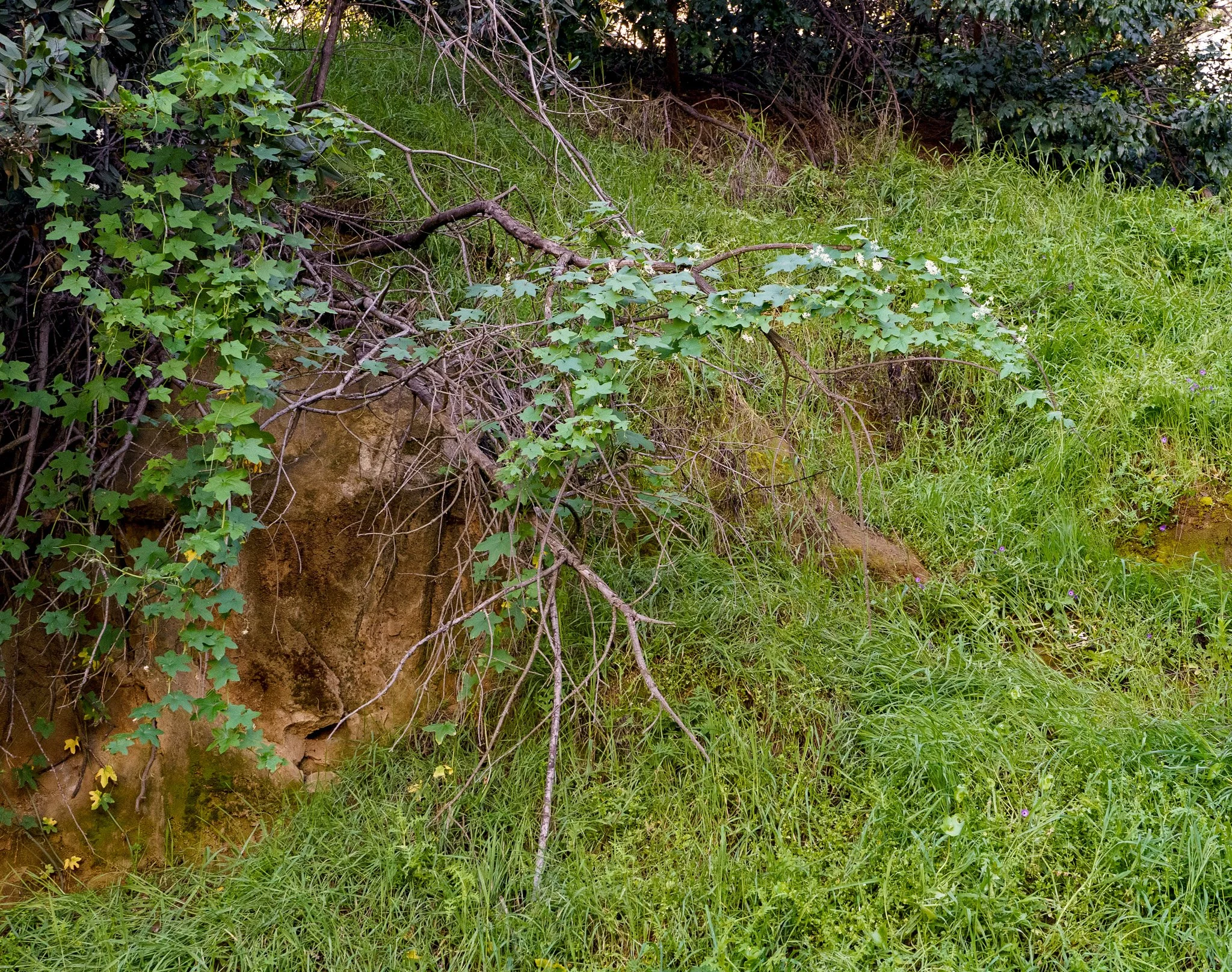
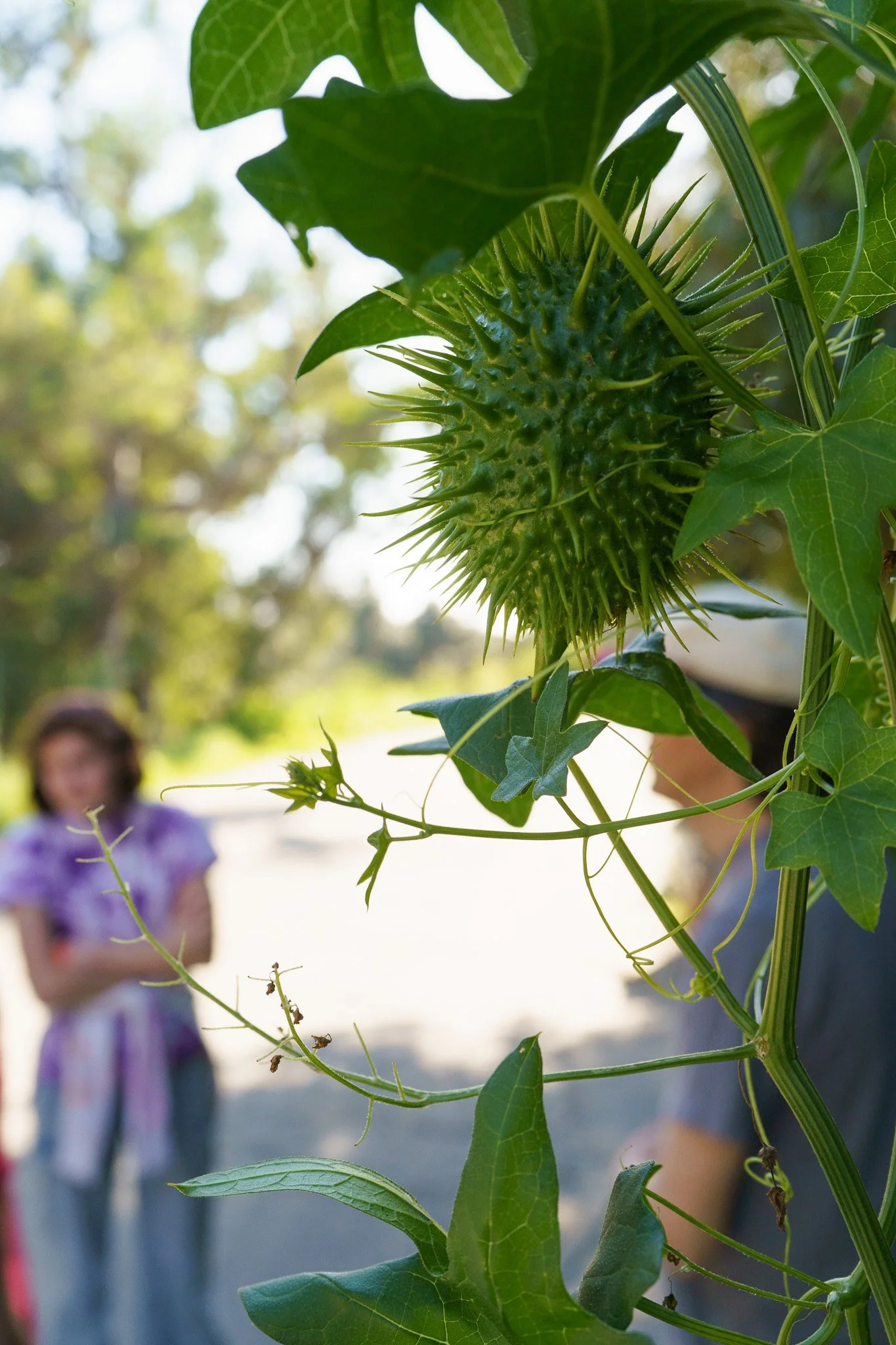
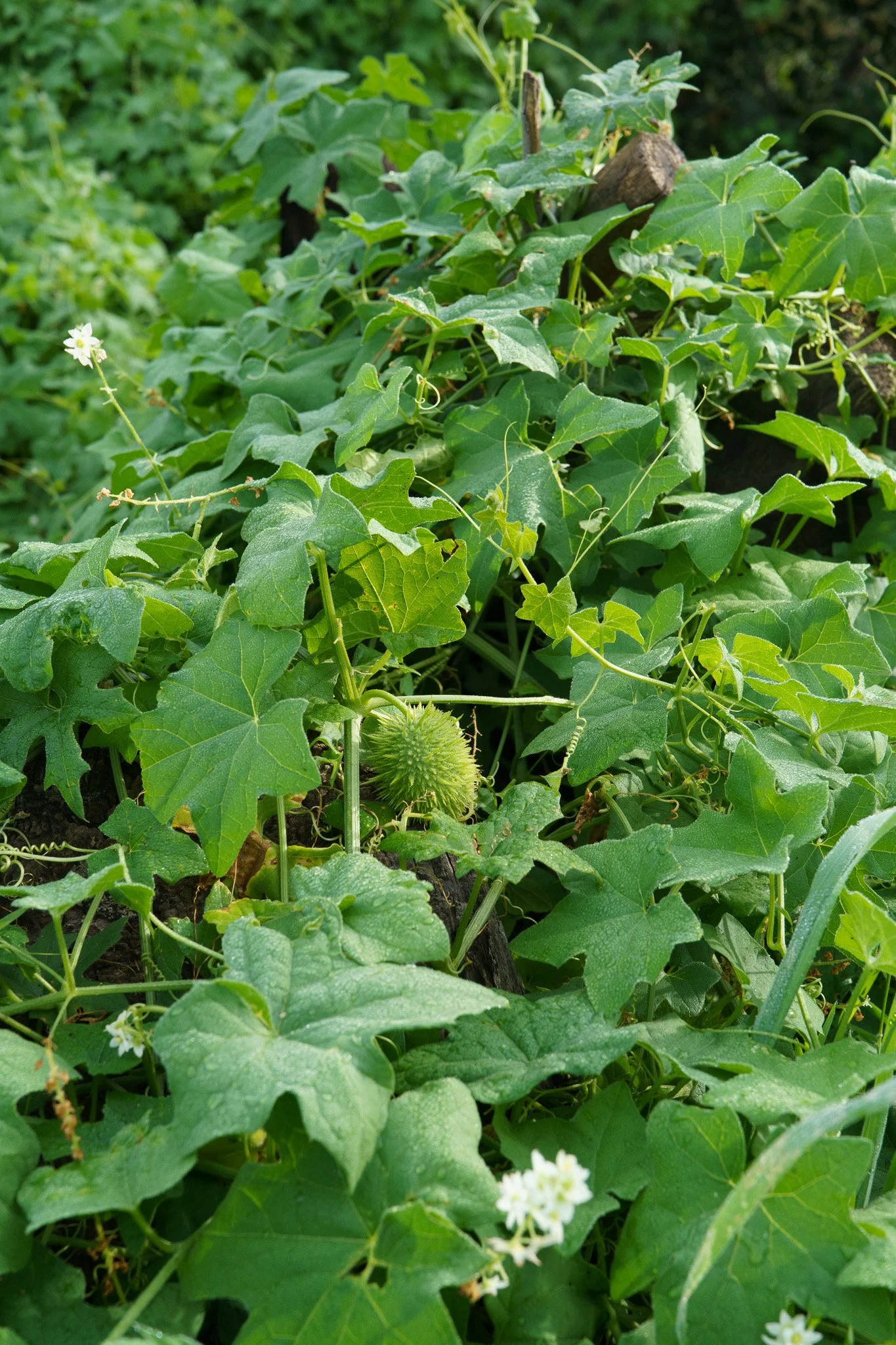
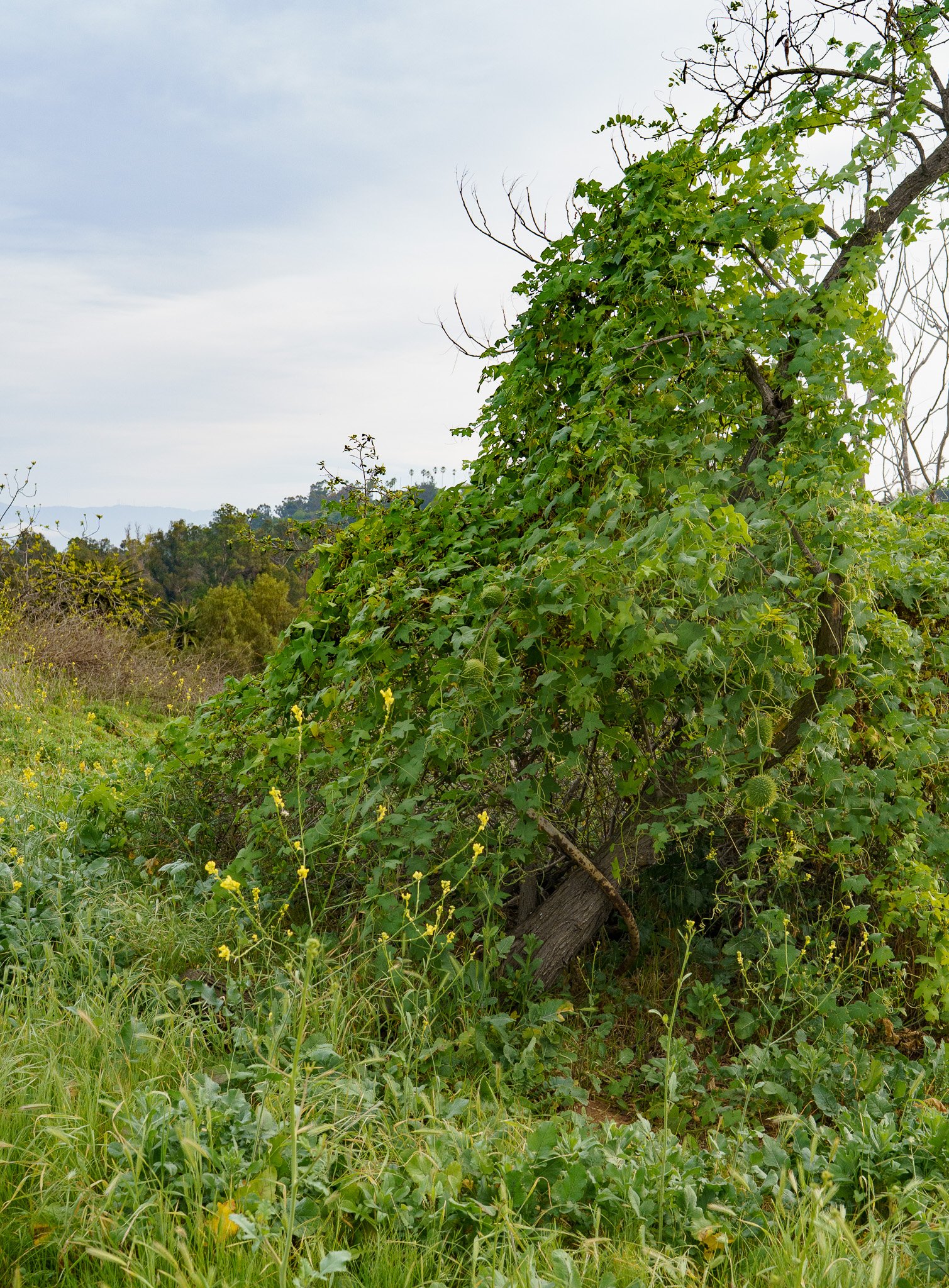
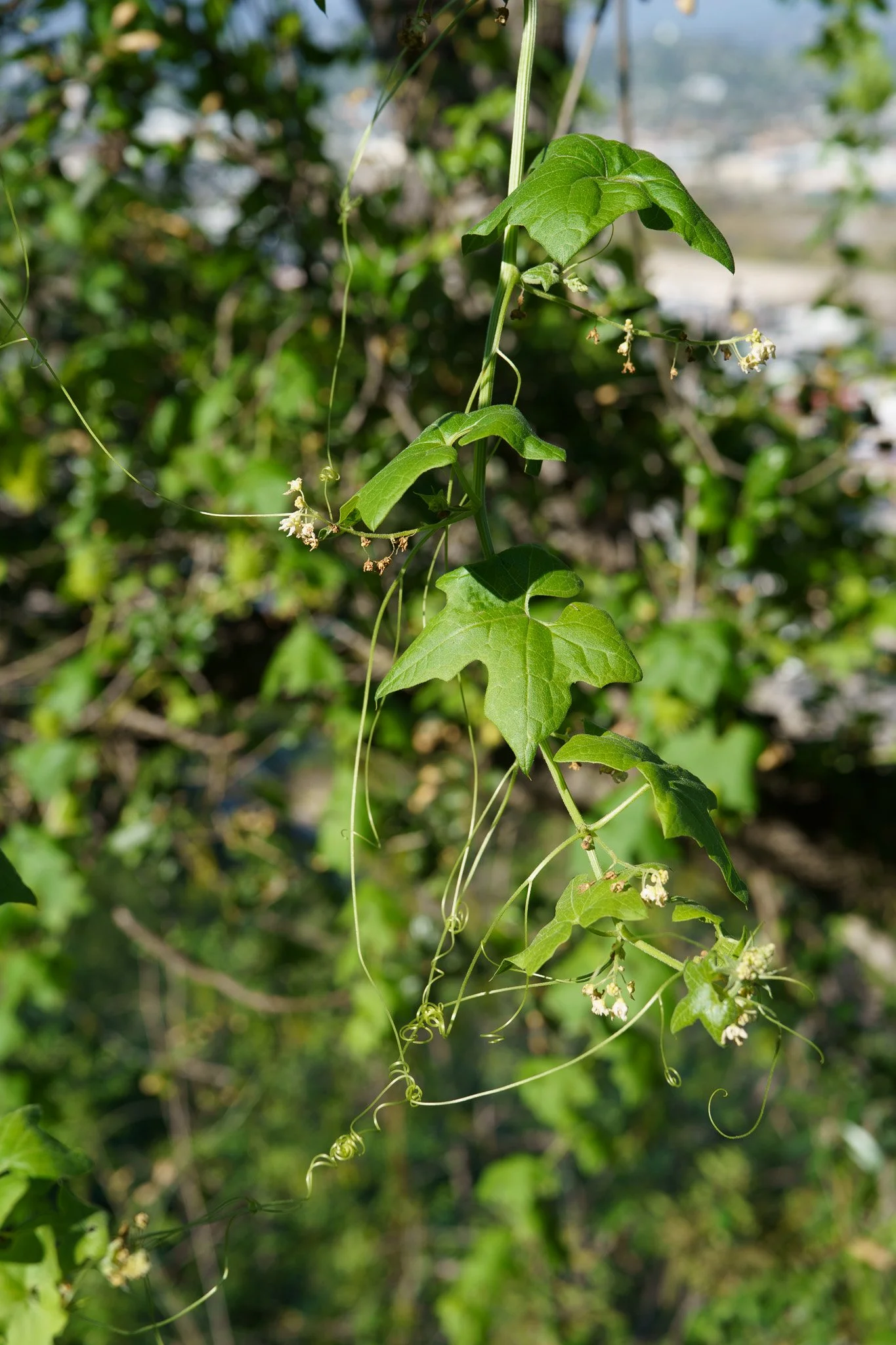
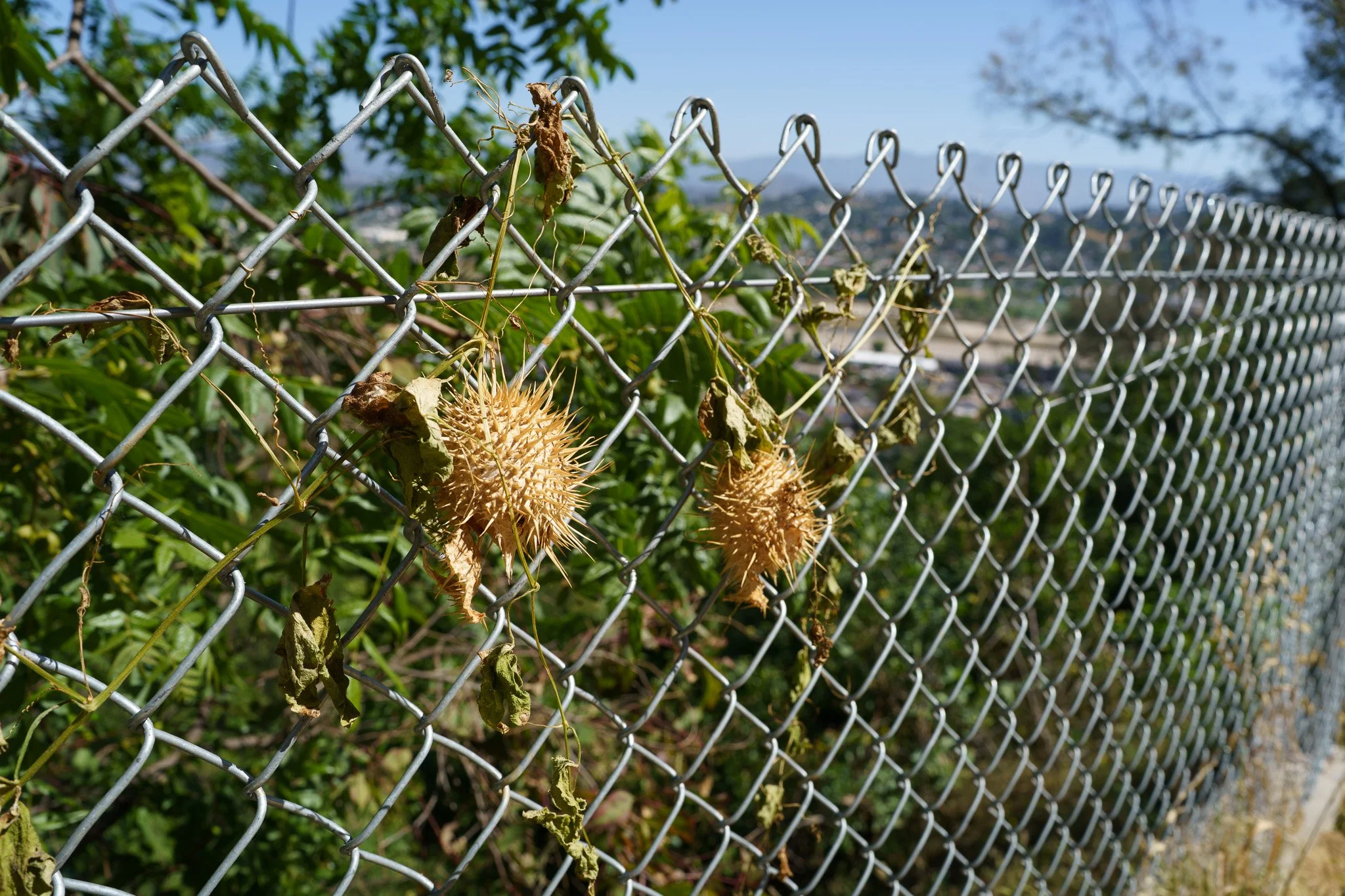
Wild Cucumber
Marah macrocarpa
The spiky fruits are actually gourds that are bitter and severely toxic. Historically the roots were crushed and used to stun or kill fish! Roots and fruits contain saponins that create a soapy lather for washing. The seeds can be crushed to make a red dye or paint.
With the winter rains it grows and climbs quickly covering and smothering other plants (not harmful in a natural park setting like Elysian). It’s deciduous in summer - when hot it dies back.
Winter Blooming: January - April
Spring Blooming
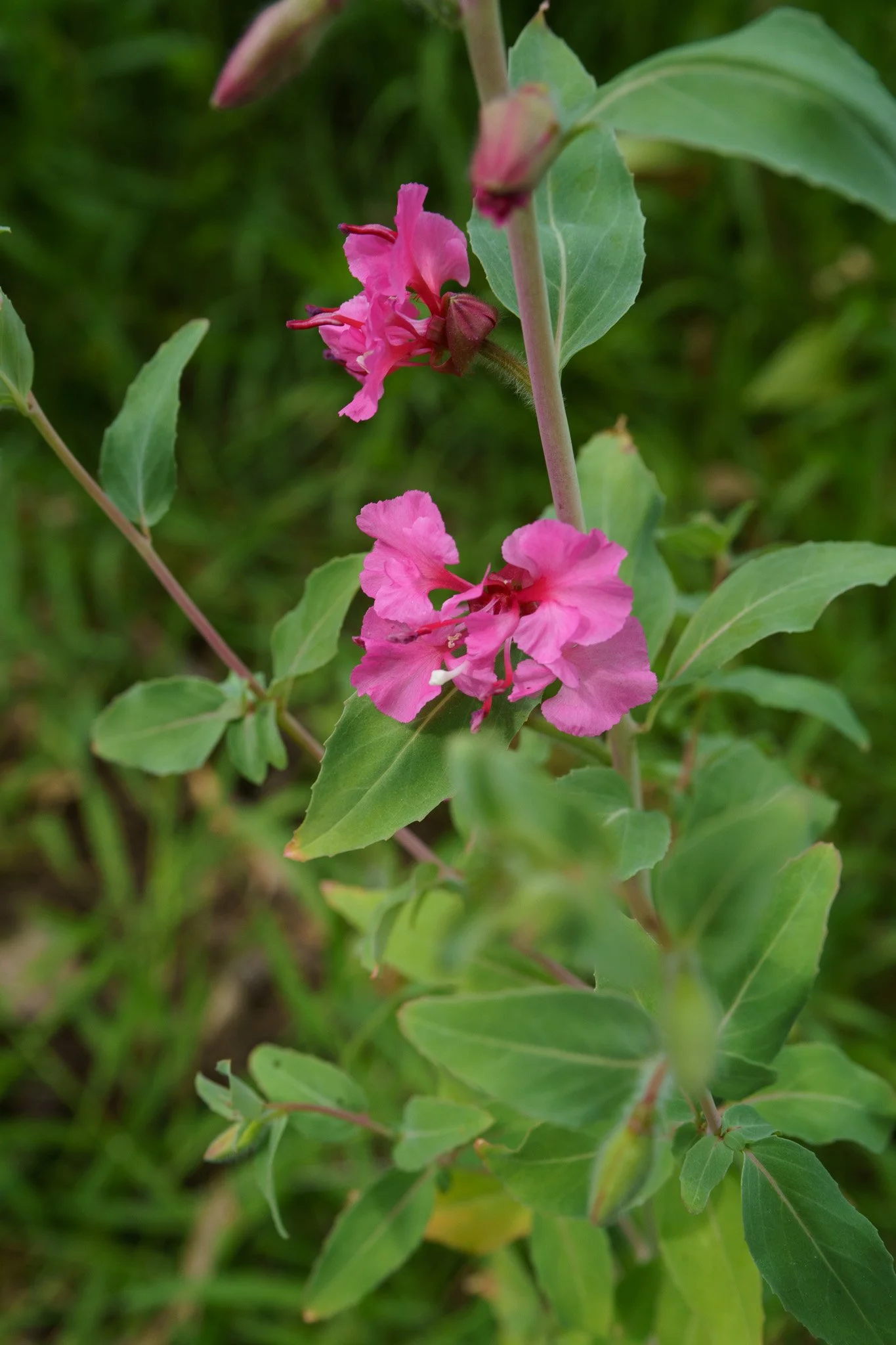
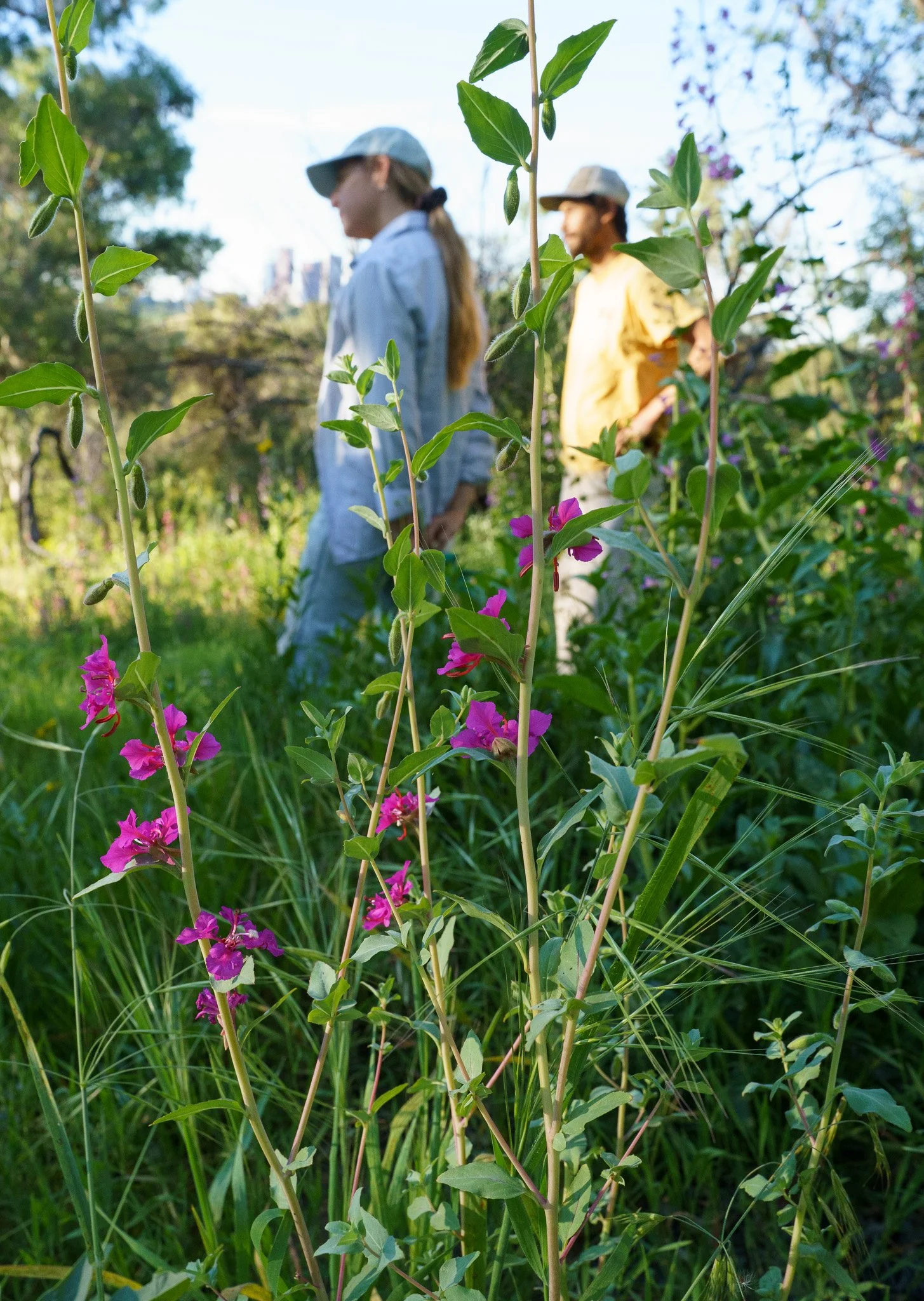
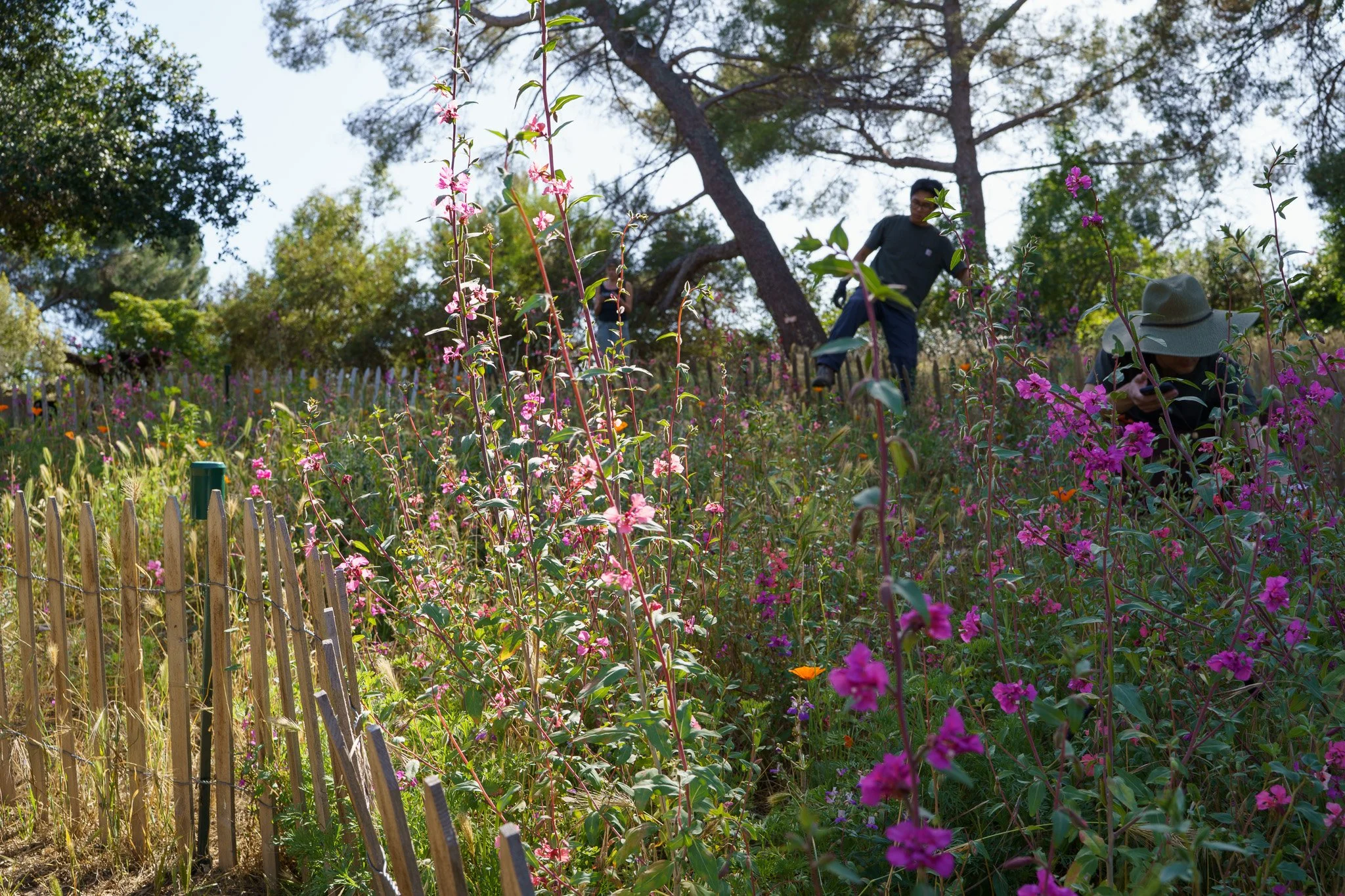
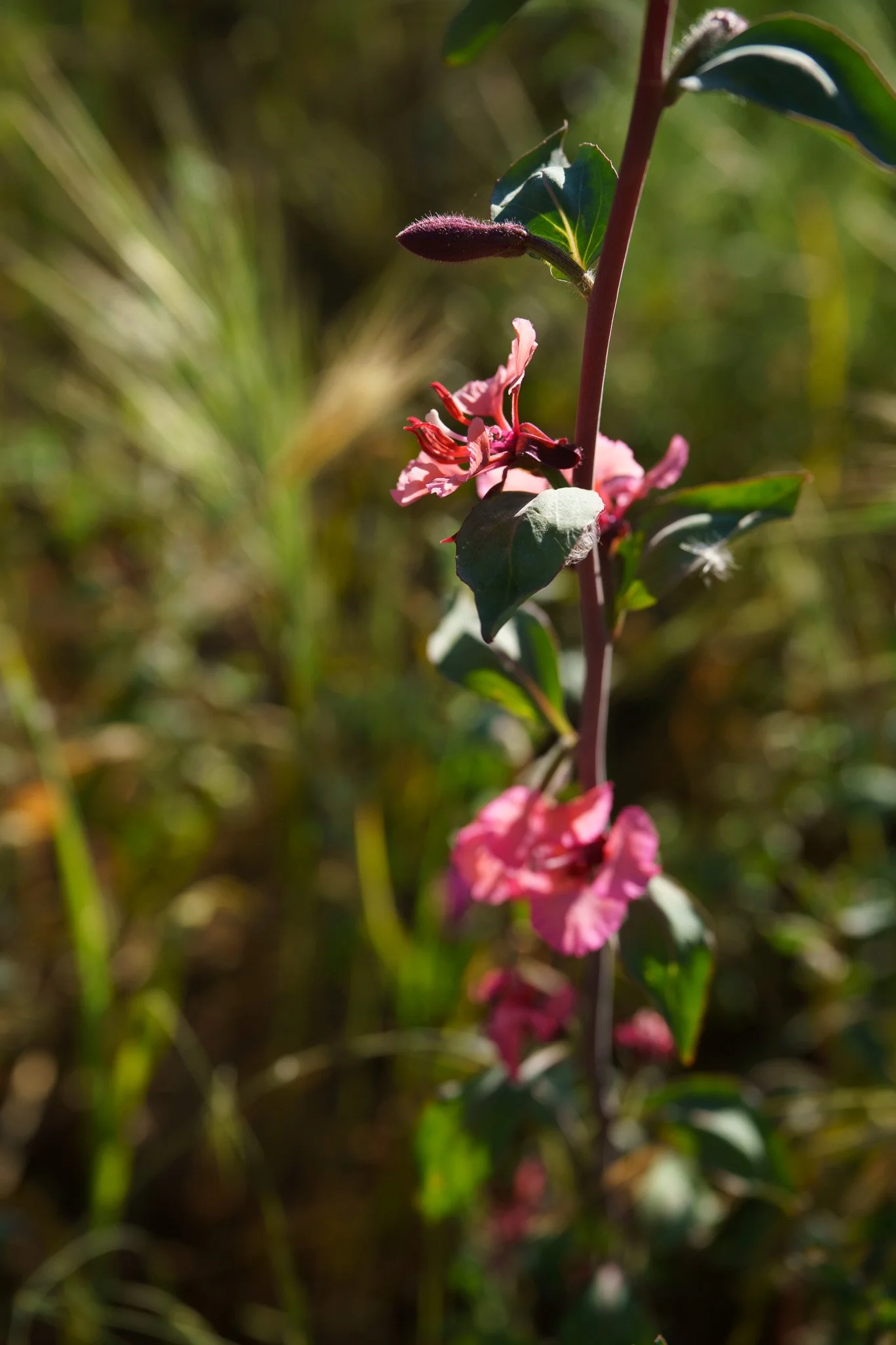
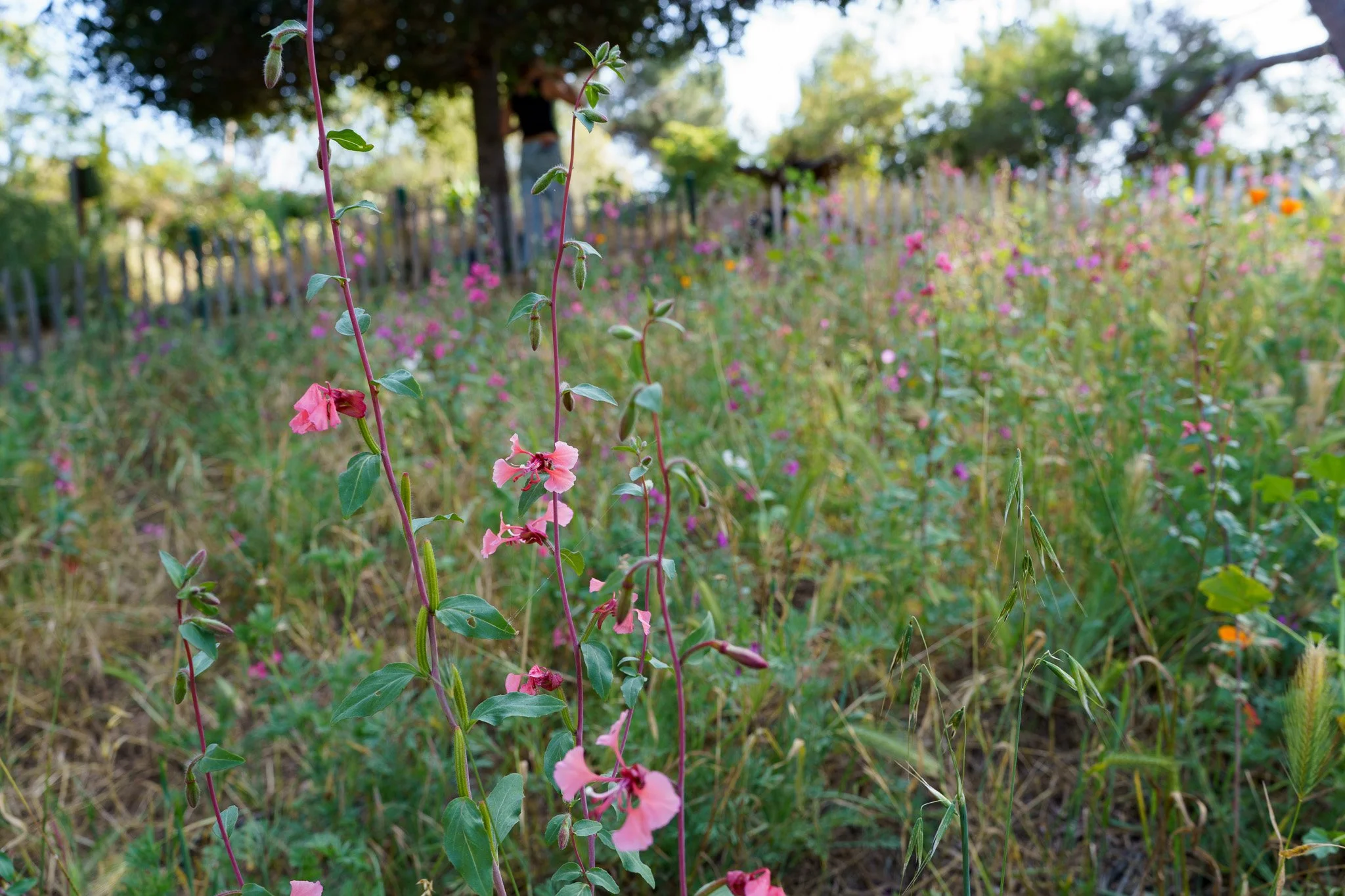
Elegant Clarkia
Clarkia unguiculata
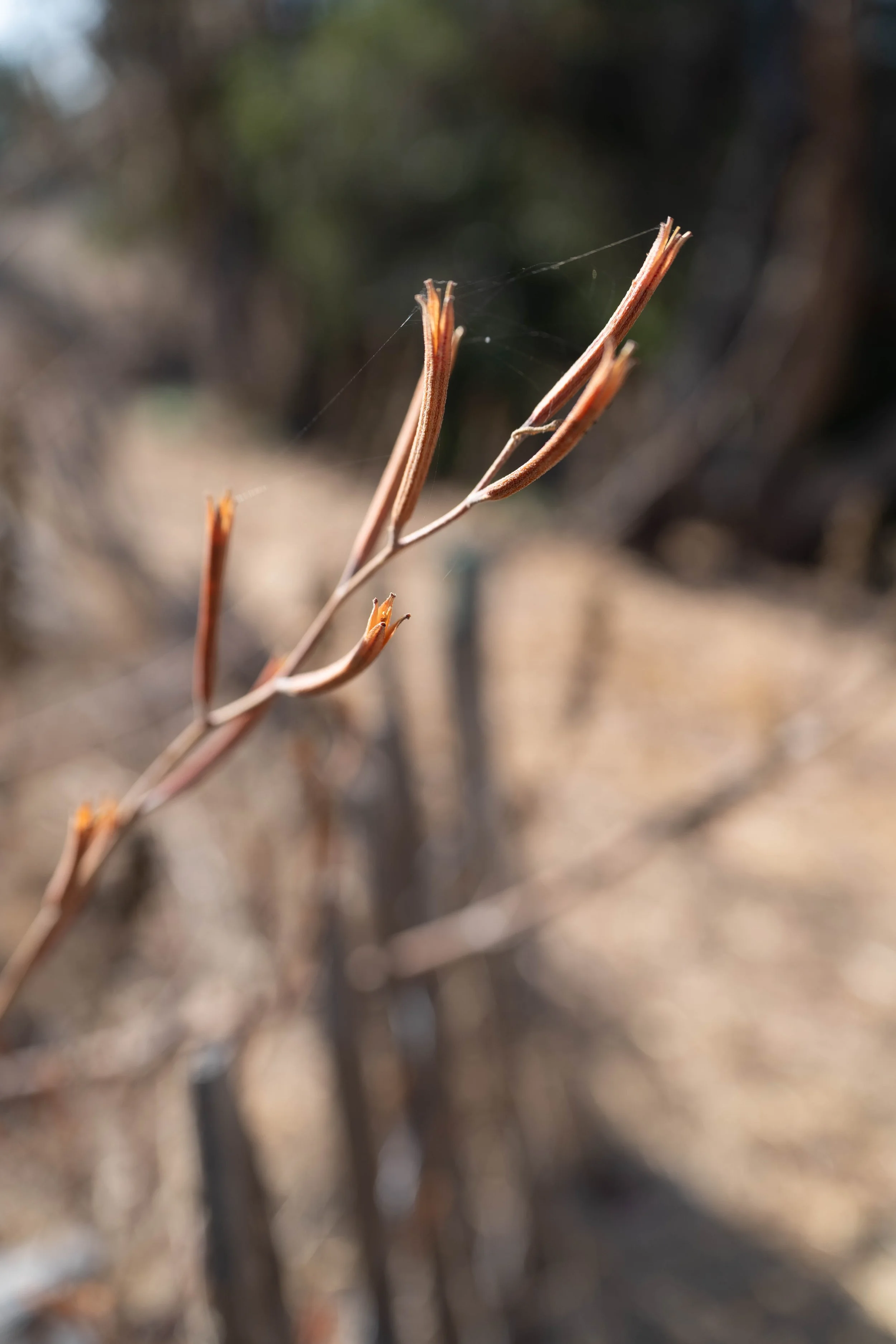
A California native wildflower annual used for restoring native pollinator habitats attracting native bees, hummingbirds, and butterflies. The edible seeds were eaten by indigenous Californians who dried and ground them making flour or a beverage. It’s a drought-tolerant, fast-growing groundcover establishing deep roots and improving soil.
Spring Blooming: May - July
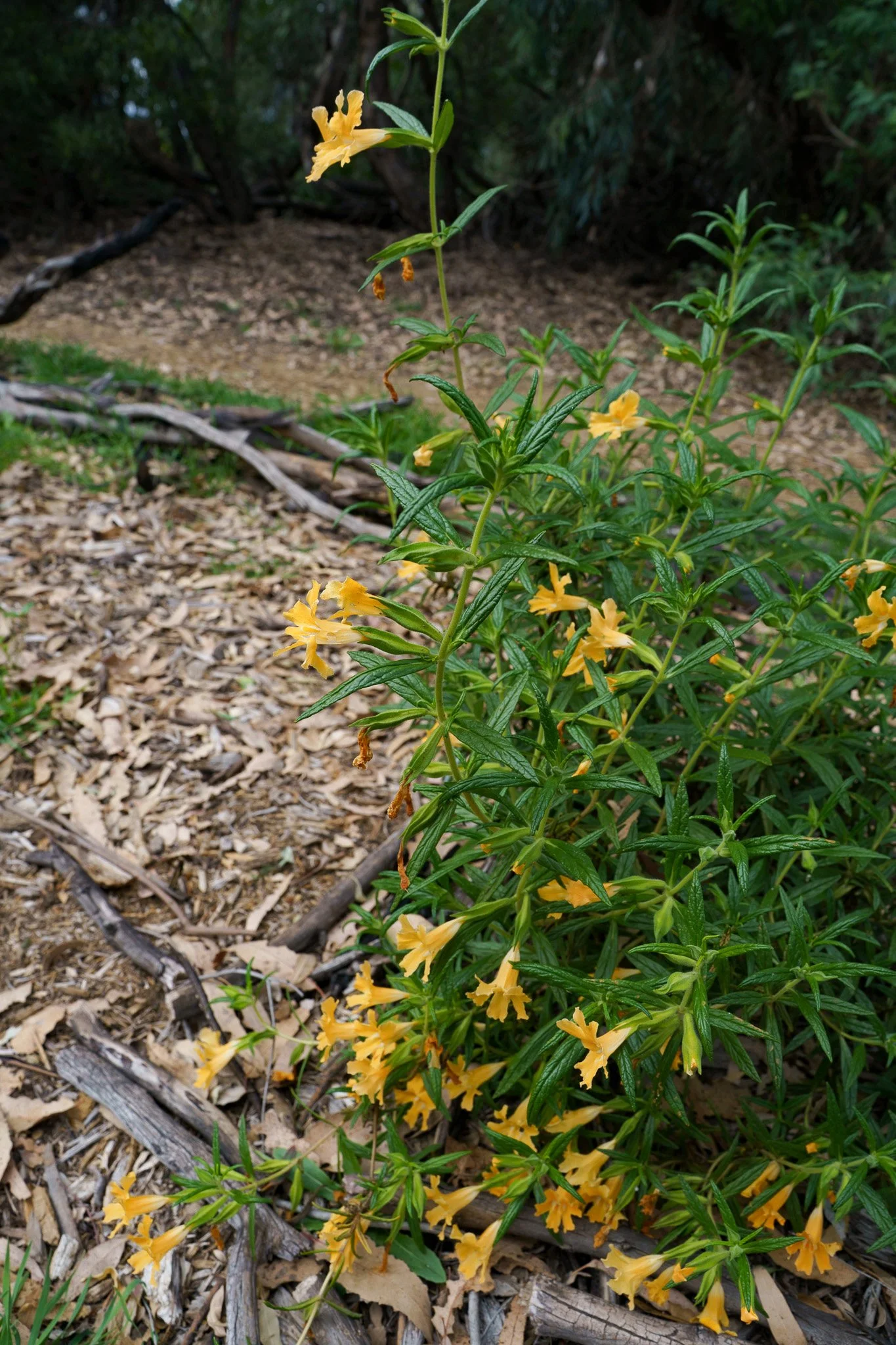
Sticky Monkey Flower
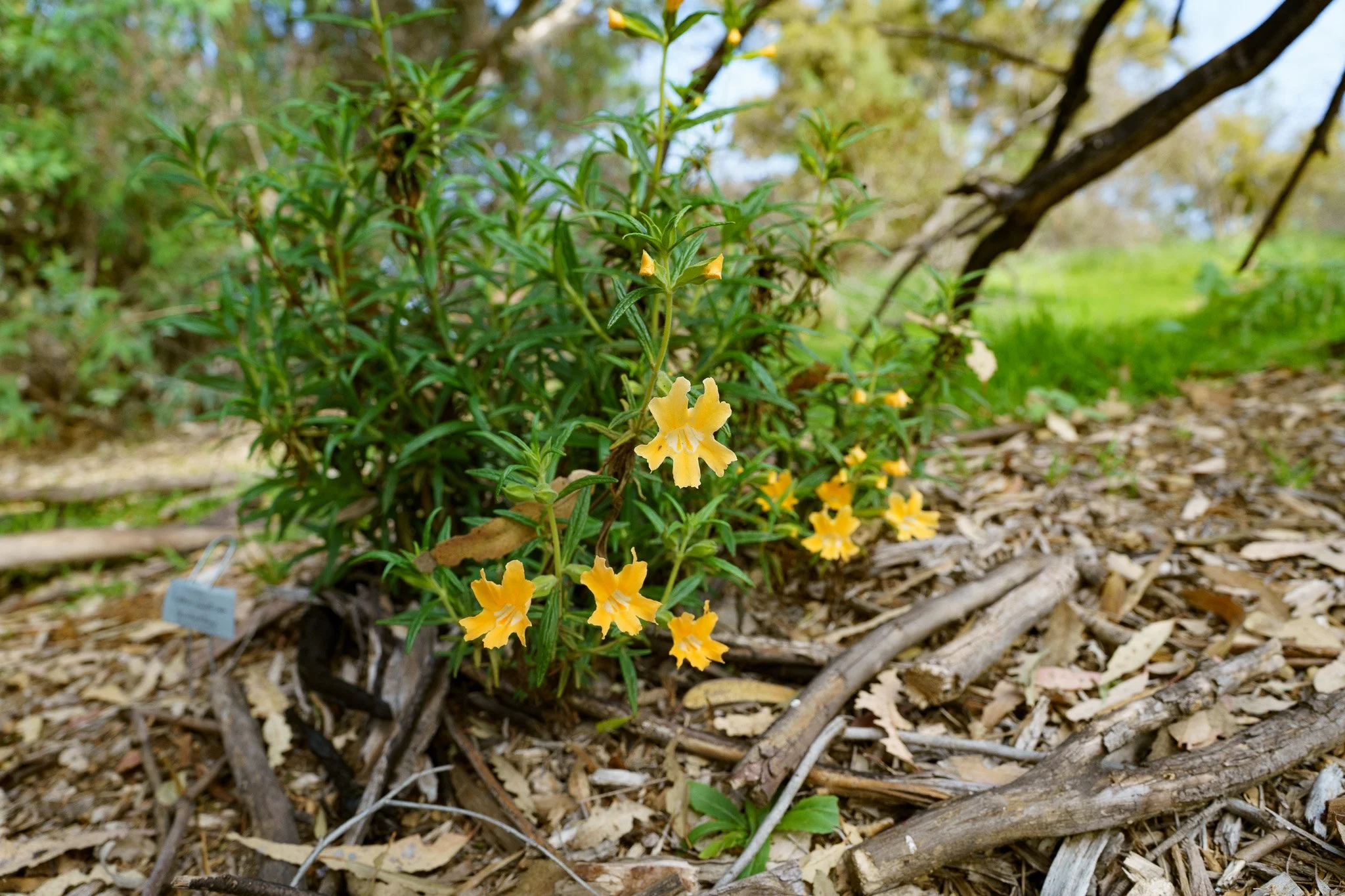
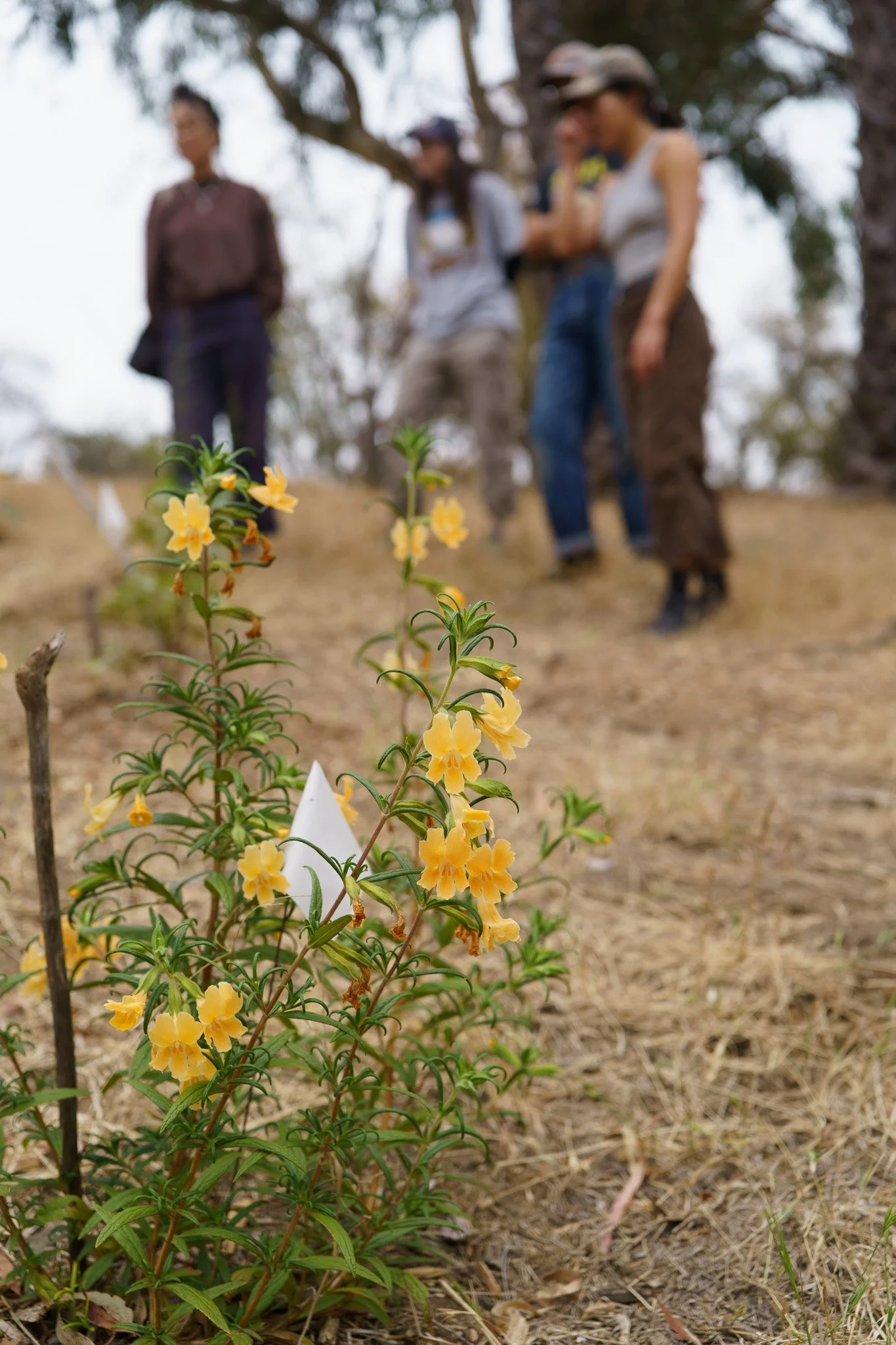
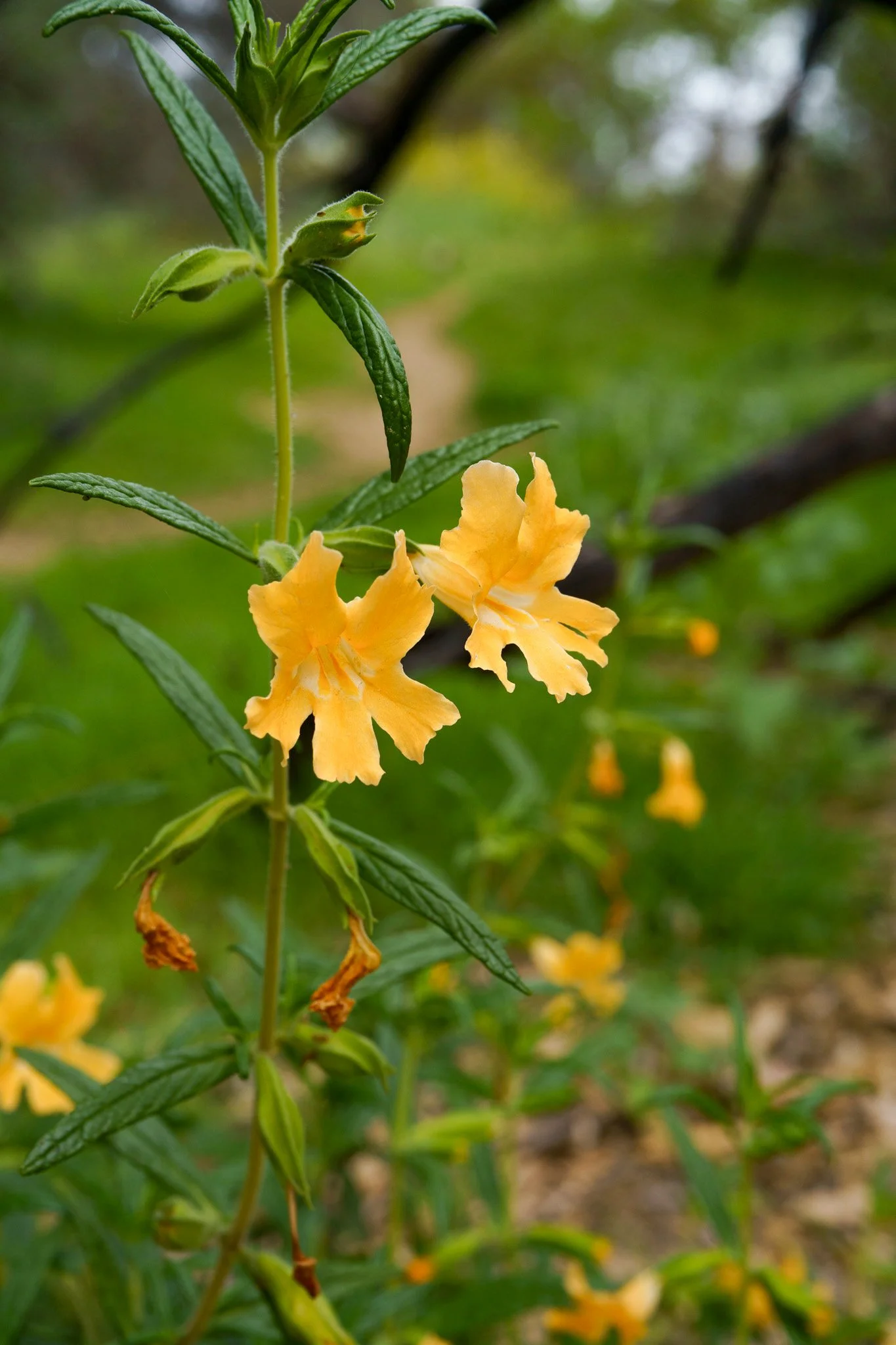
Diplacus aurantiacus
(Also known as Bush Monkey flower) is named for the flower’s resemblance to a monkey’s face(?). The ‘sticky’ references the plant’s resinous coating that seals moisture in and repels unwanted insects.
Found throughout CA, SW Oregon and Mexico they bloom from early spring into summer. If the stigma is touched by a pollinator (or human) the flower folds closed, perhaps as a sign that it has been pollinated.
All parts of the plant are edible. Indigenous people used the leaves as a sodium substitute and antiseptic. Leaves were cooked as one would spinach, to reduce bitterness.
Spring Blooming: March - July
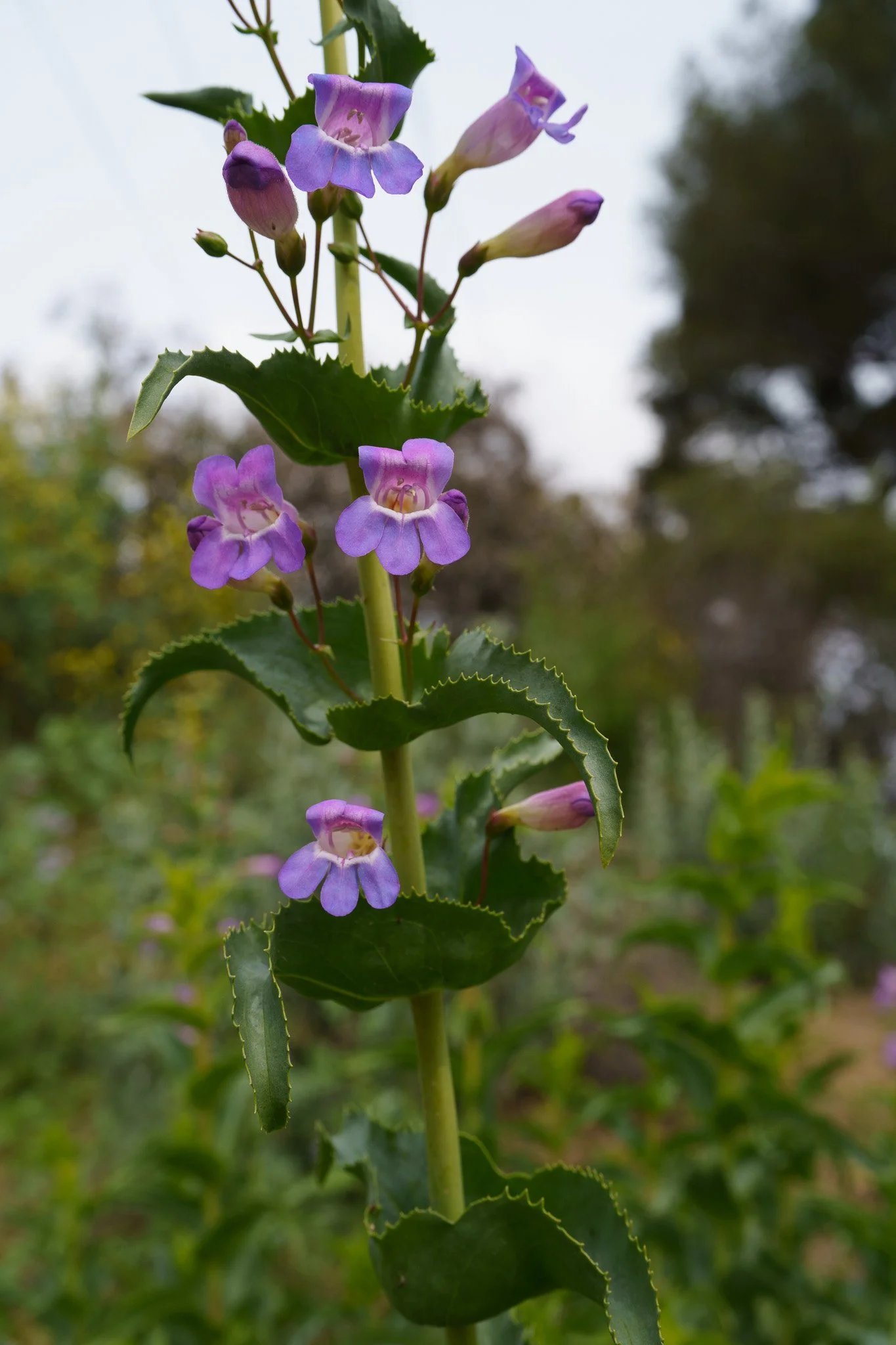
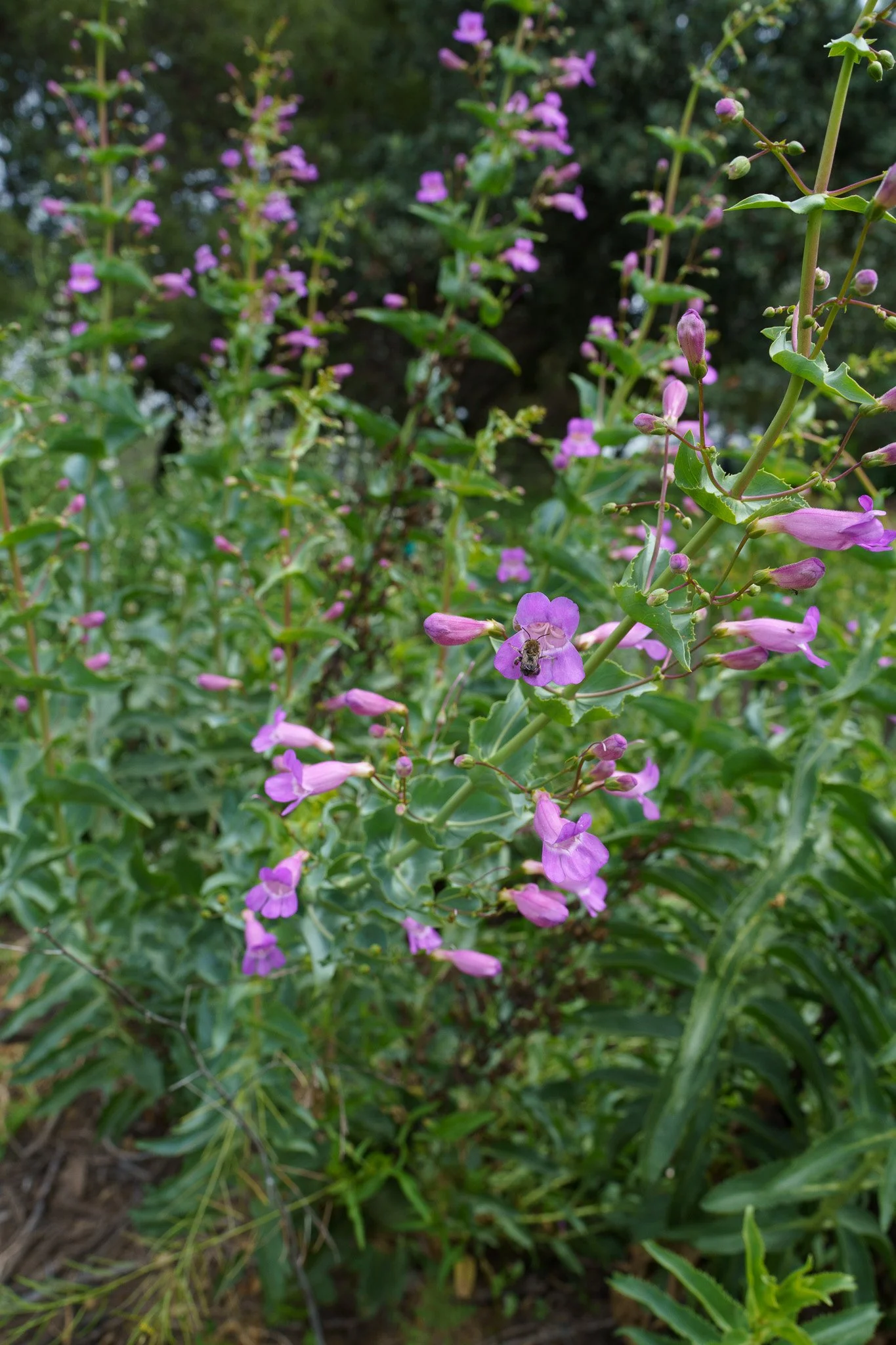
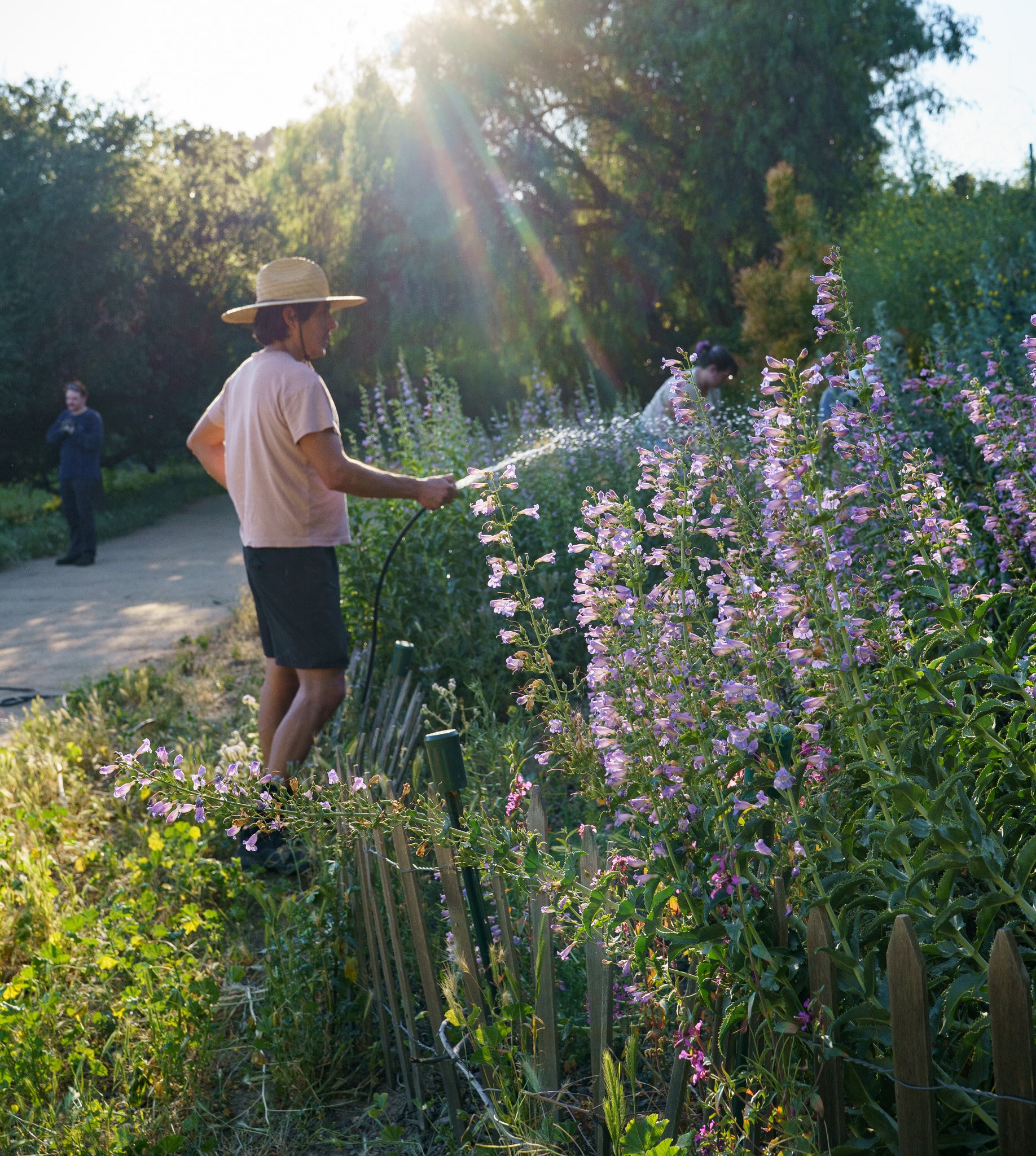
Showy Penstimon
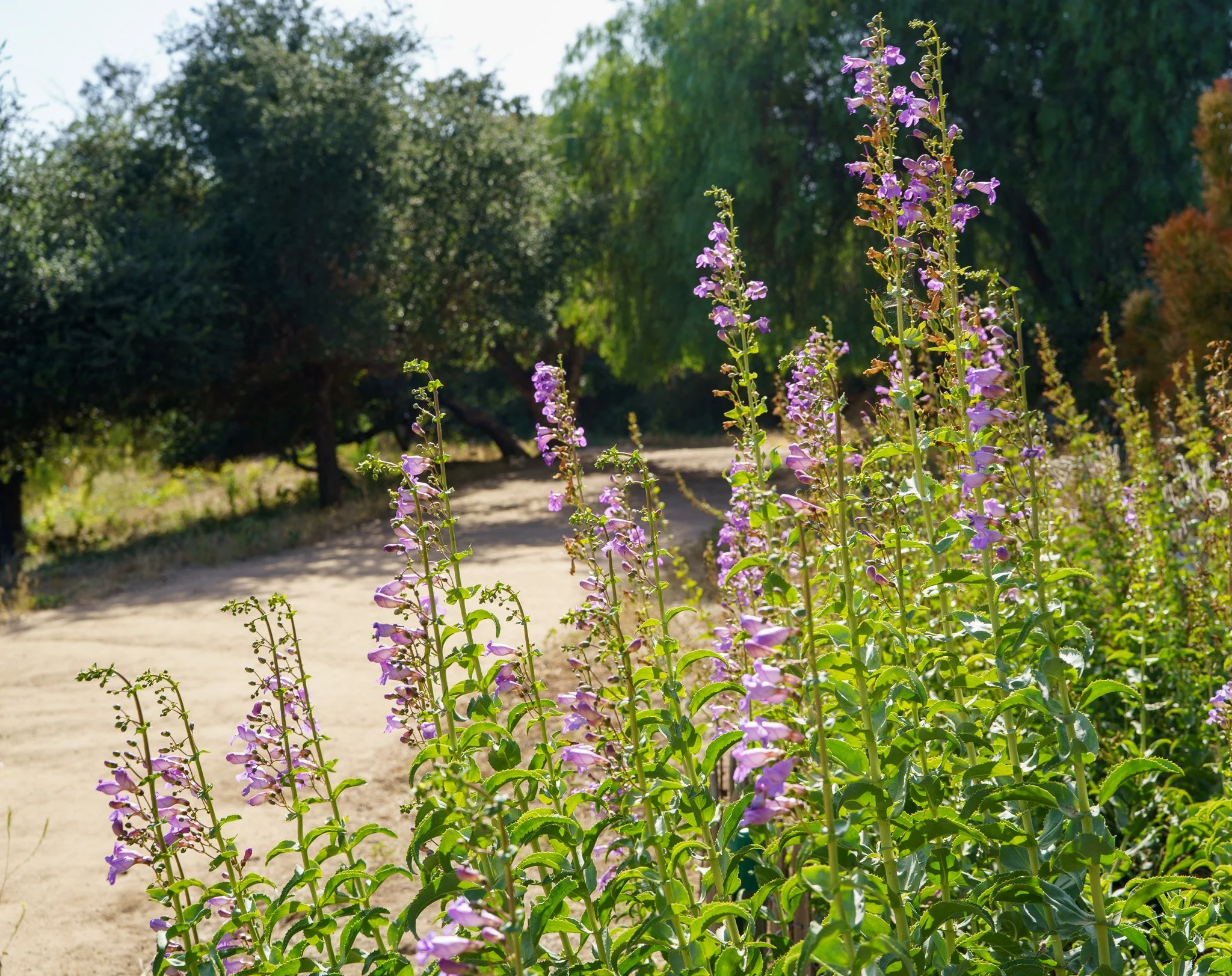
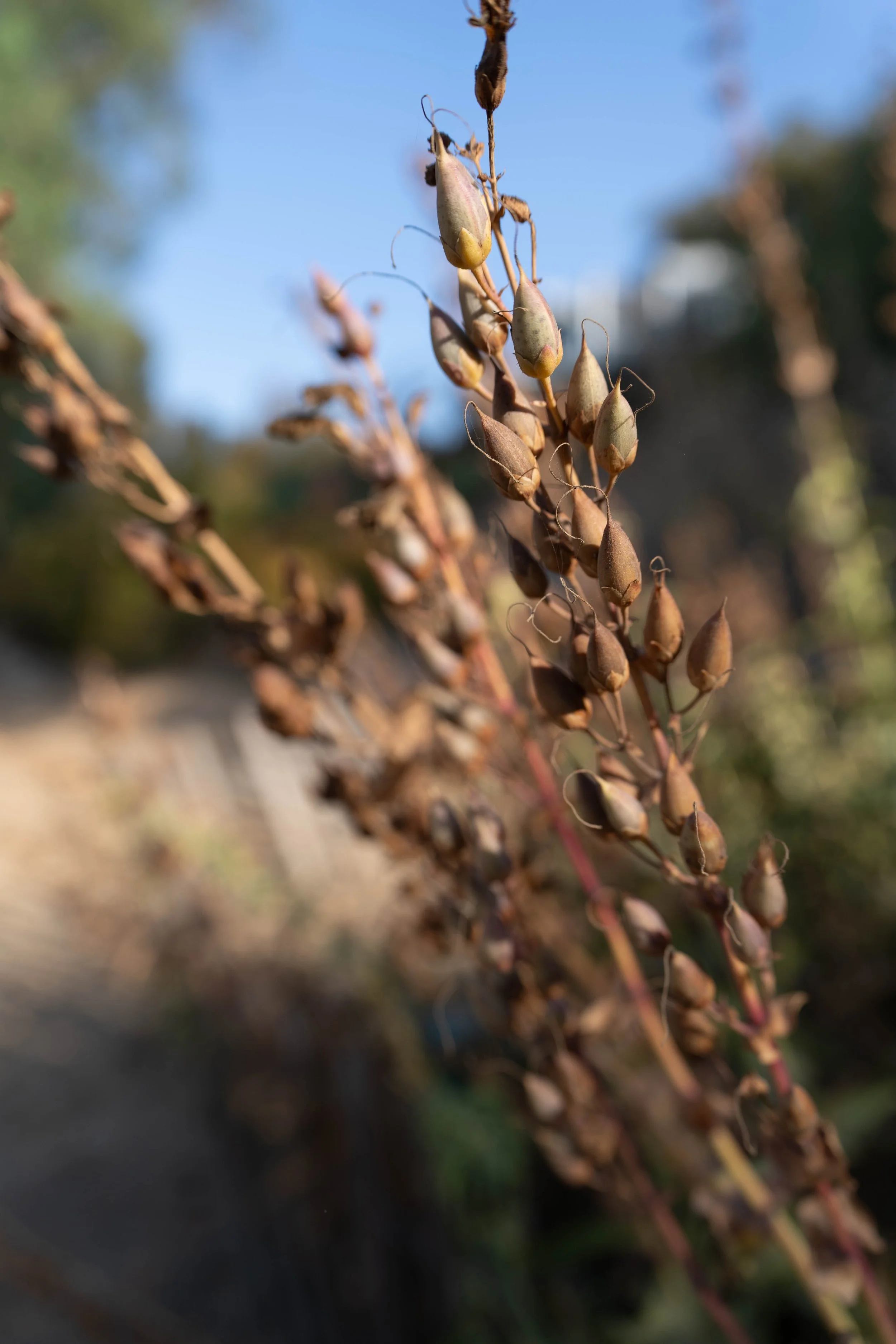
Penstemon spectabilis
Showy penstemon likes full sun and a range of soils (but wont need supplementary summer water with clay or other water-holding soils). It flowers more with some summer water but may be shorter lived. It only lasts 5 to 10 years, but self seeds easily.
It’s great for wildlife, attracting a variety of native bees and hummingbirds for nectar. It hosts larvae for about 13 butterfly and moth species.
Spring Blooming: April - June
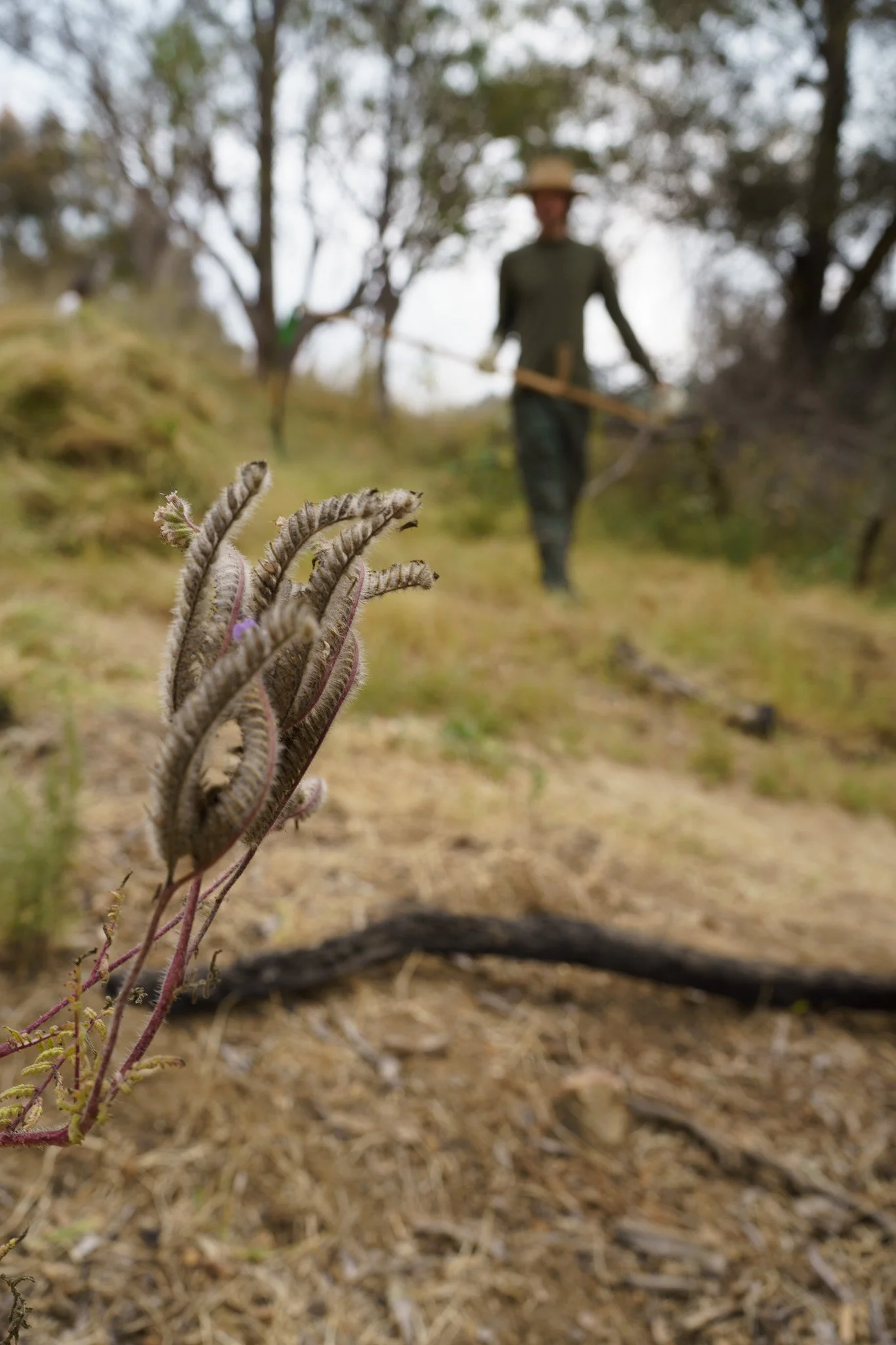
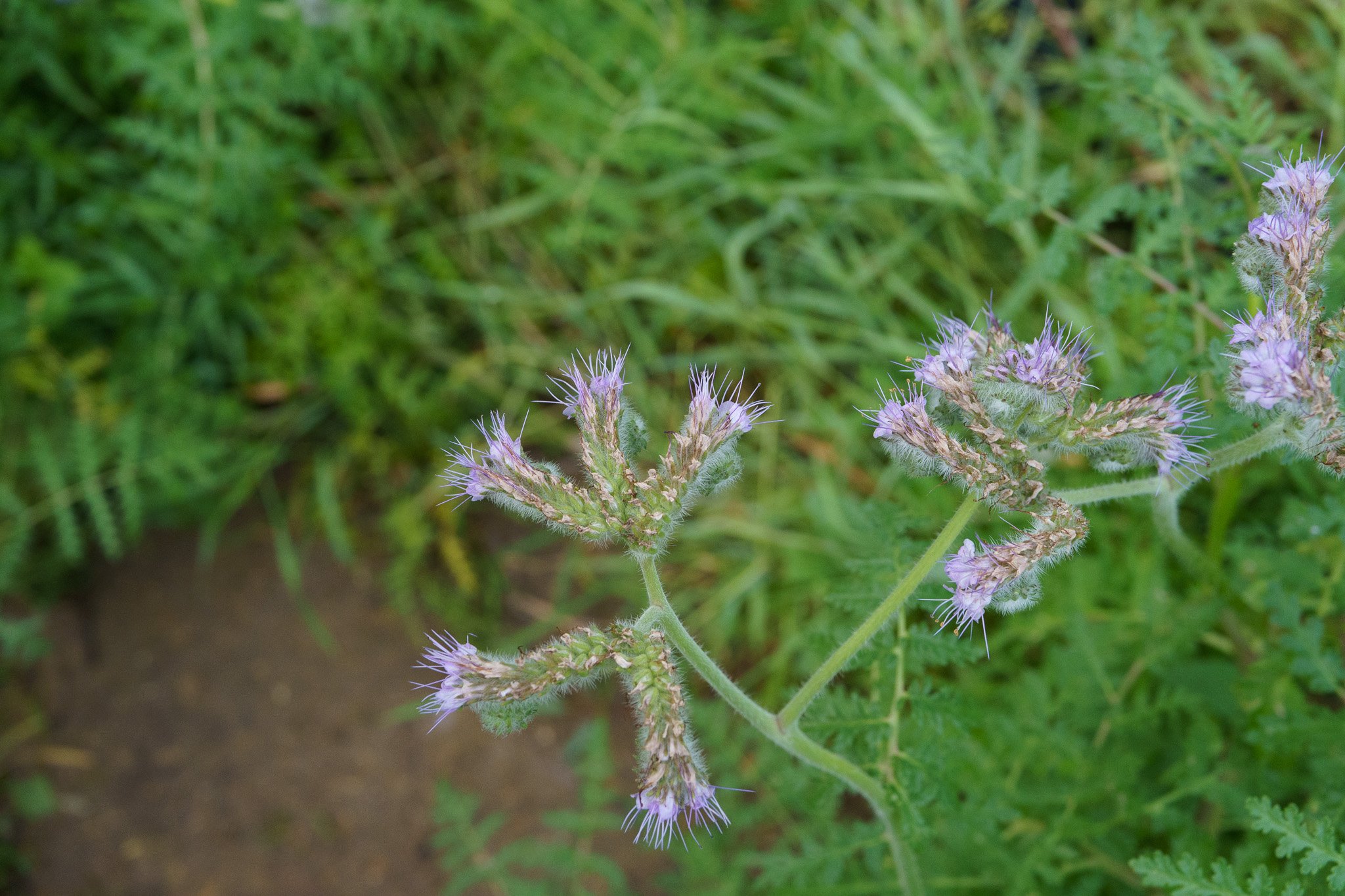
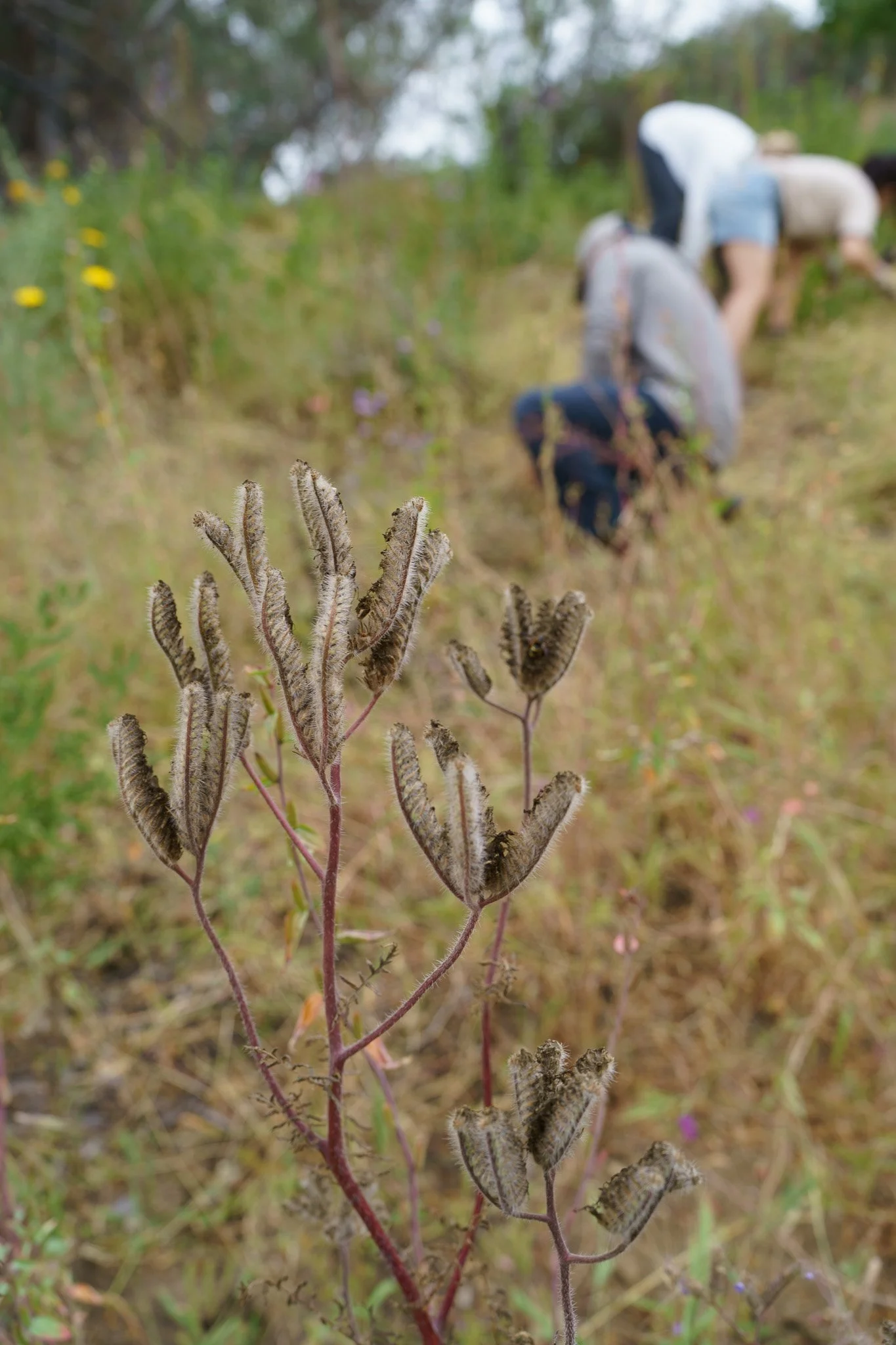
Lacy Phacelia
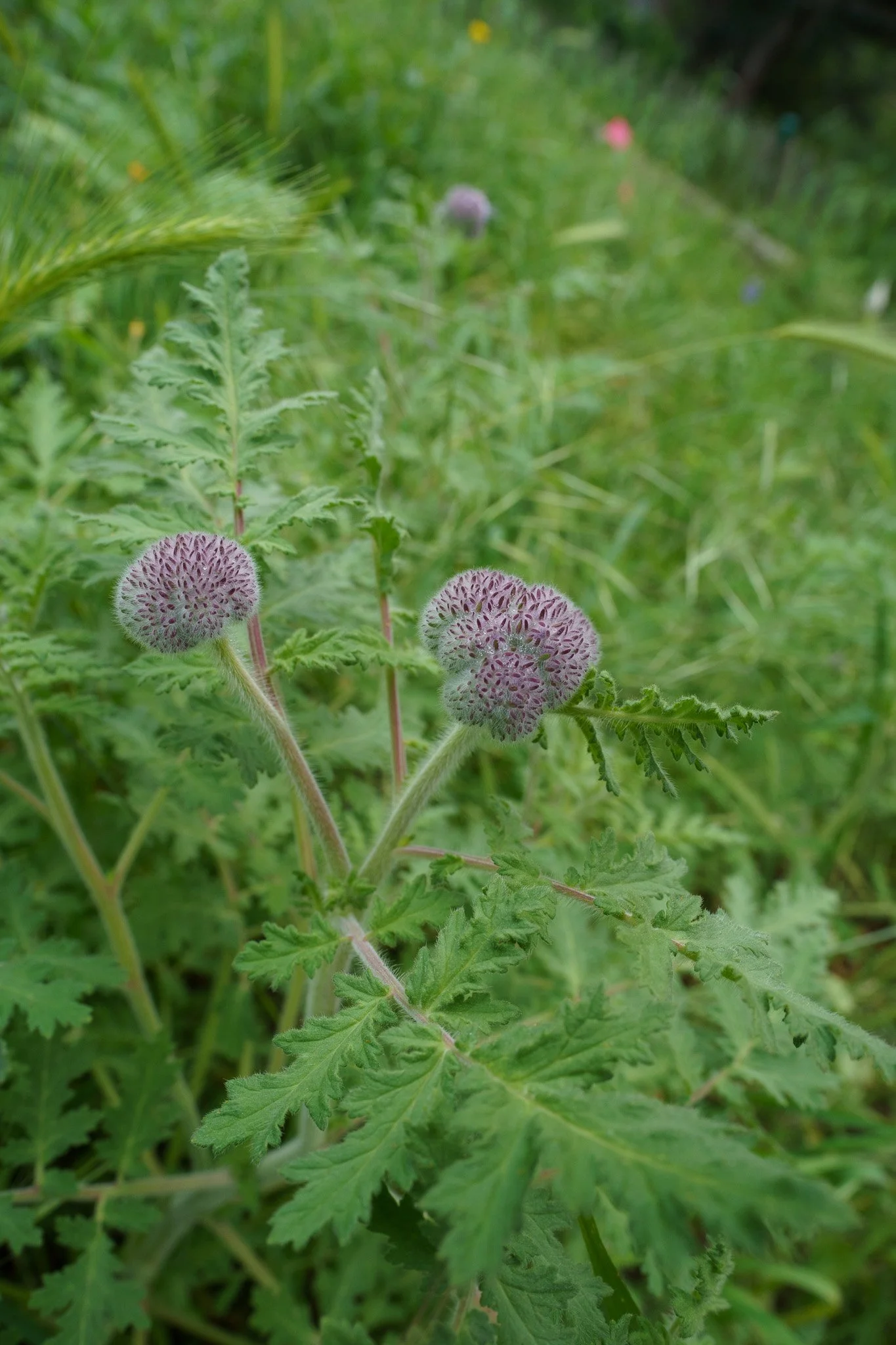
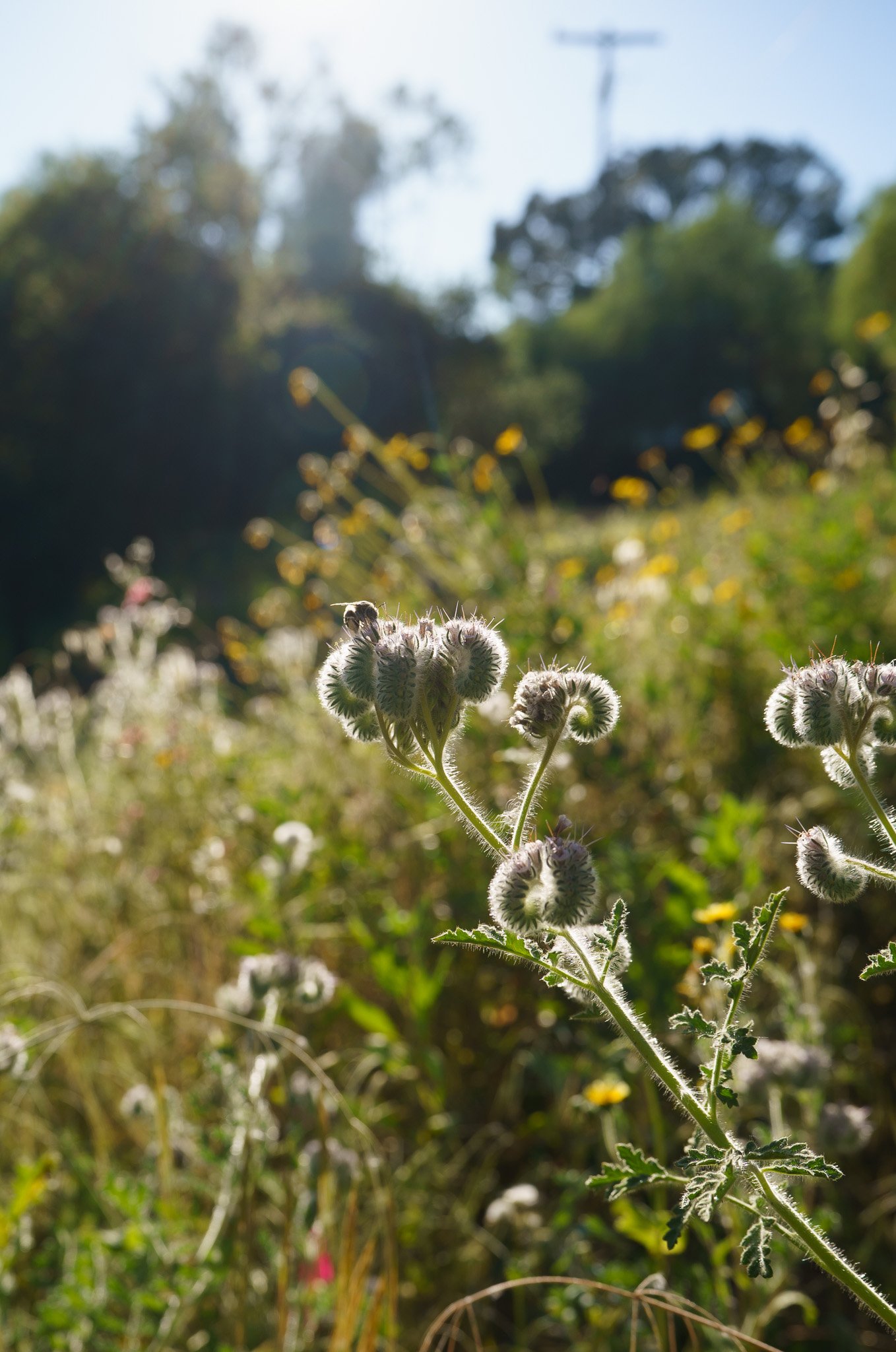
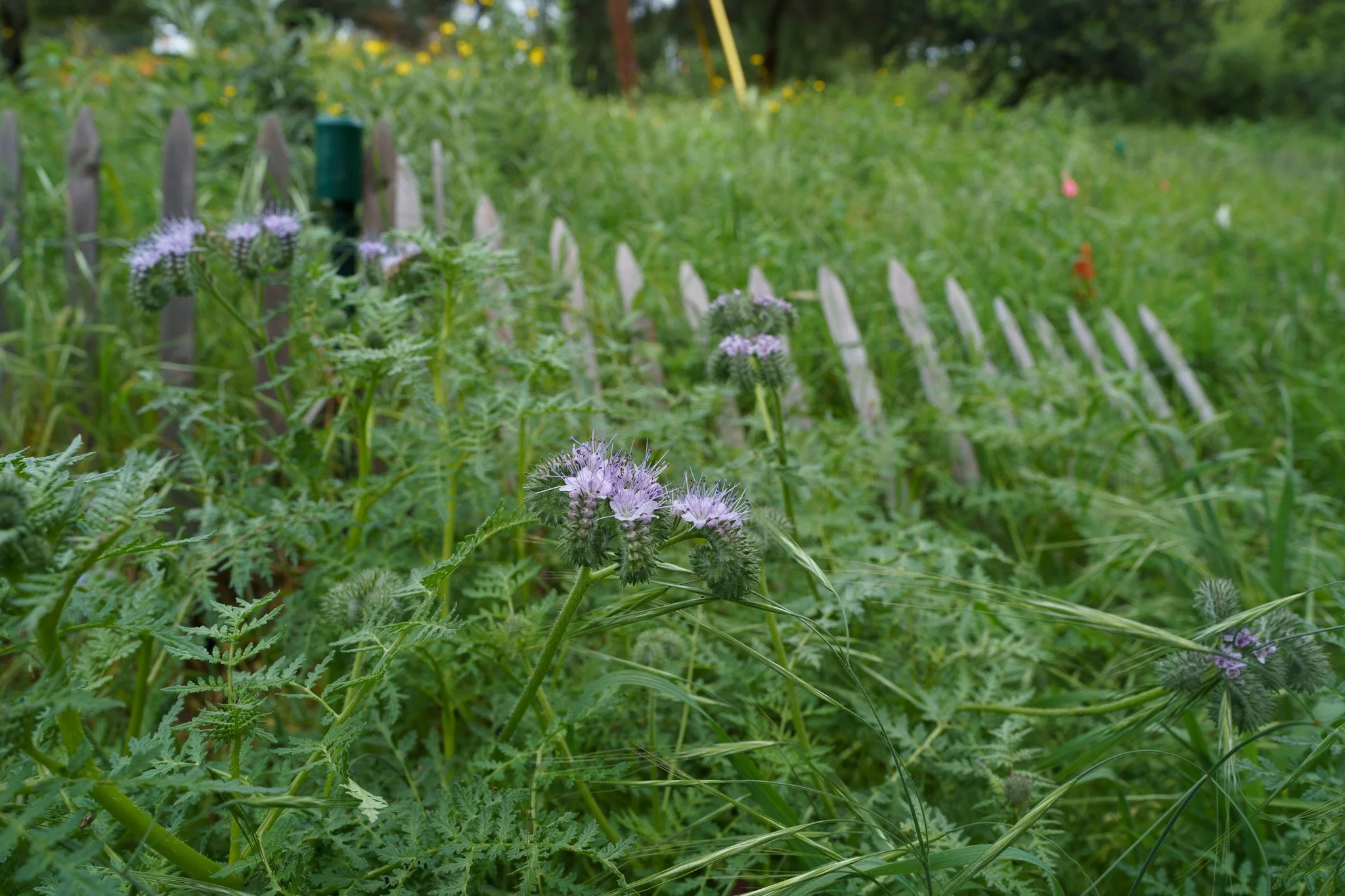
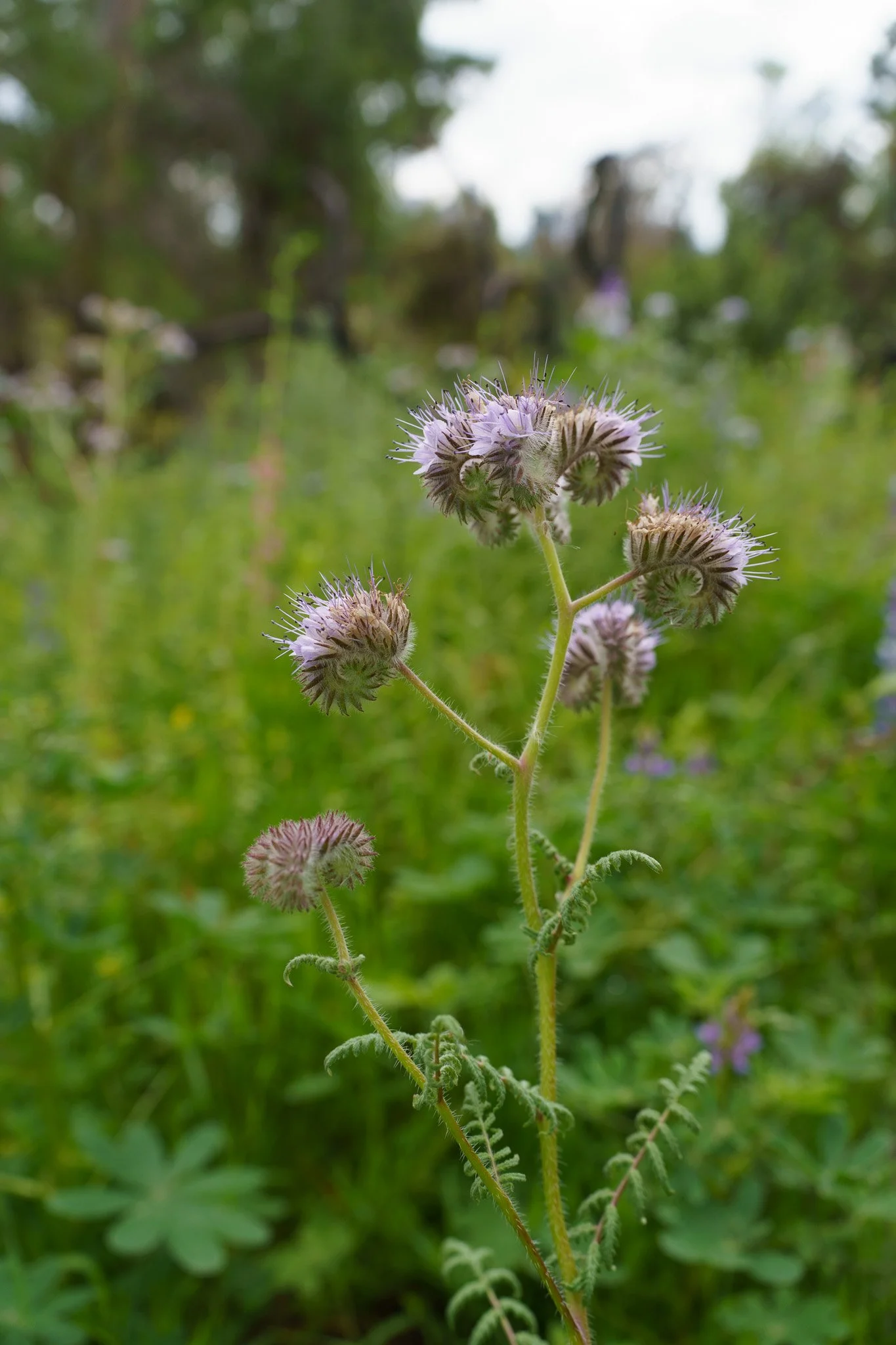
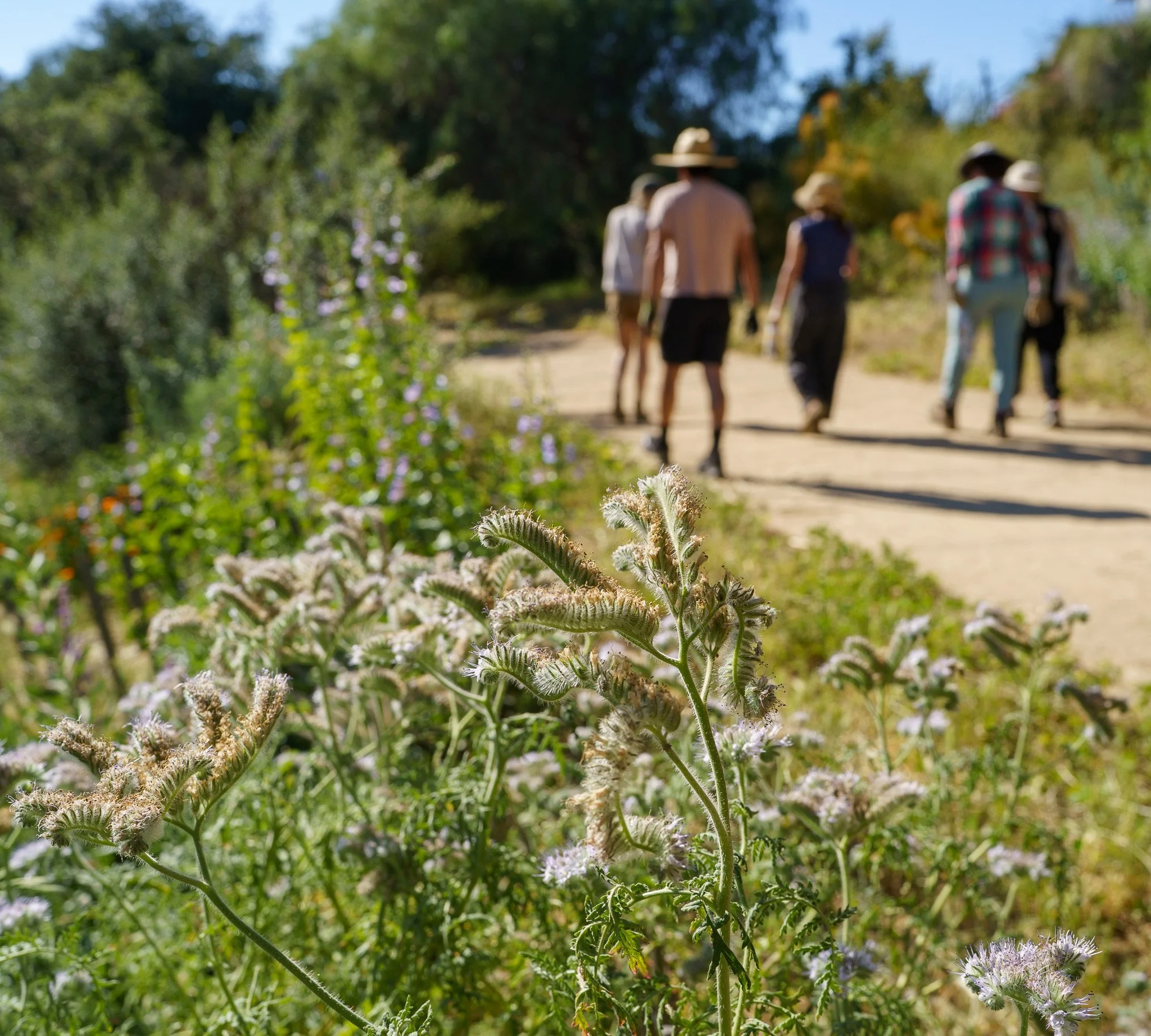
Phacelia tatacetifolia
A native wildflower of the borage family - it attracts beneficial insects so well it’s planted within vinyards. Another common name for it is “Bee’s Friend”. In Elysian it’s used in the Burn Scar Test Plot as a cover crop to improve the soil after the fire.
It’s an annual but its seeds are self-sown so it will continue the next year. It loves poor soil, drought and is fast-growing. (Take note that it can cause contact dermititis for those sensitive .)
Spring Blooming: March - May
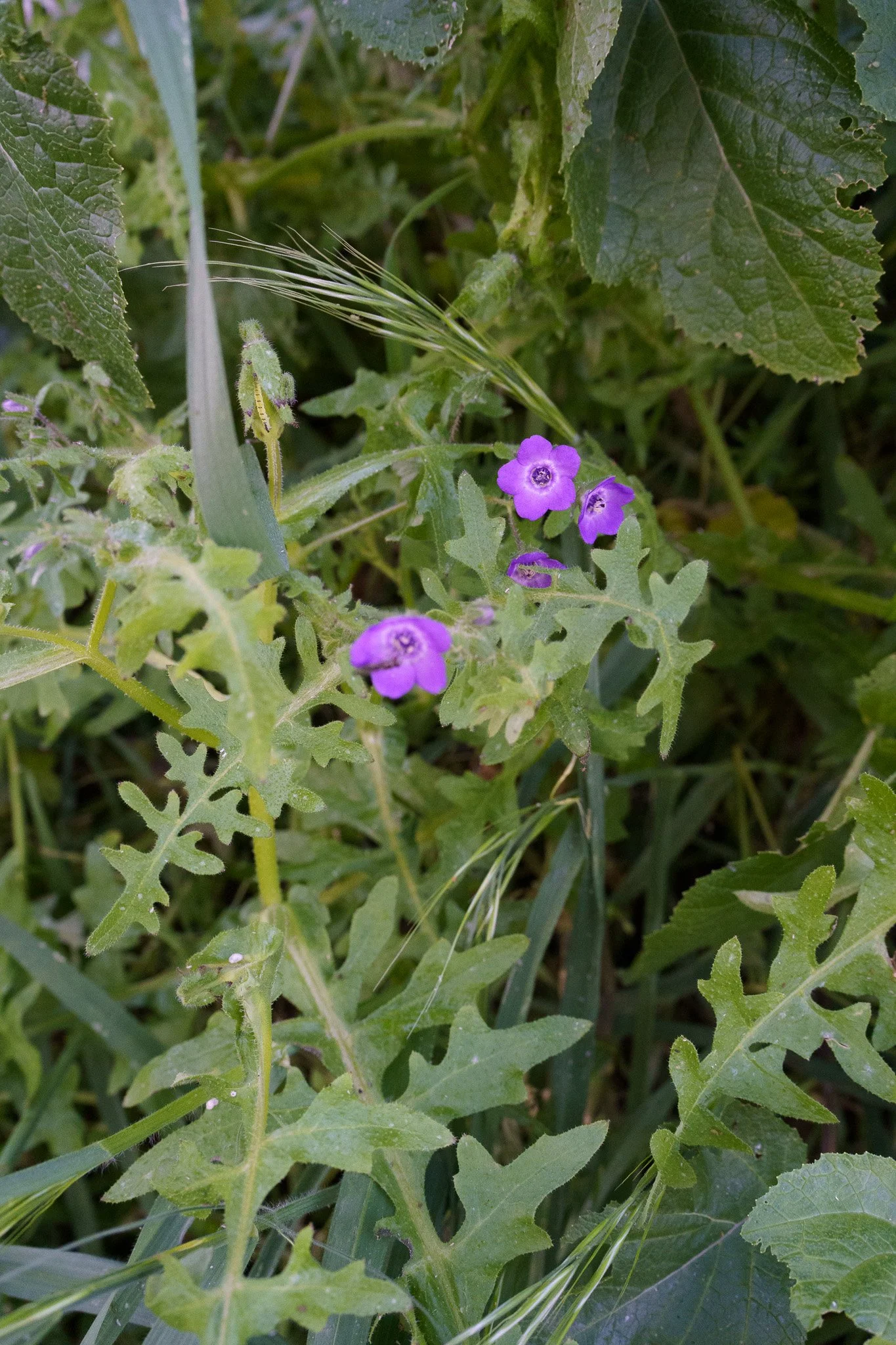
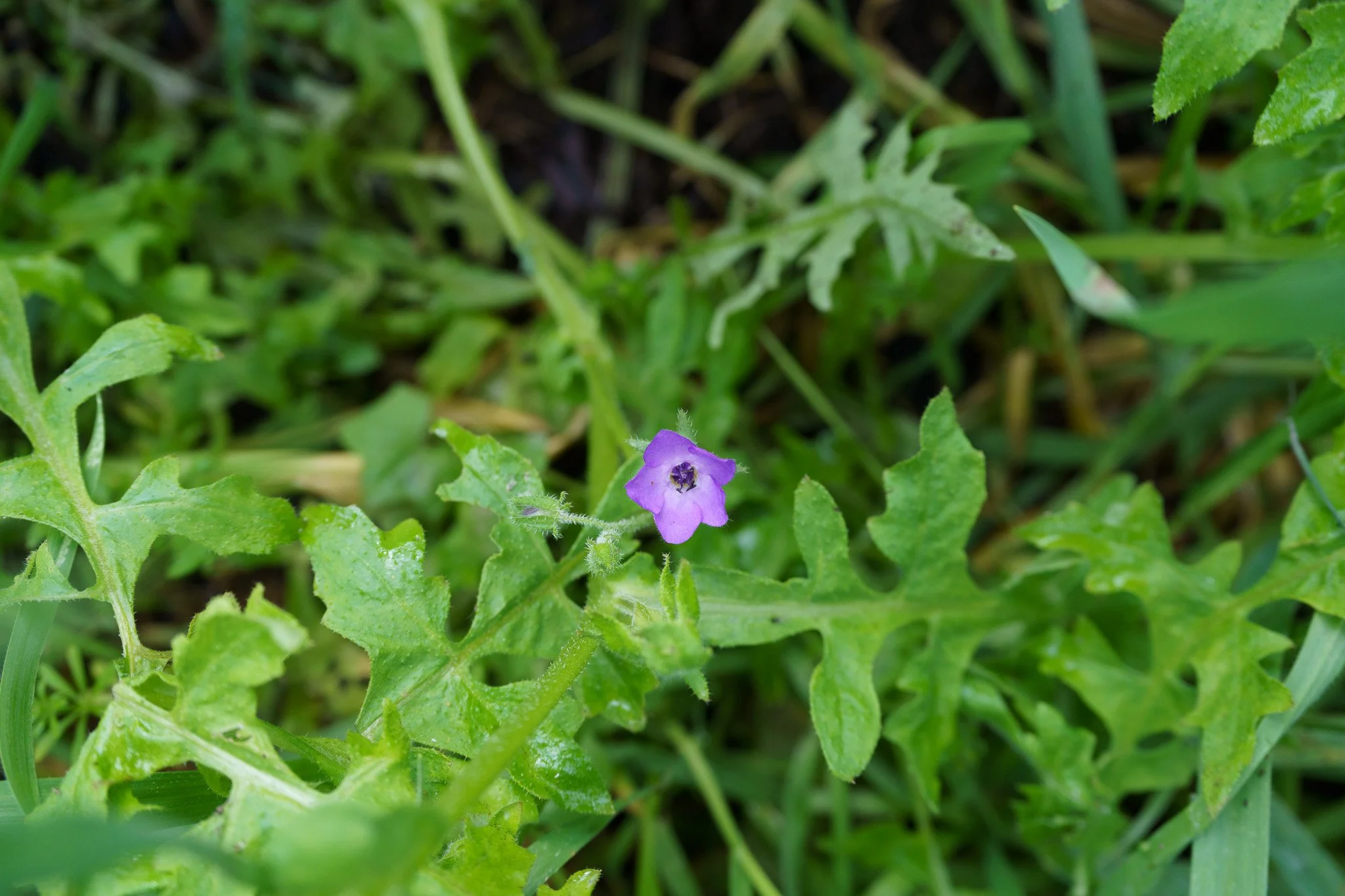
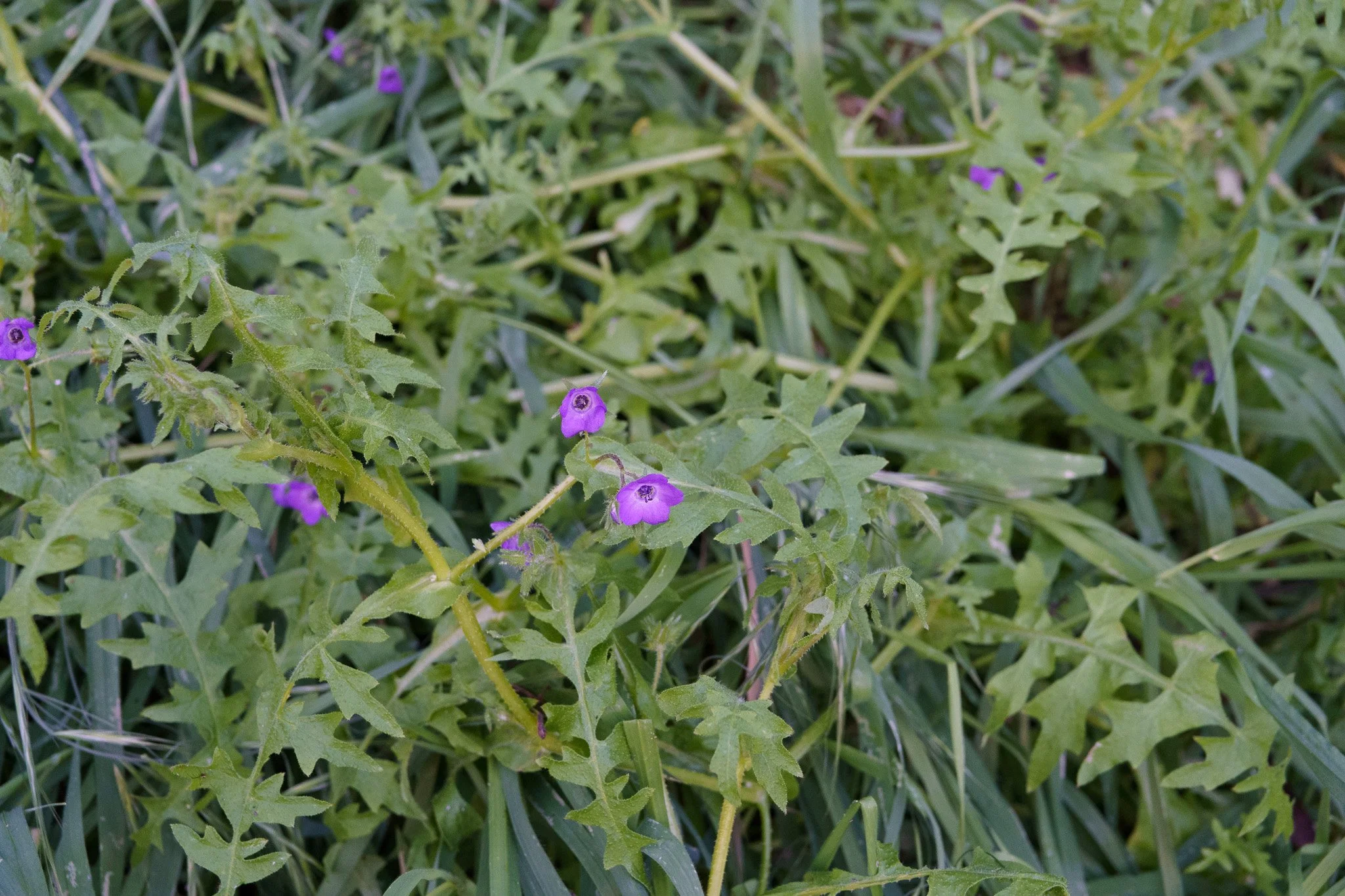
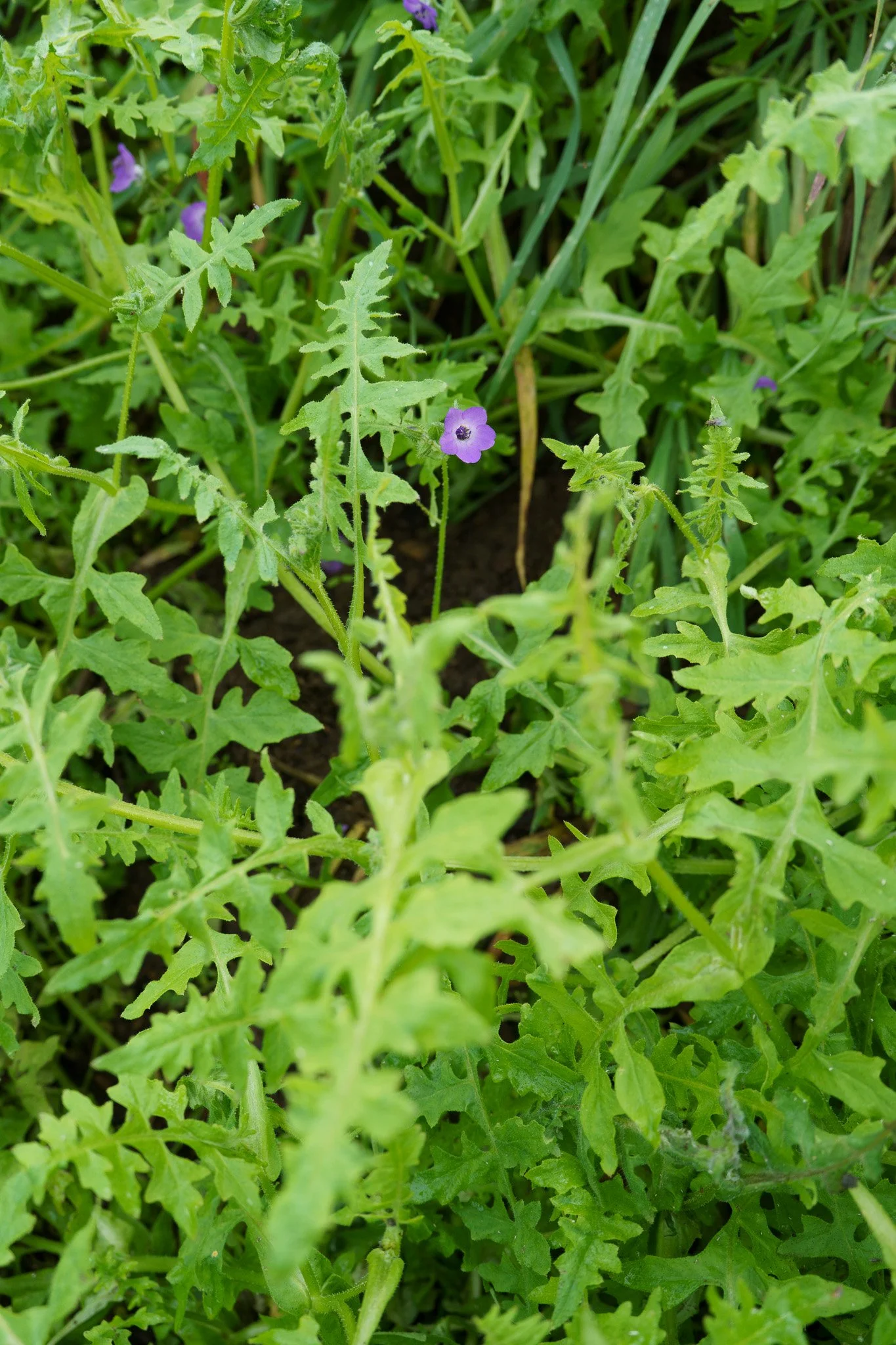
Blue Fiestaflower
Pholistoma auritum
In Elysian Park these naturally occurring California natives enjoy the cool dampness of early spring. Even though we’re into warmer weather you might still see them on north-facing shady slopes (West loop far side overlooking the 5, and the fire road from Douglas nearer Scott).
They are salad greens! They have a slightly bitter, peppery, tangy flavor. The foliage is covered in small, stiff bristles that help it cling to other plants but are harmless when eaten. They are known to grow fast and will “run-over” anything nearby.
Spring Blooming: March - May
Summer Blooming
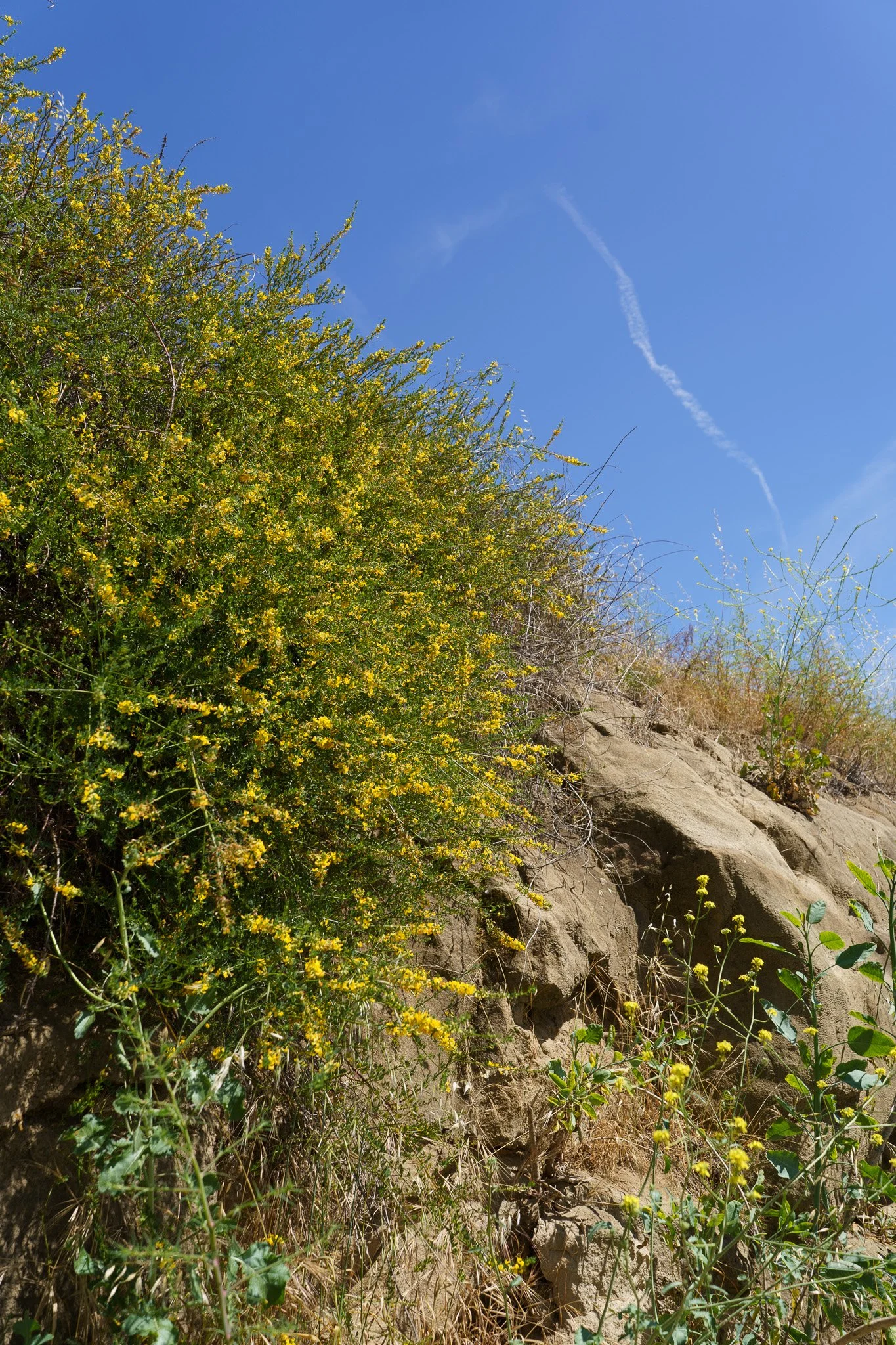
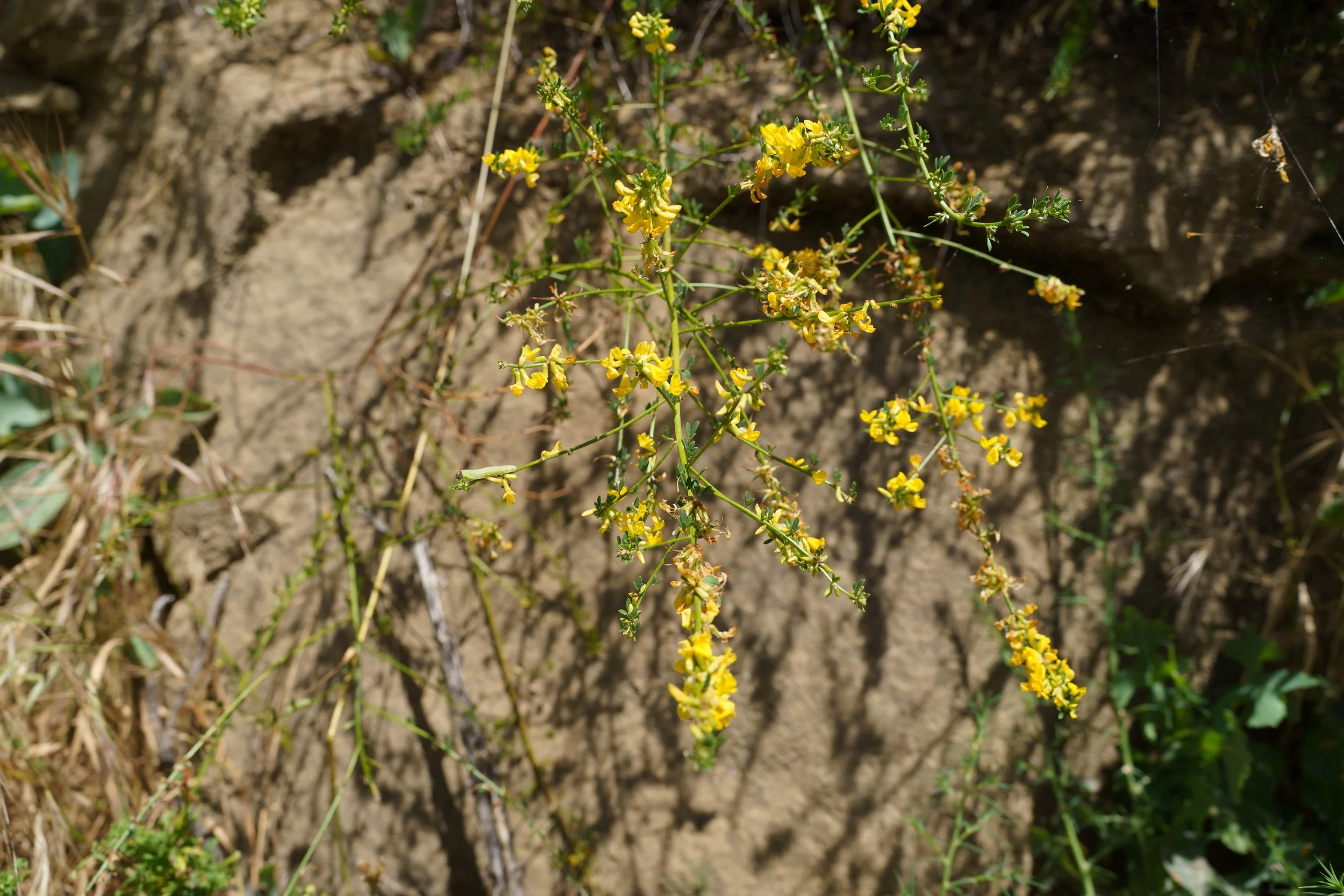
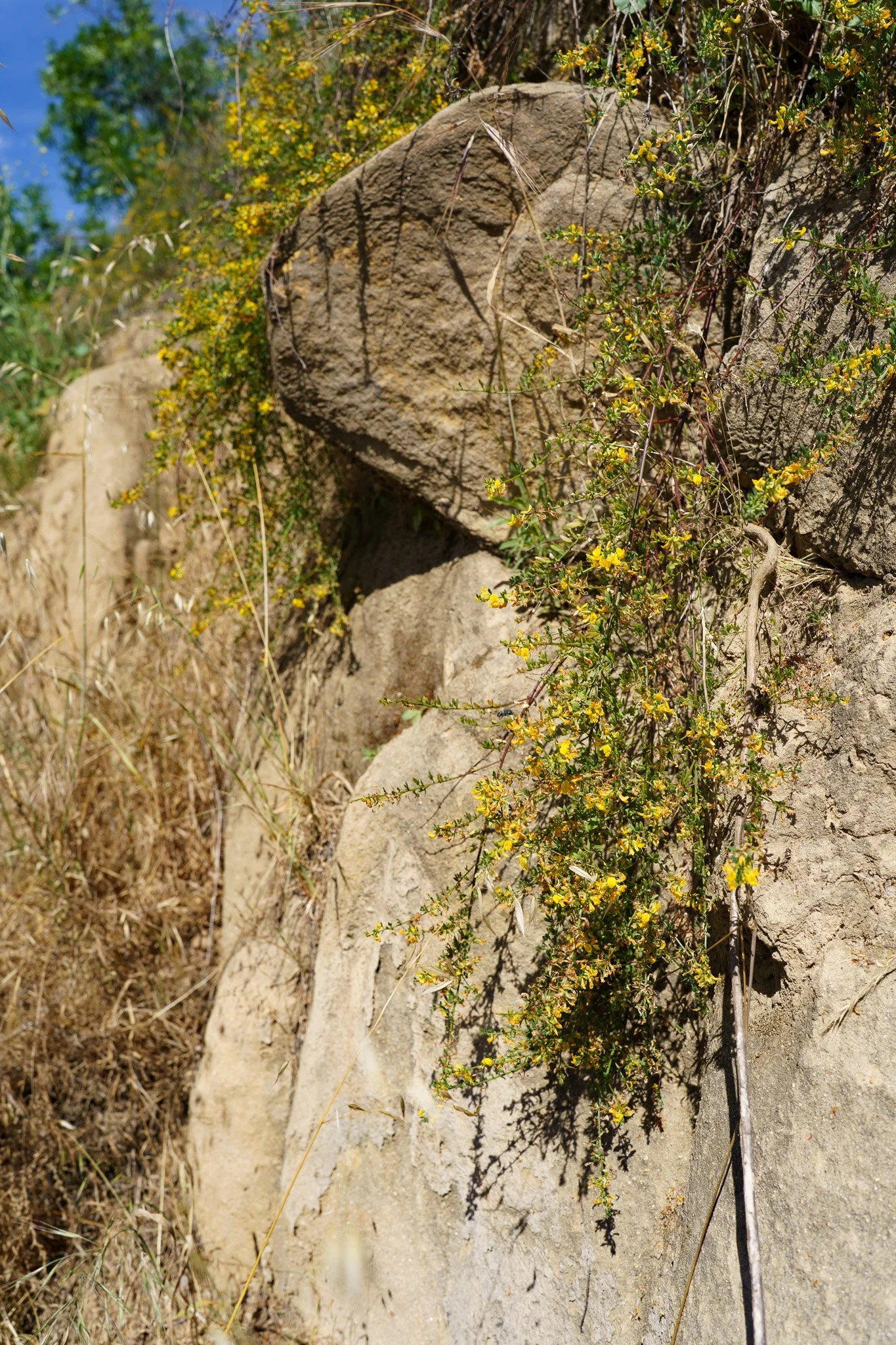
Deerweed
Acmispon glaber
A great “pioneer” species found in dry areas of California, Arizona, and Mexico.
The tiny green leaves, in sets of three, drop off to conserve water during the heat of the summer. Stems stay green with chlorophyll to making food in the absence of leaves. The spring-blooming slows down by late summer. Flowers that remainin turn orange/red before dropping off, leaving small seed pods. It is nitrogen-fixing so is great for habitats and restoration projects.
Summer Blooming: March - August
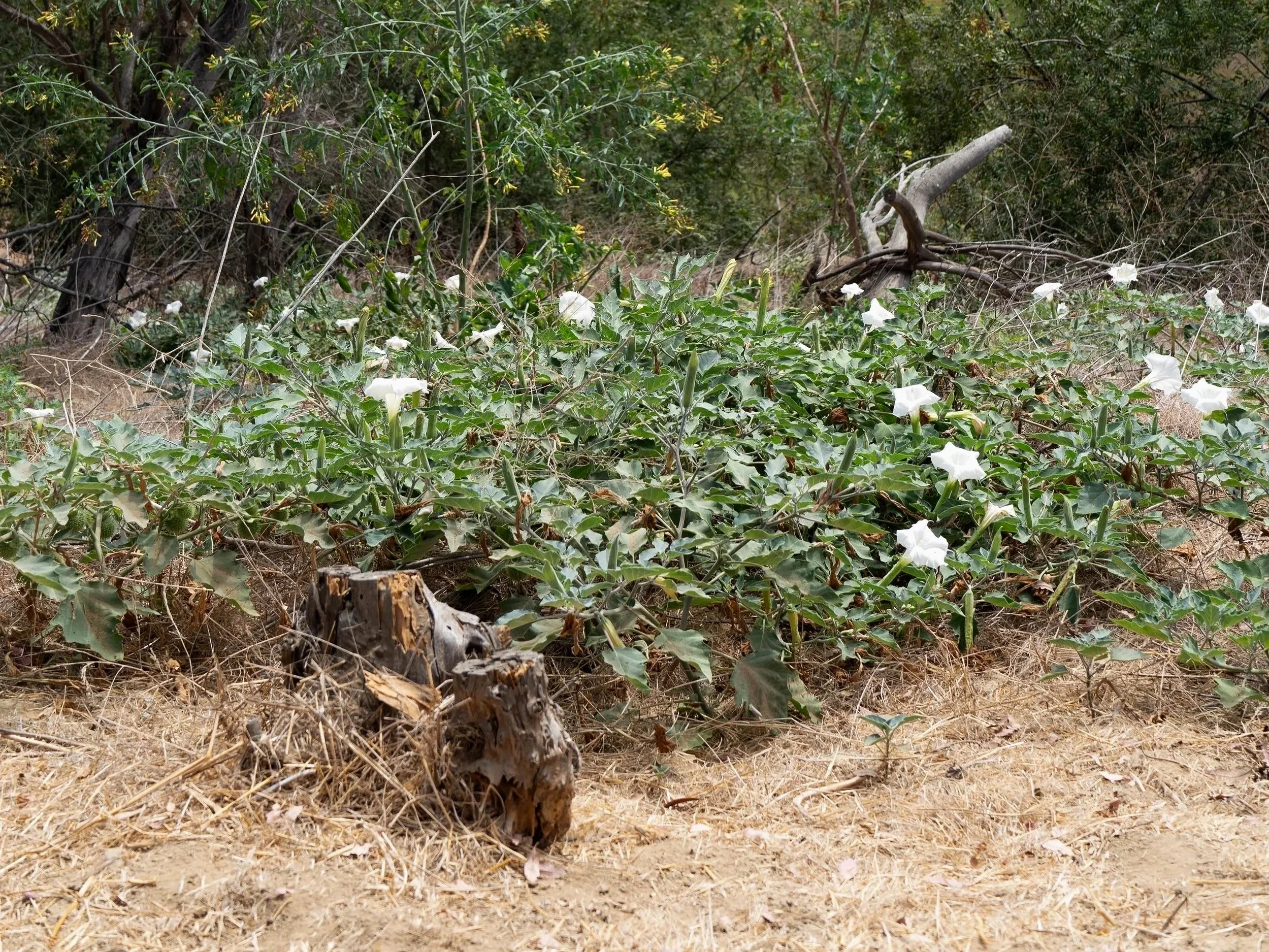
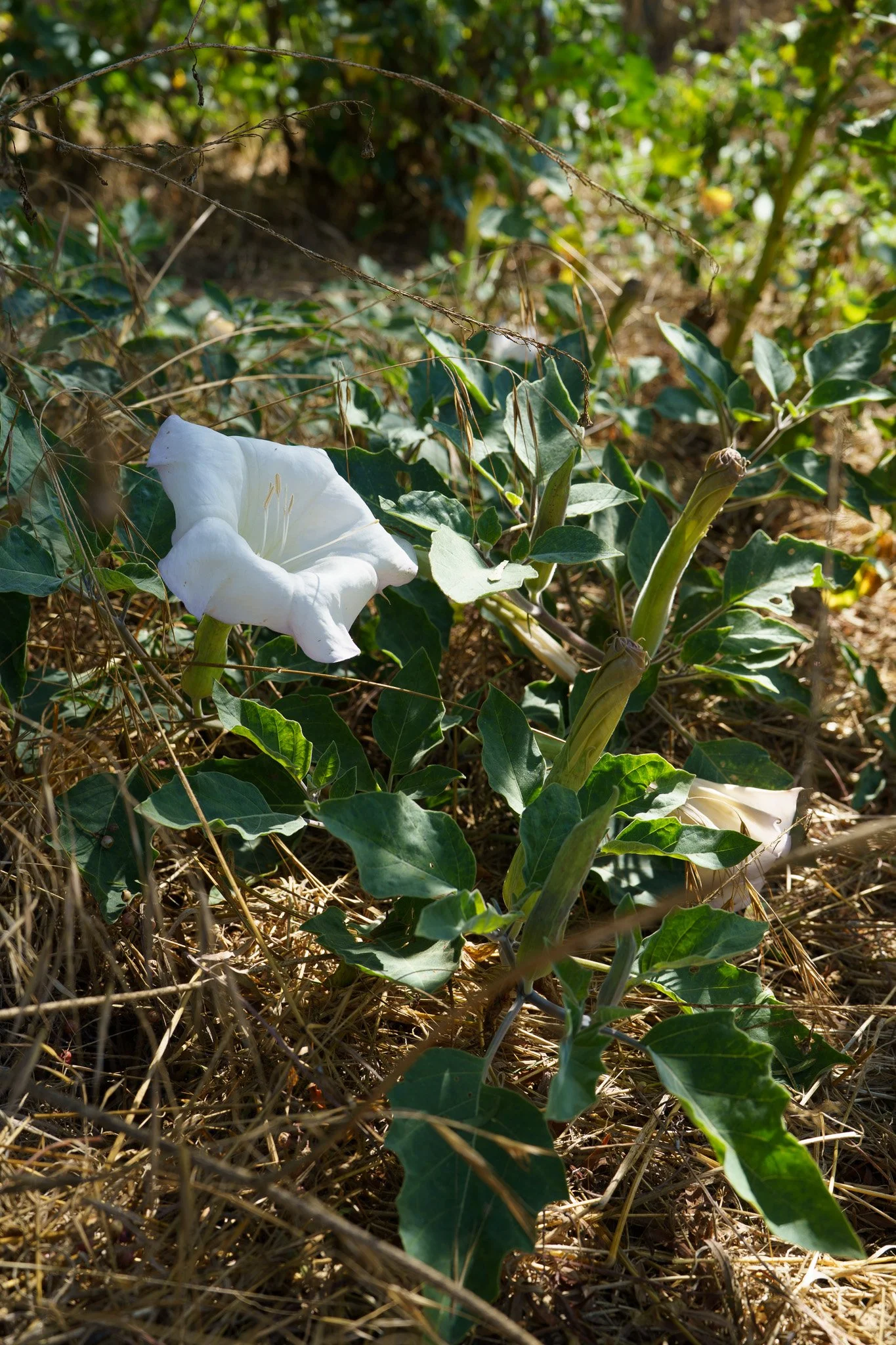
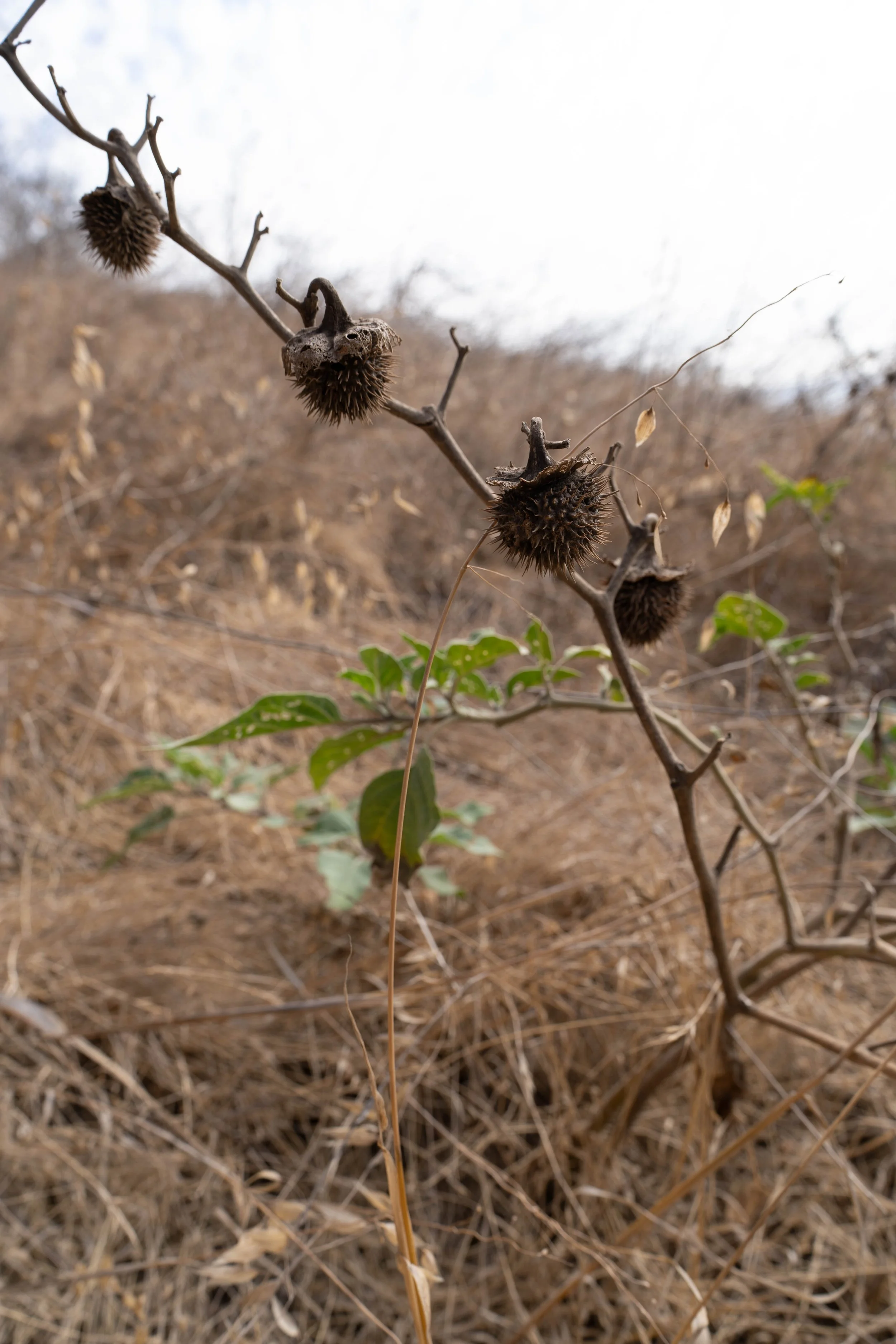
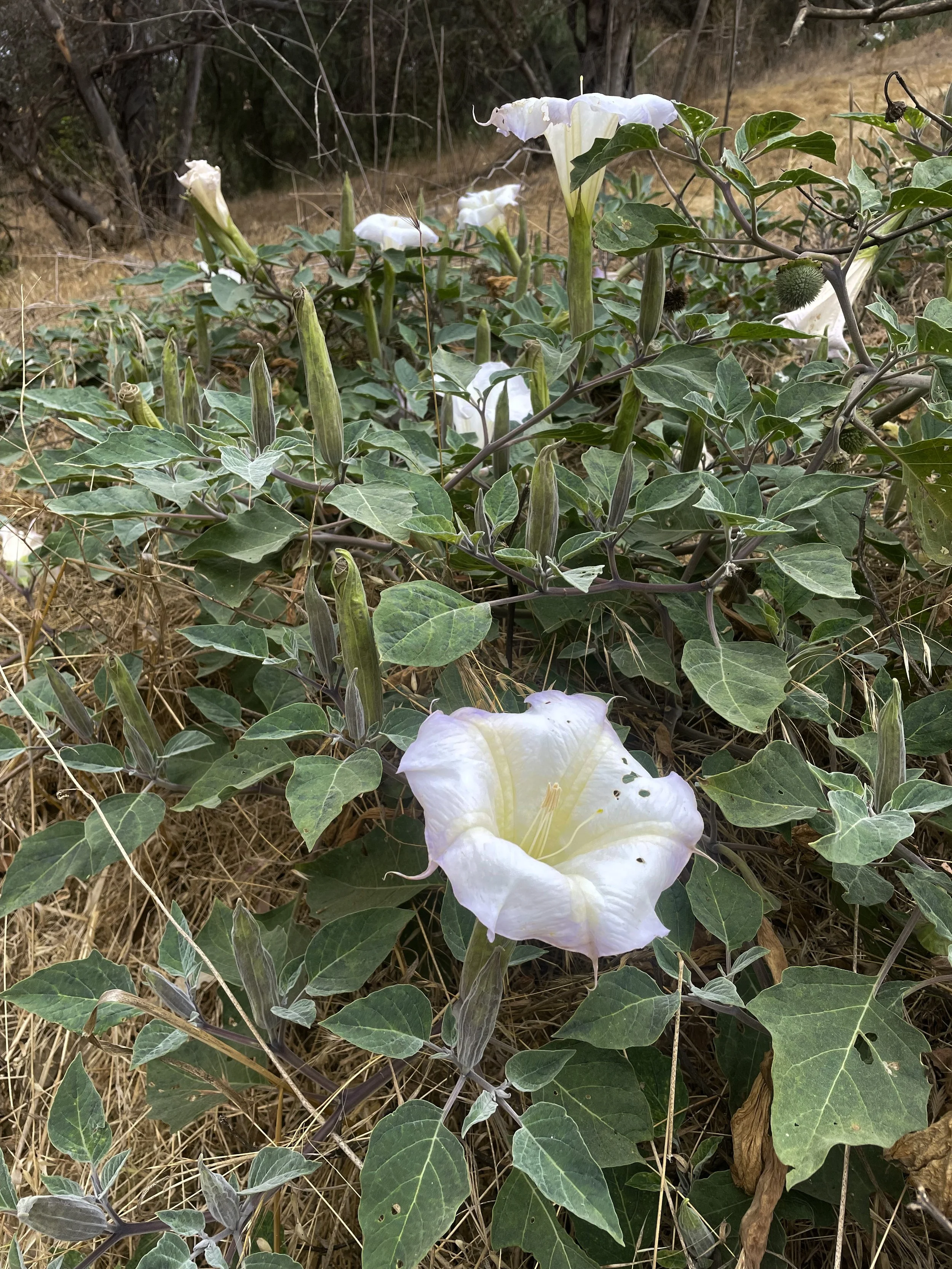
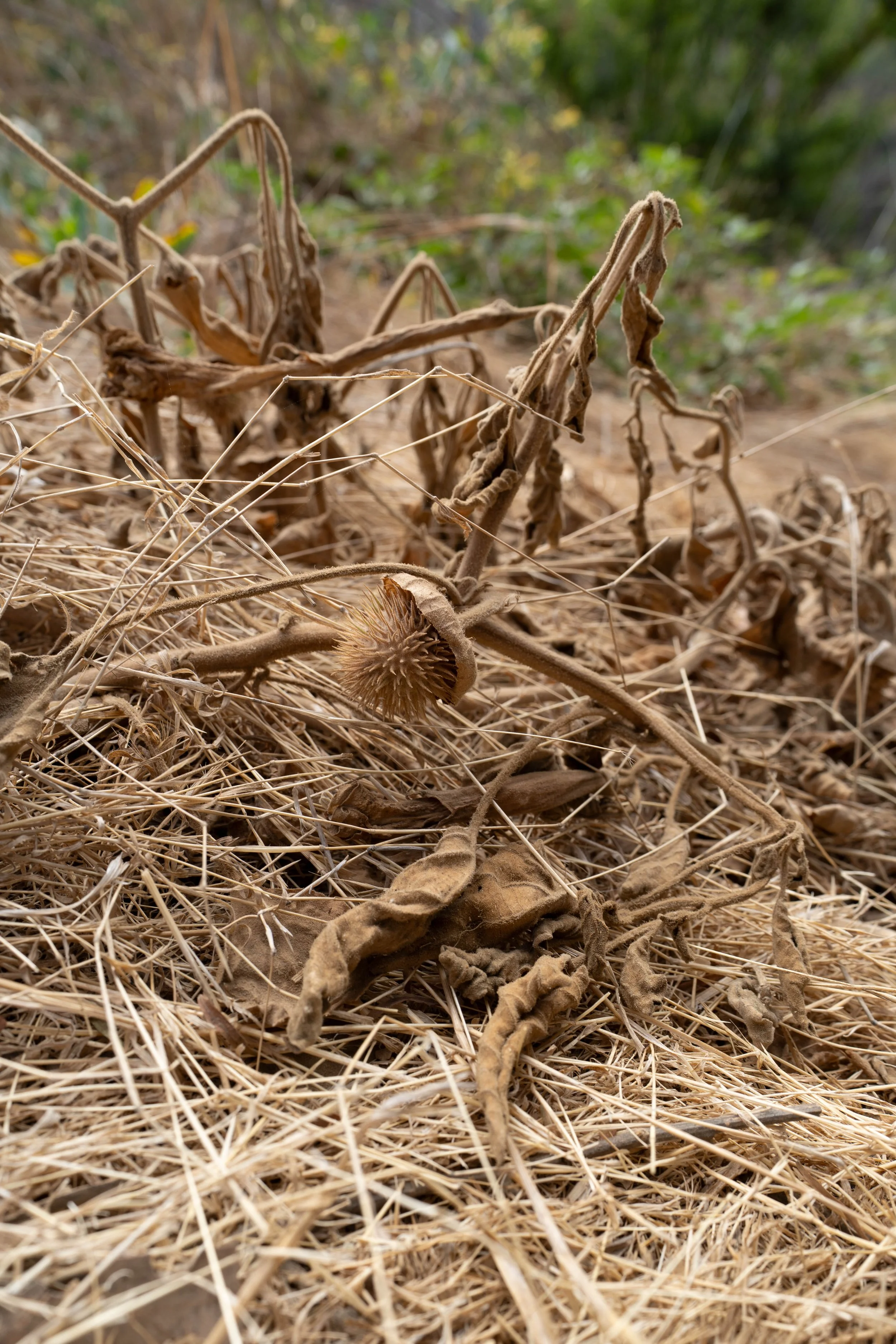
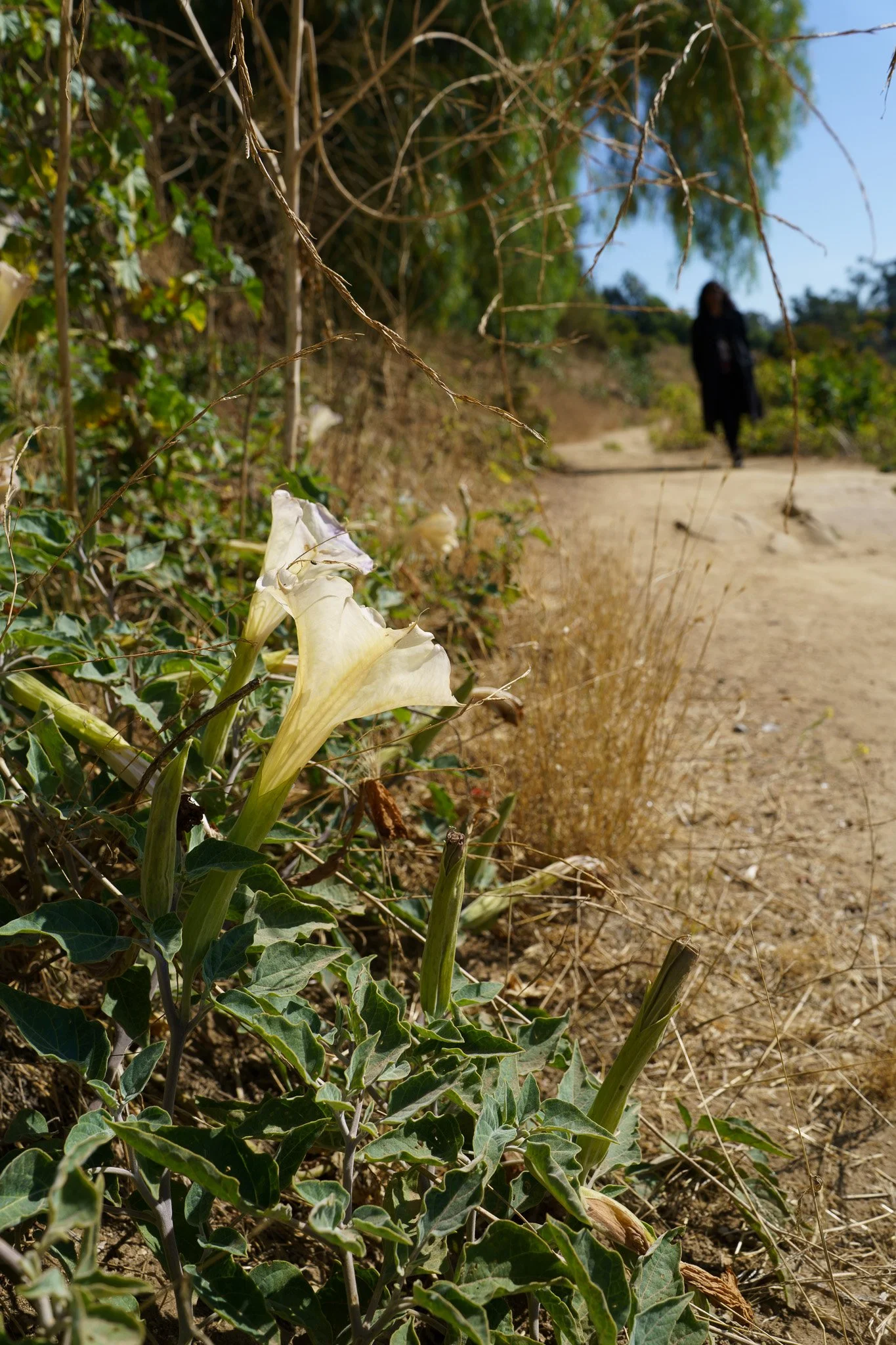
Sacred Datura
Datura wrightii
Native to Southern California and Northern Mexico, it is a highly toxic member of the nightshade family. The fragrant flowers are pollinated at night by hawkmoths, which hover like hummingbirds. Historically Indigenous healers used it for ceremonies and medical purposes, including as an anesthetic, for pain relief and in respiratory treatments.
Summer Blooming: April - October
St. Catherine's lace
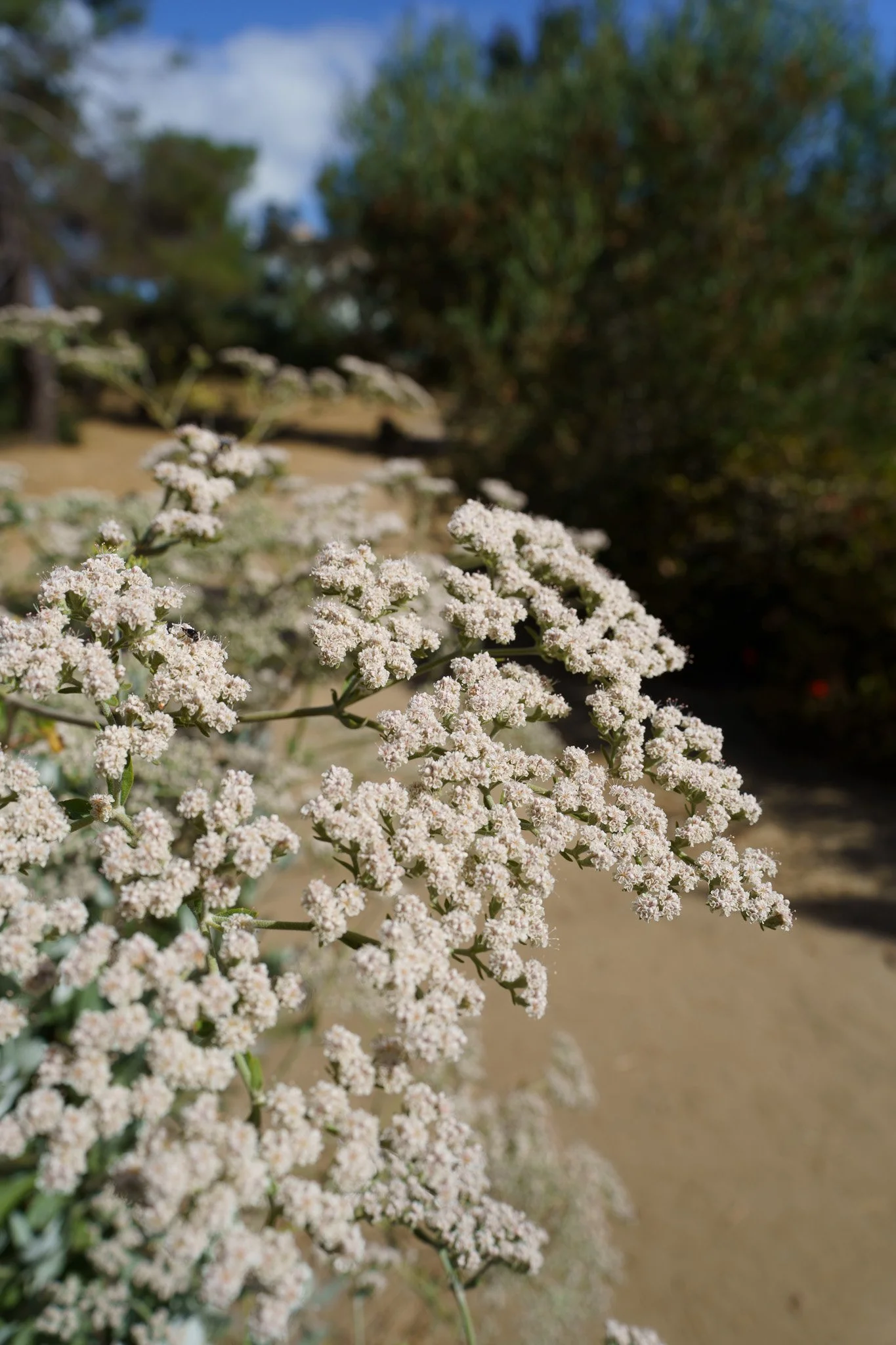
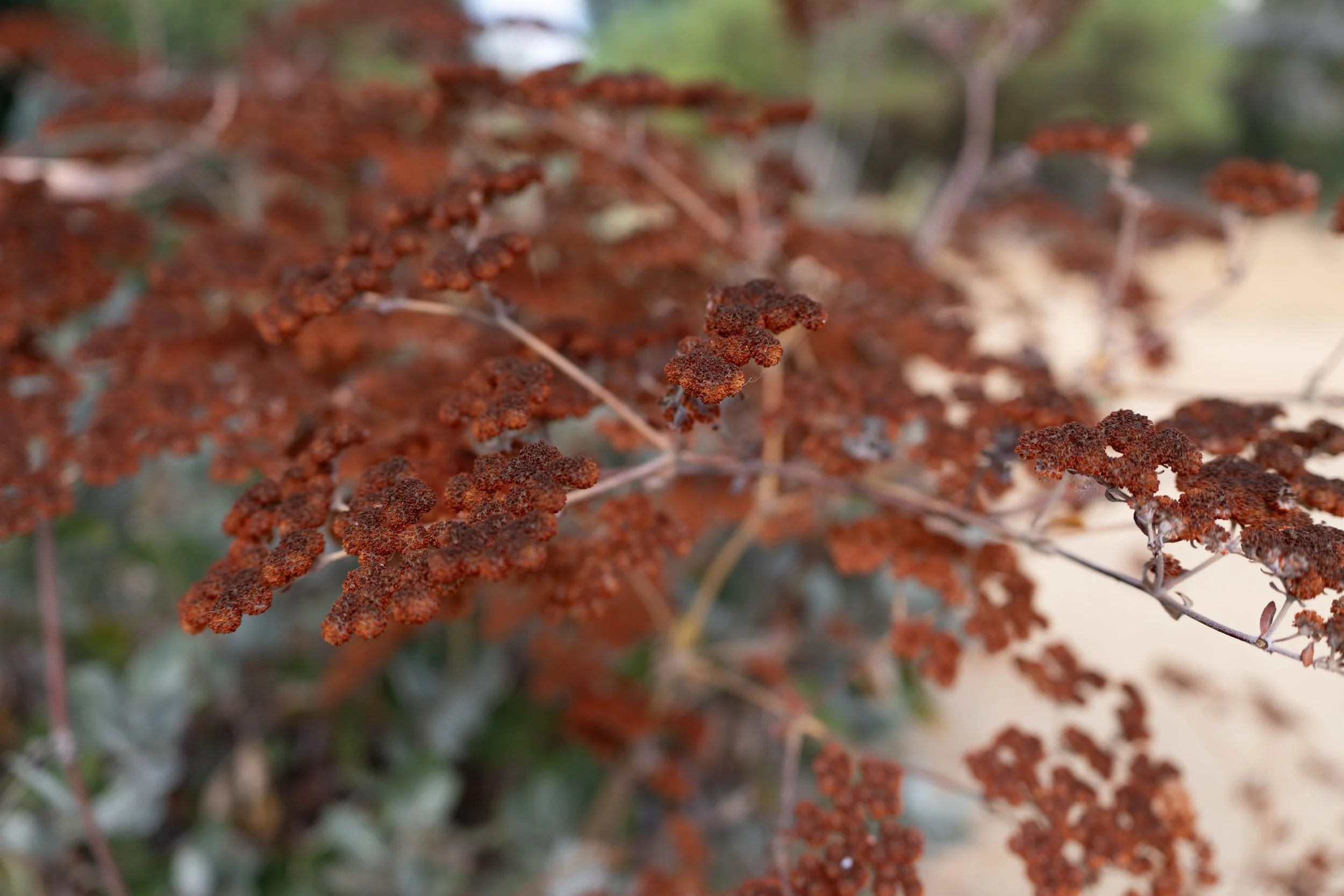
Eriogonum giganteum
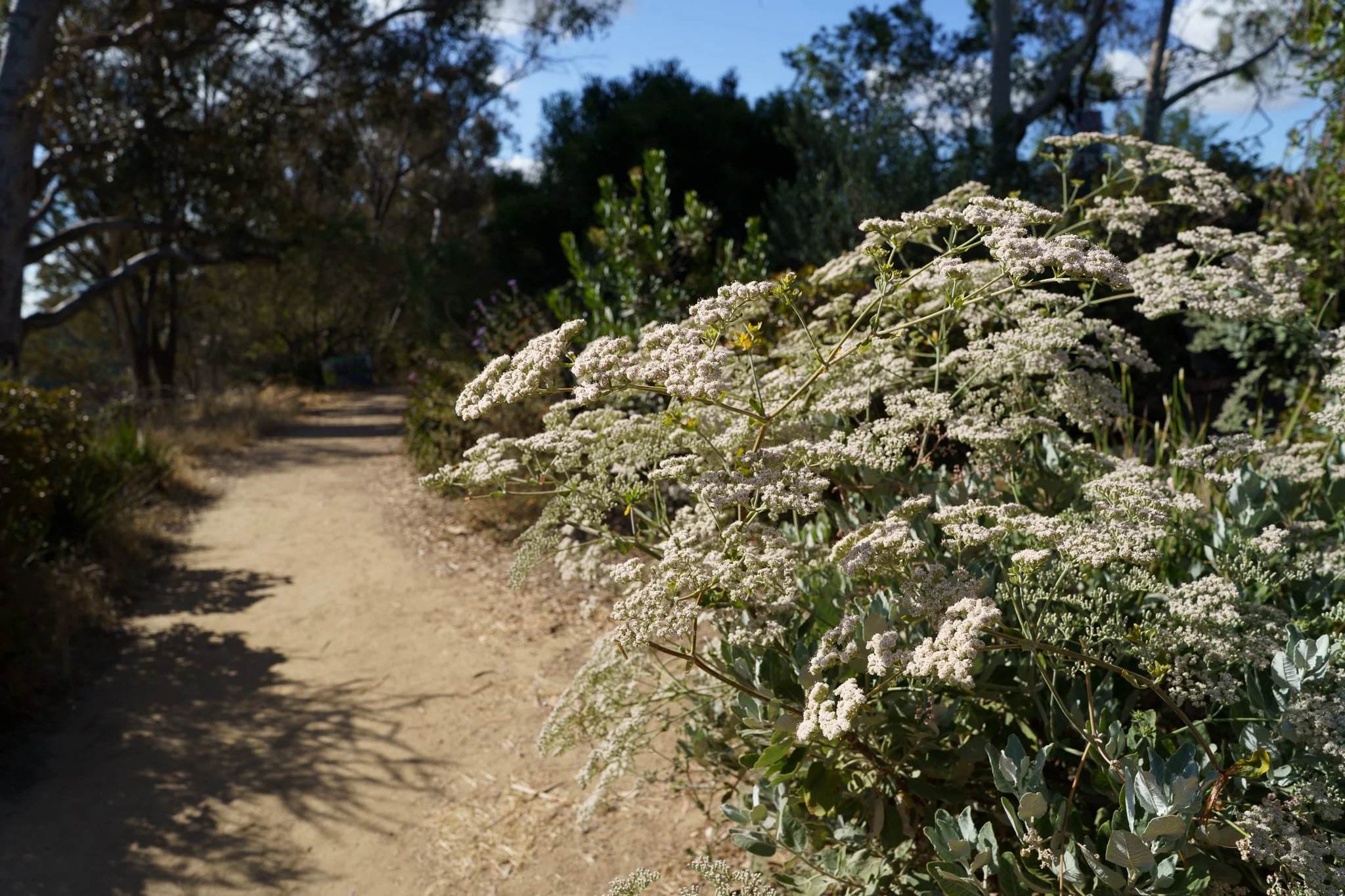
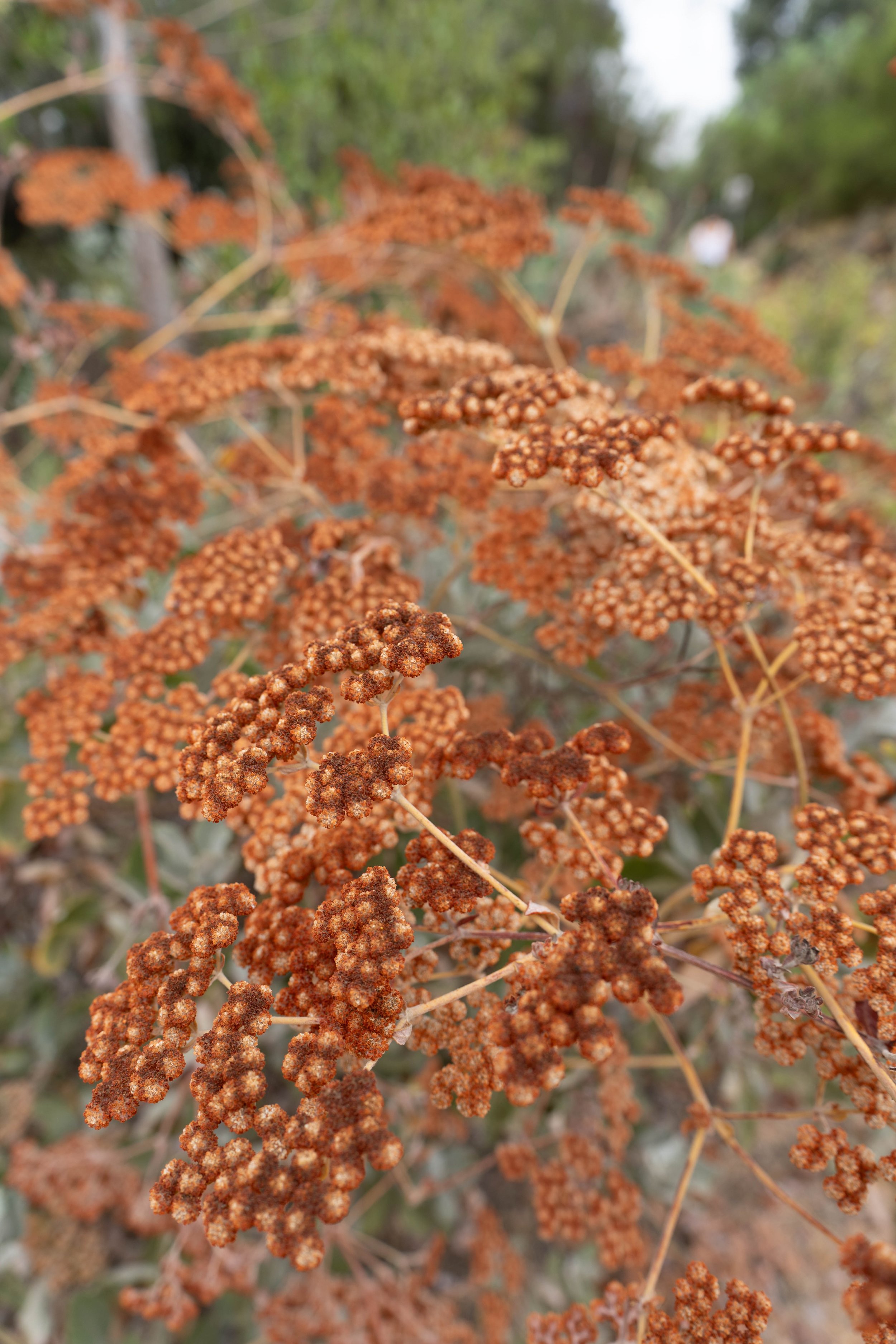
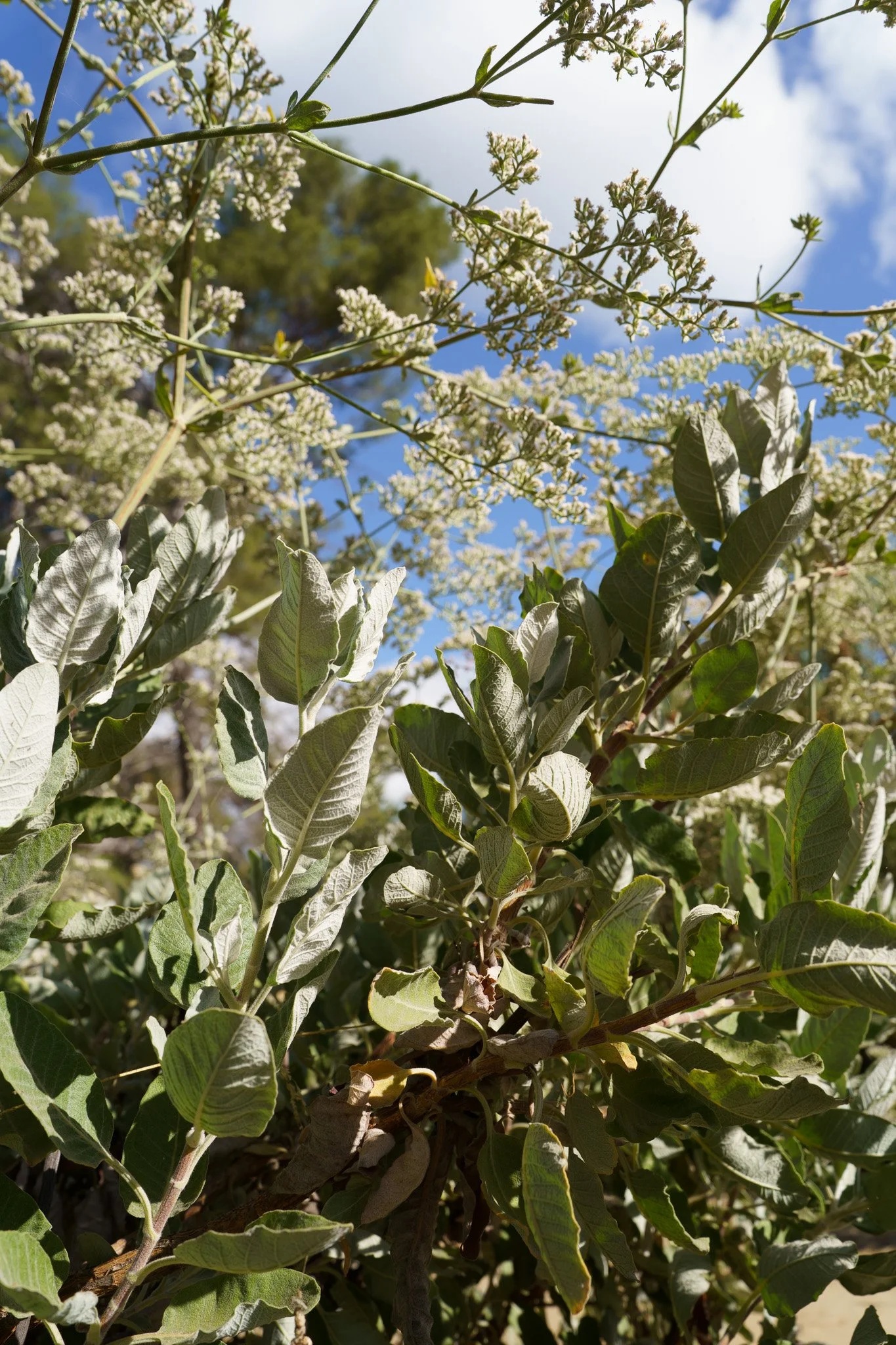
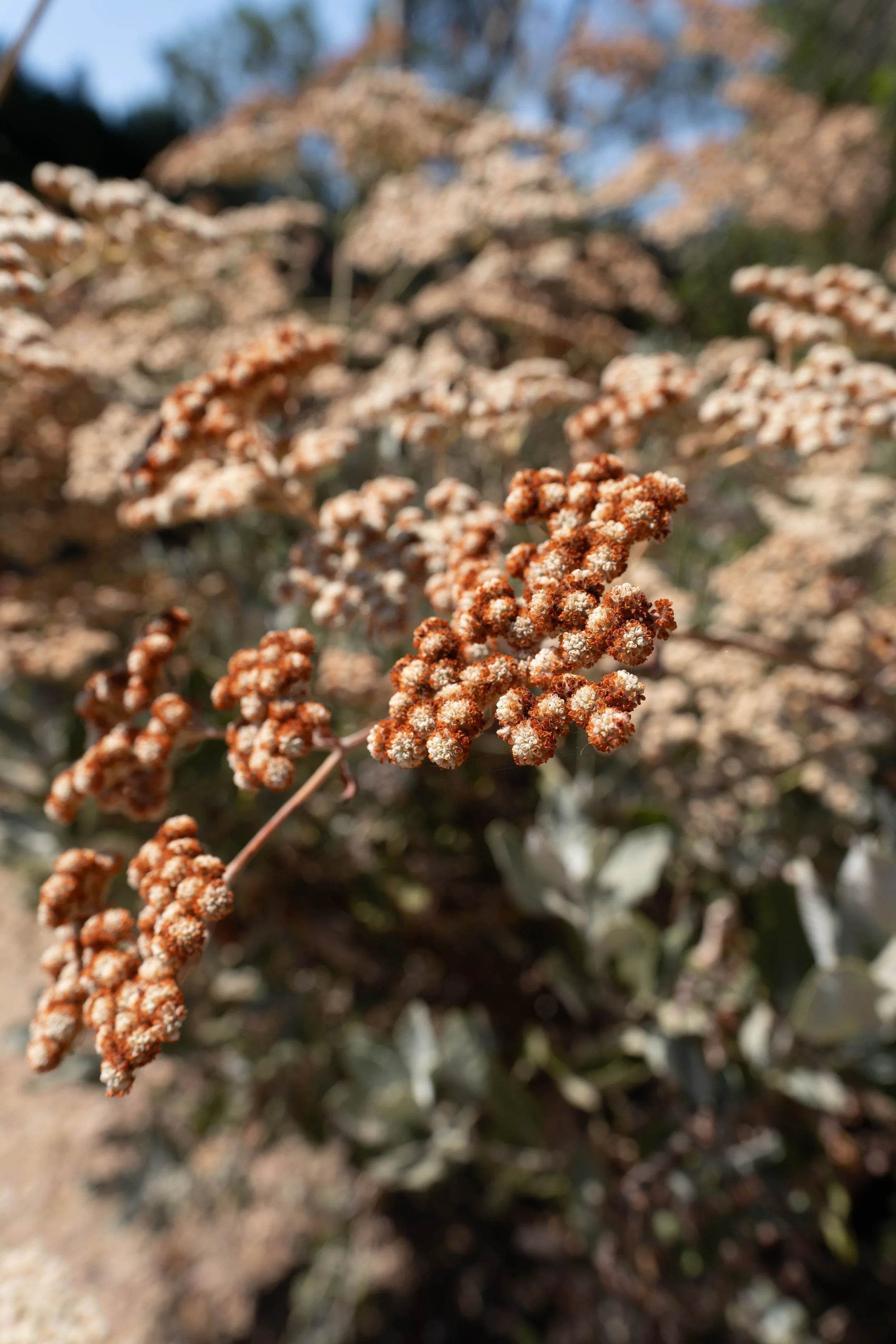
A large and showy buckwheat endemic to the Channel Islands of California. Peak bloom features massive white-to-cream clusters that attract heavy pollinator activity. But the real show is when the blossoms dry on the stem and transition from rich rust, cinnamon, to chocolate-brown tones, adding multi-season color.
Summer Blooming: May - October
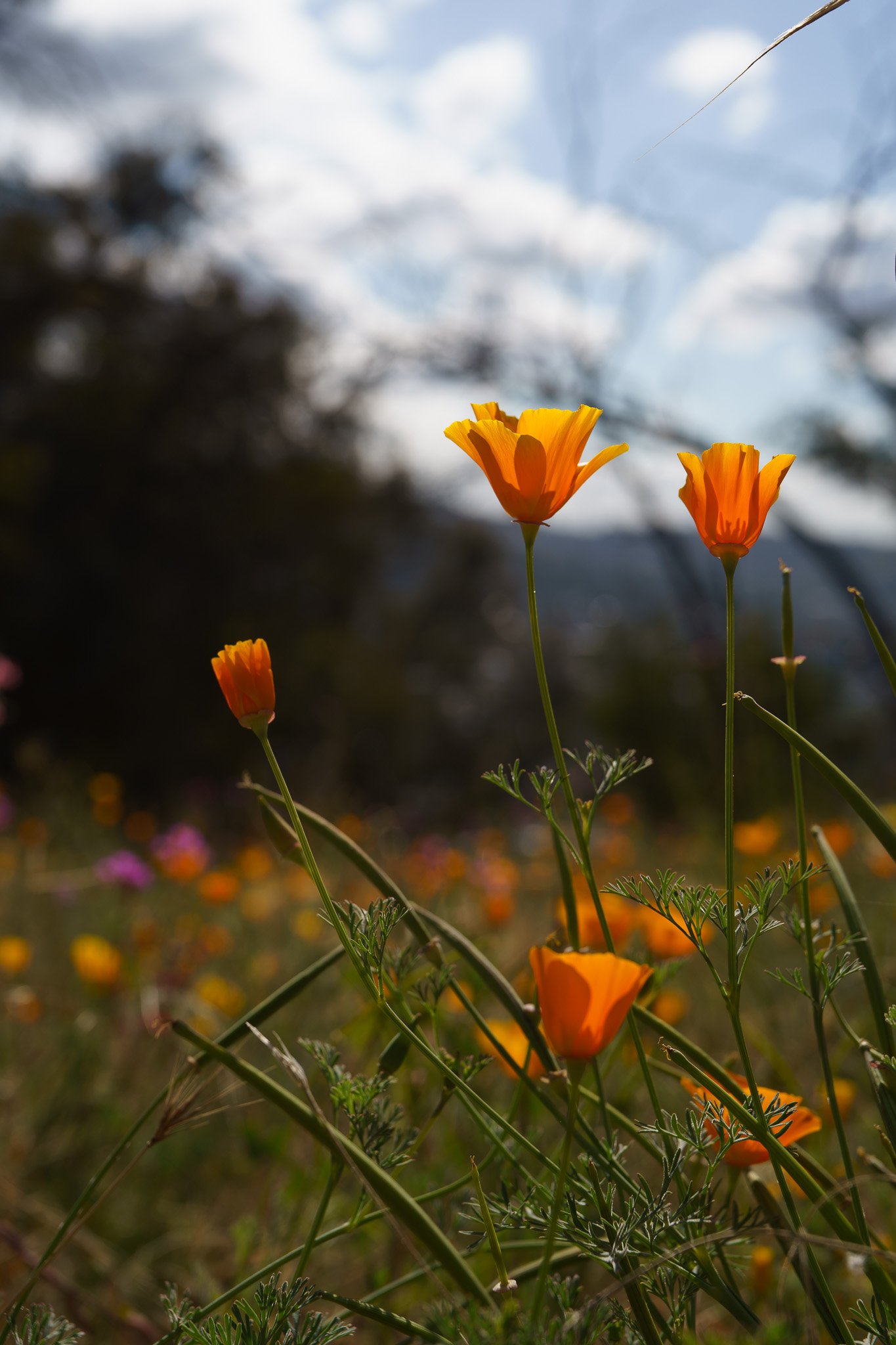
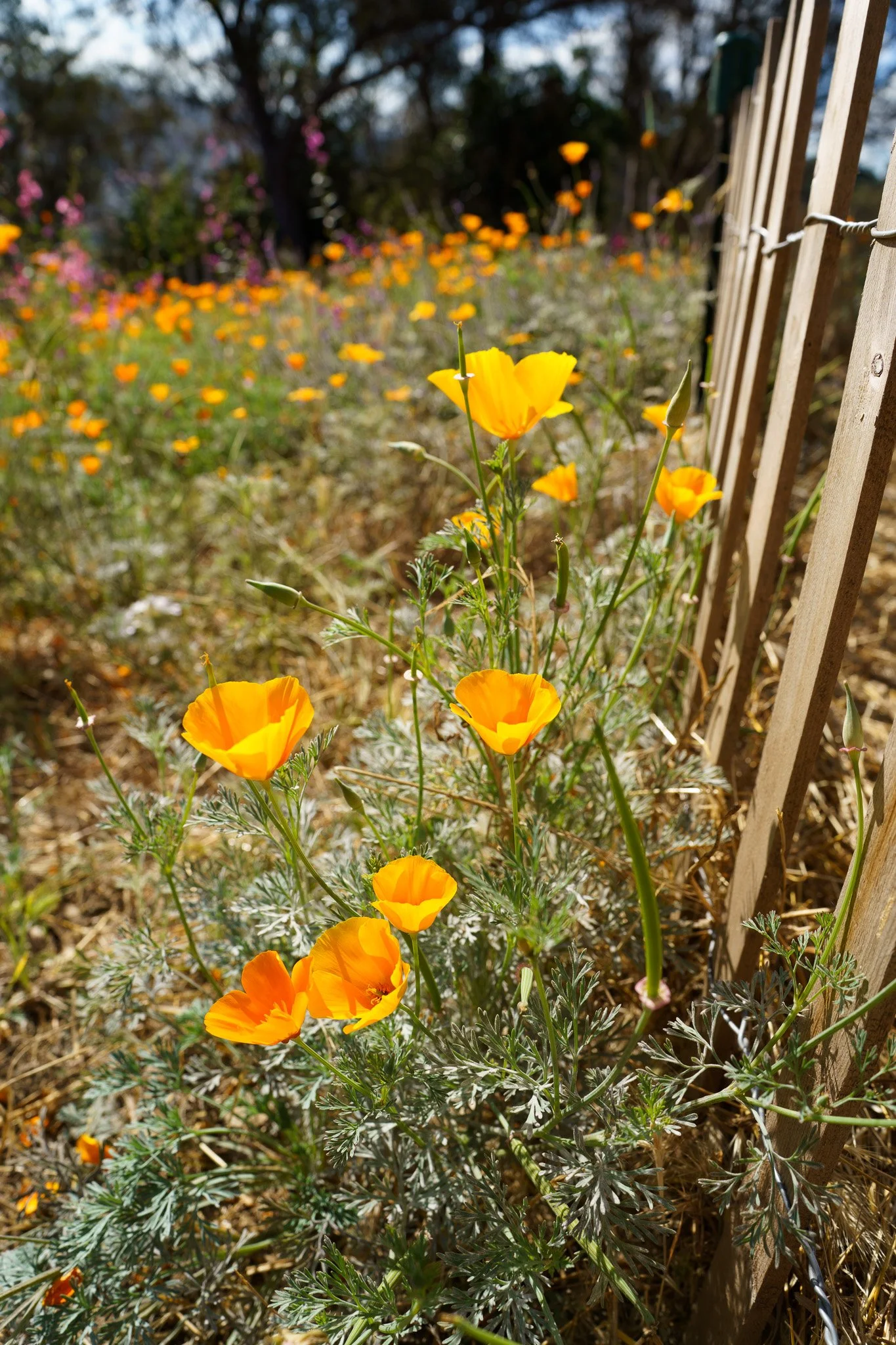
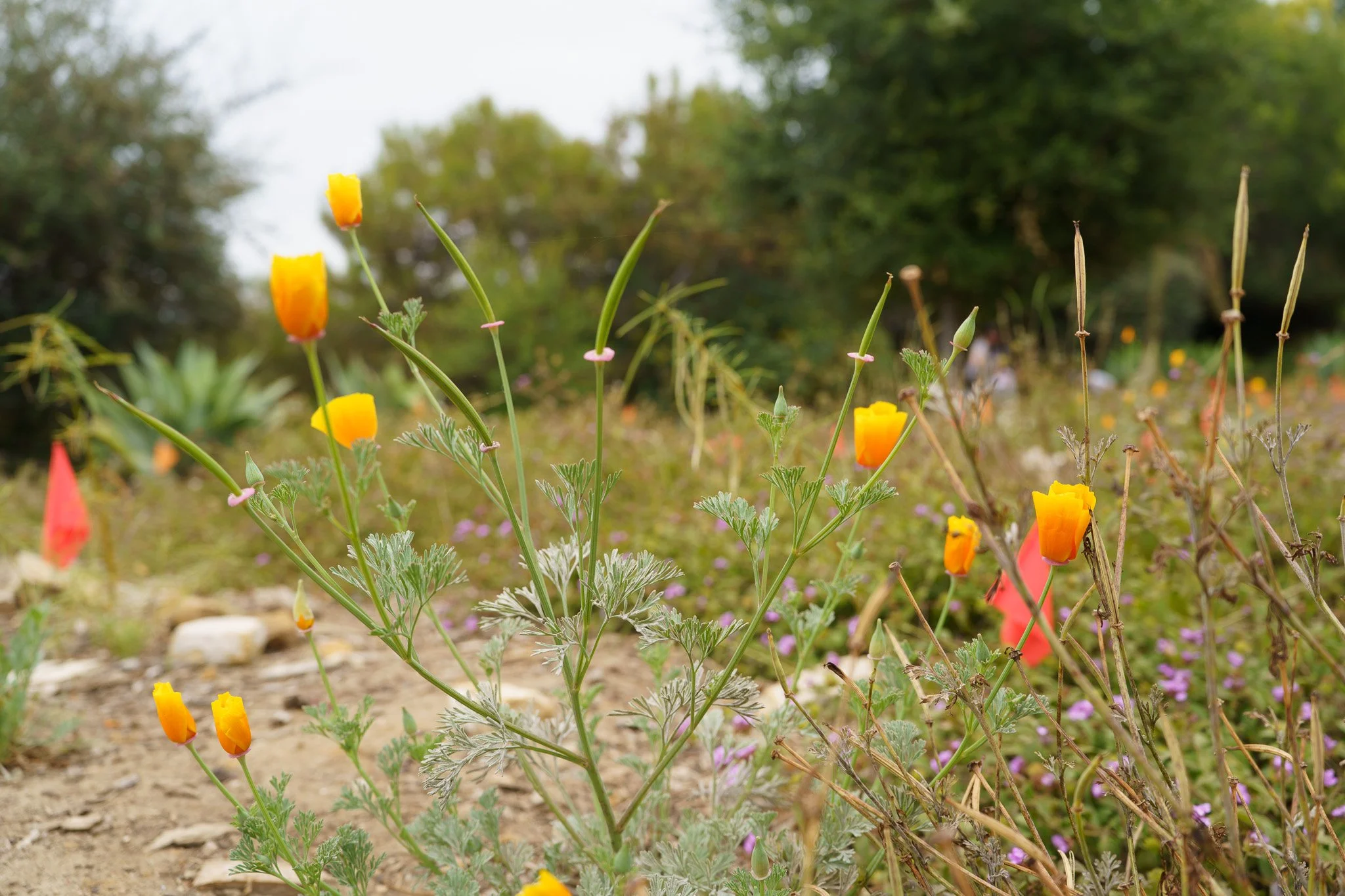
California Poppy
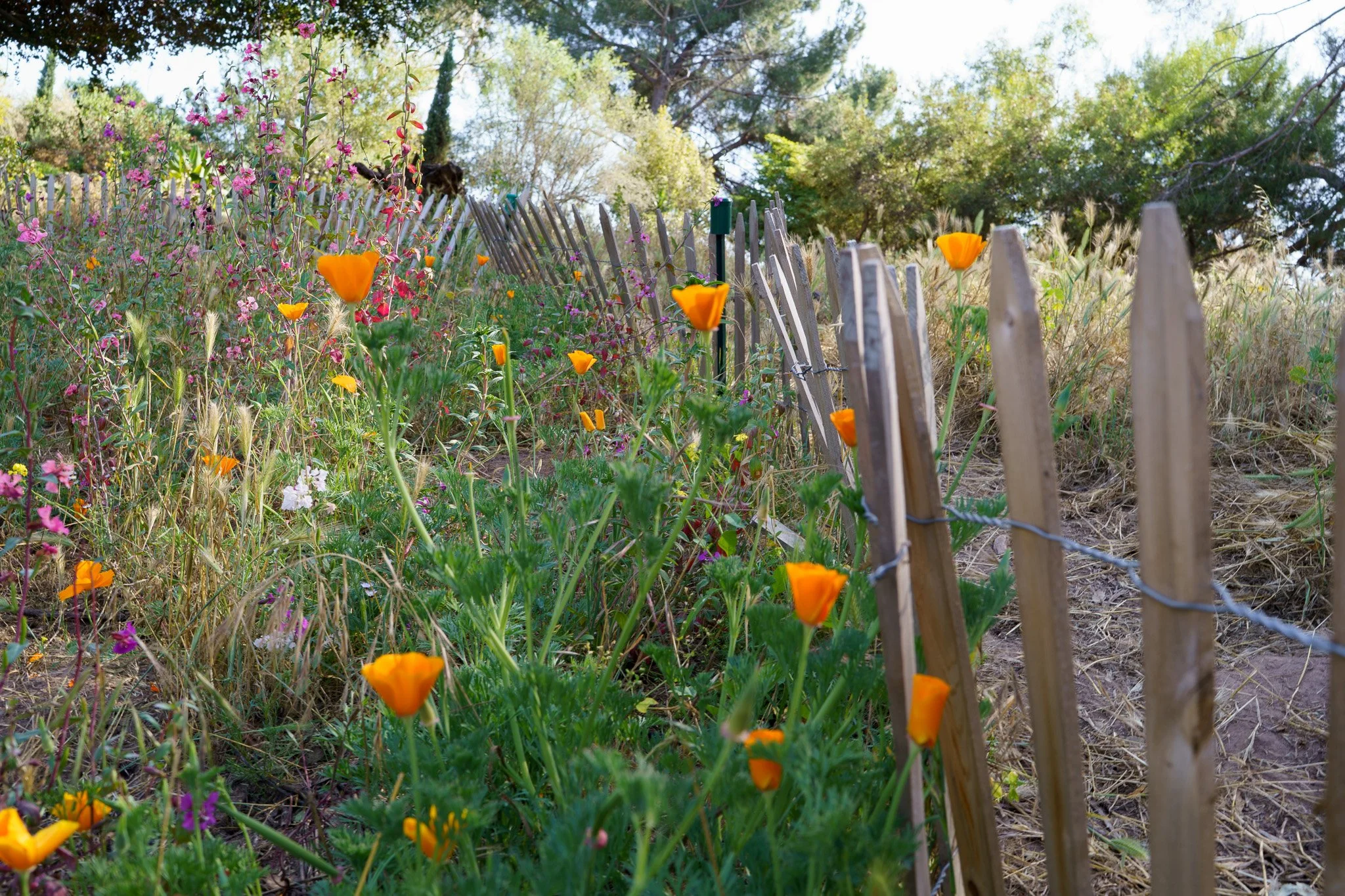
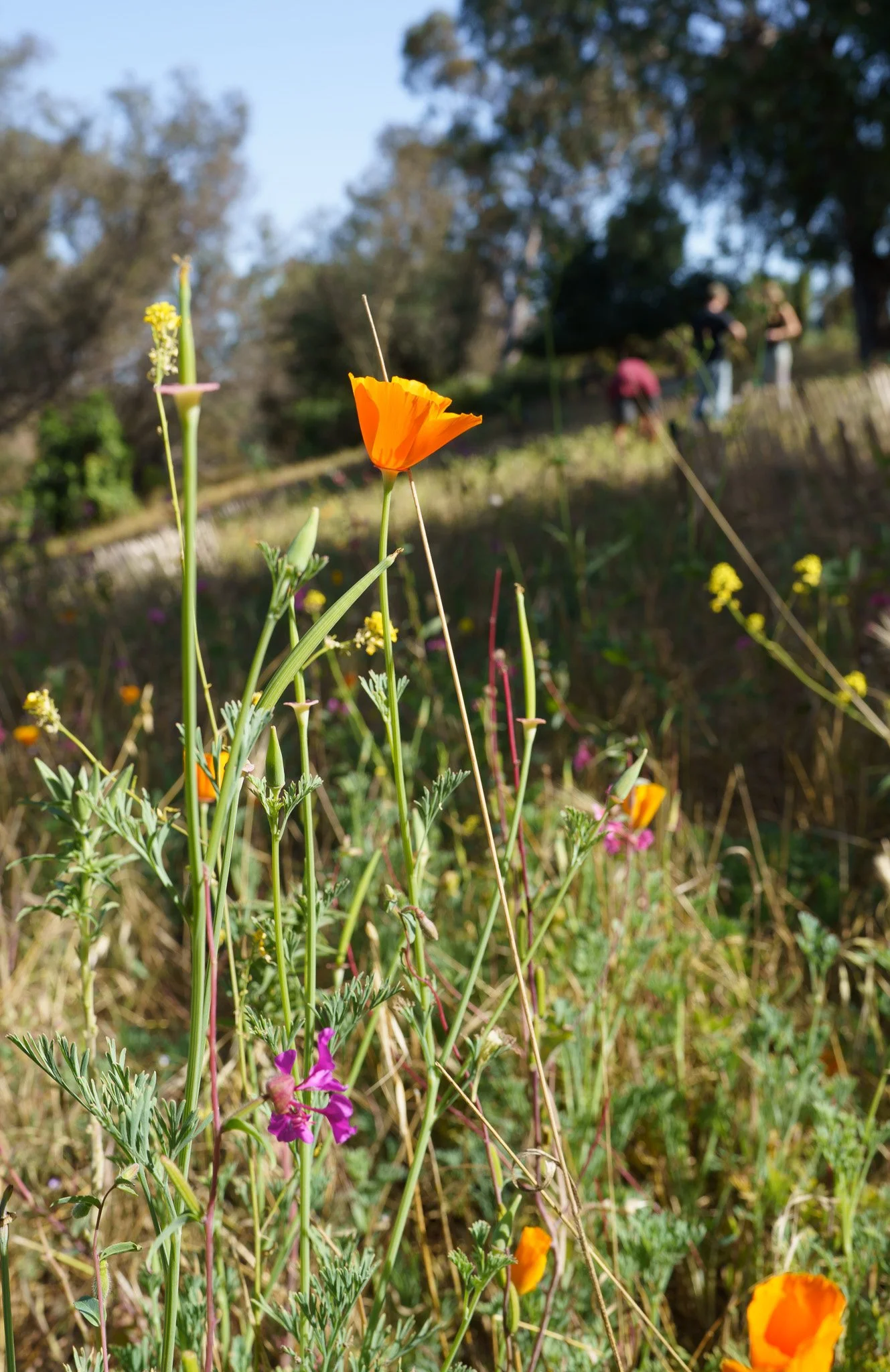
Eschscholzia californica
An annual that seeds readily. Flowers close up on cloudy days or at night. Prefers poor, sandy, or well-draining soil. Highly drought-tolerant once it starts growing. Needs very little water. Attracts helpful pollinators like bees and butterflies. Native American tribes used it as a remedy for sleep or pain. Named the official state flower in 1903. April 6 is Poppy Day.
Summer Blooming: July - November
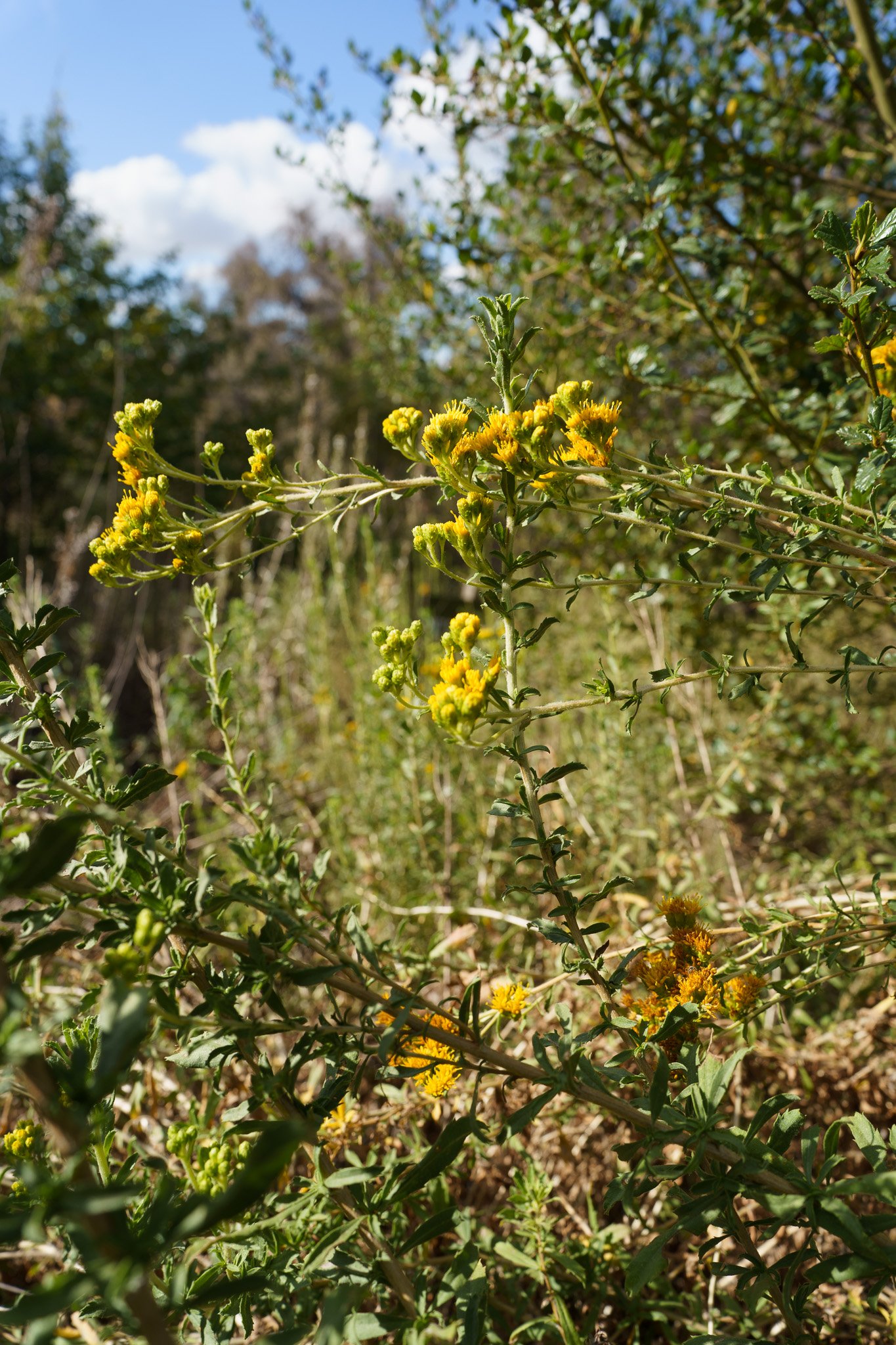
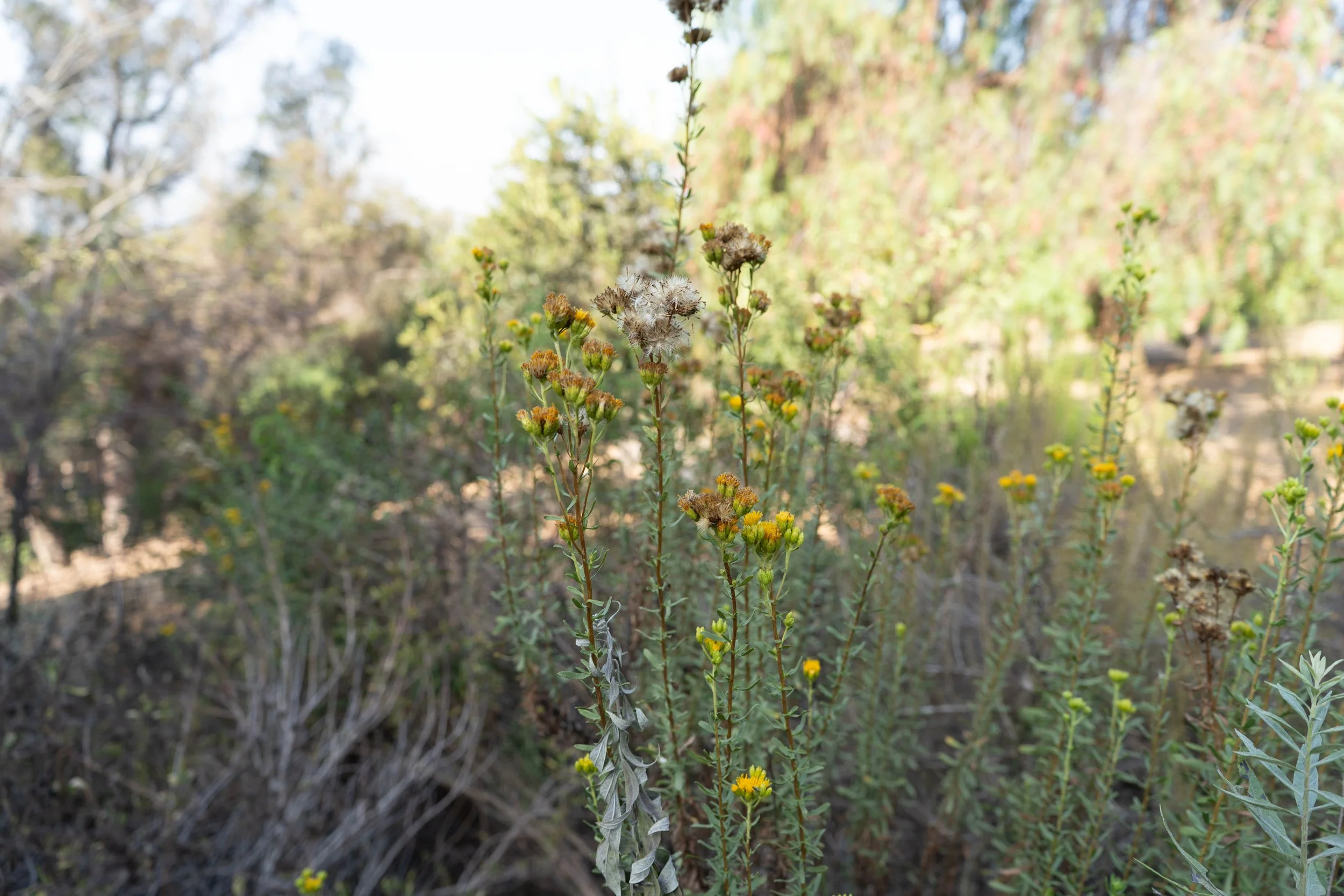
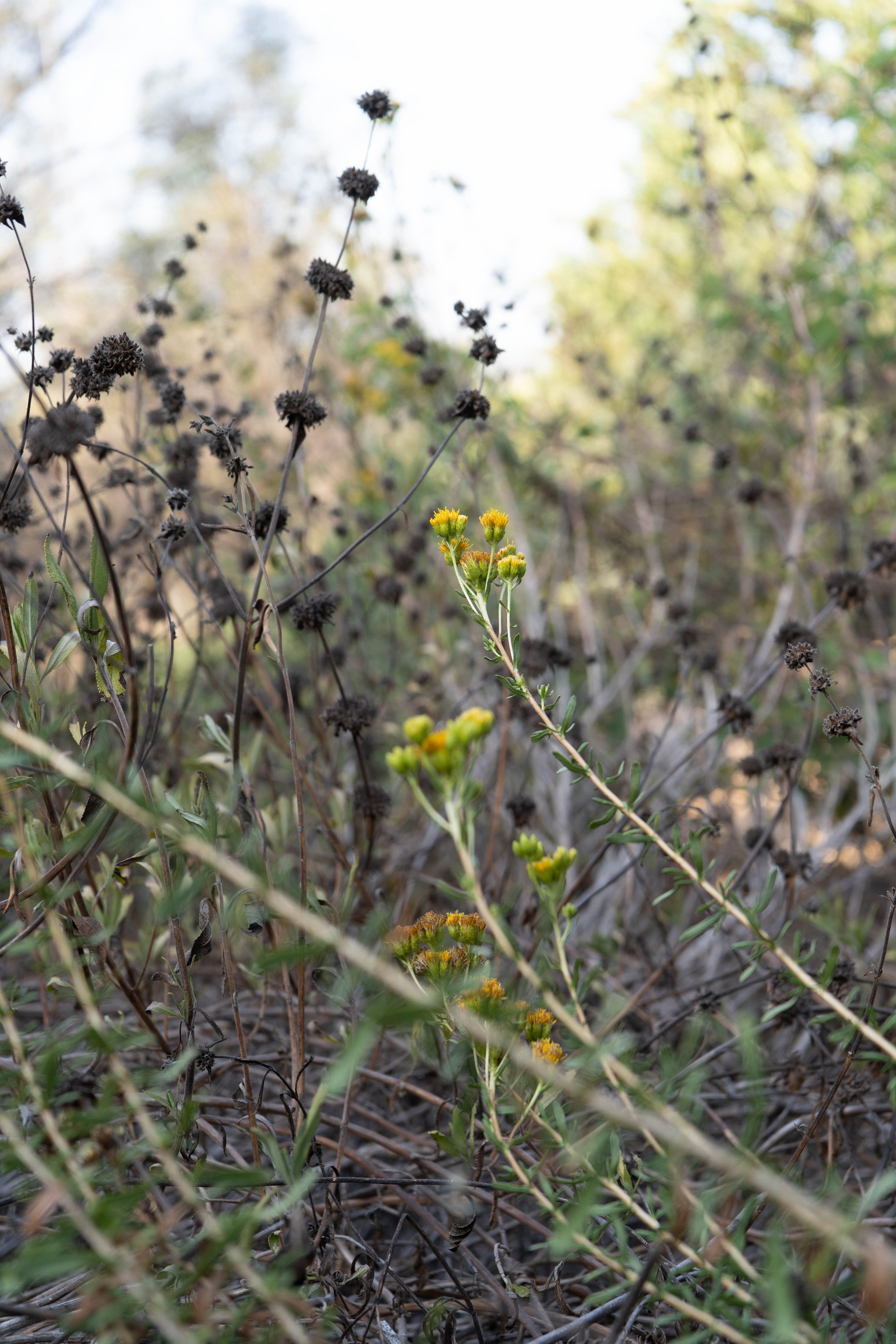
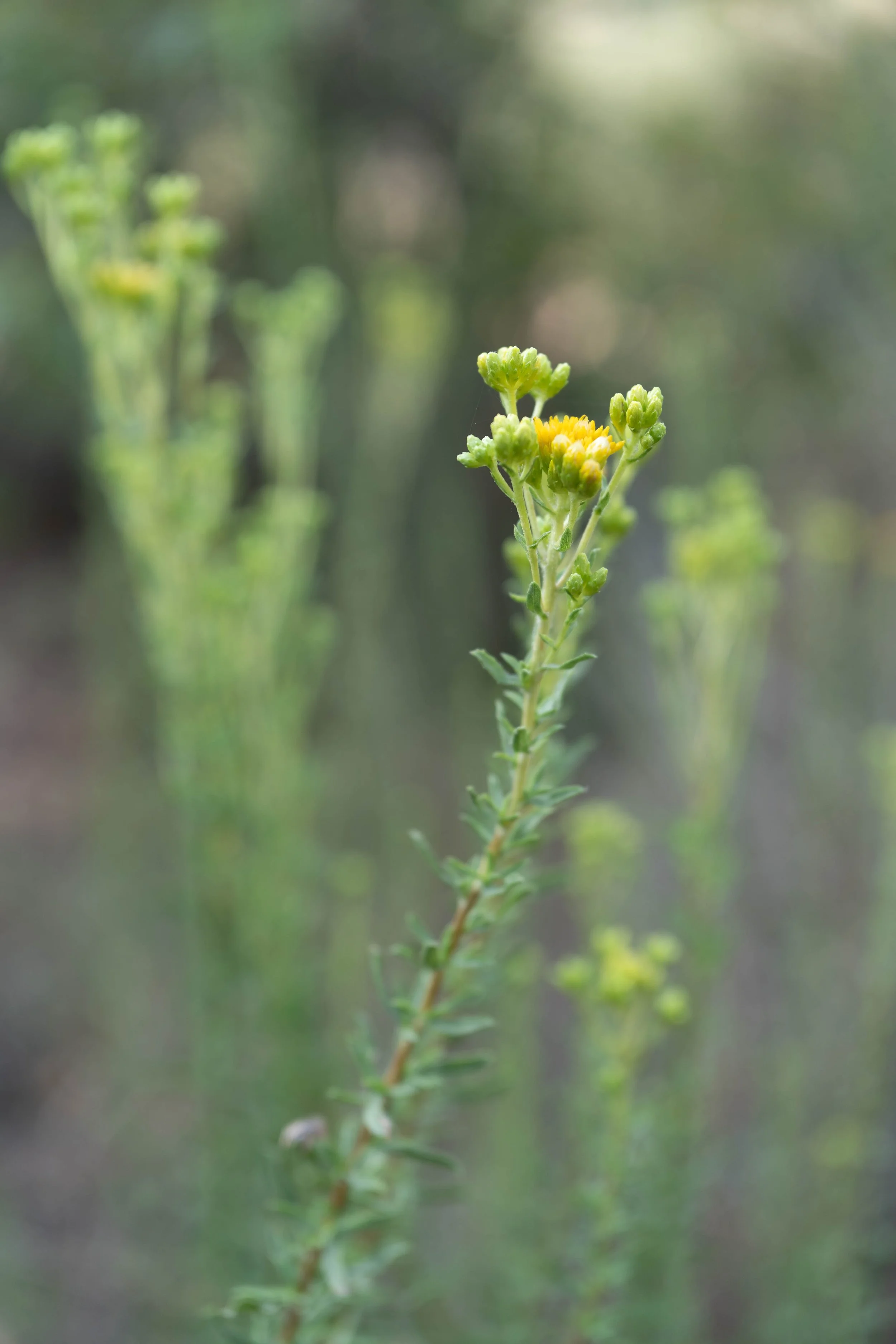
Coastal Goldenbush
Isocoma menziesii
Is often the only summer bloomer in sight. The vivid yellow flower heads intensify in brightness during the hot summer and fall months, providing nectar for butterflies, insects and bees when most other native plants have finished blooming and gone dormant.
Summer Blooming: July - November
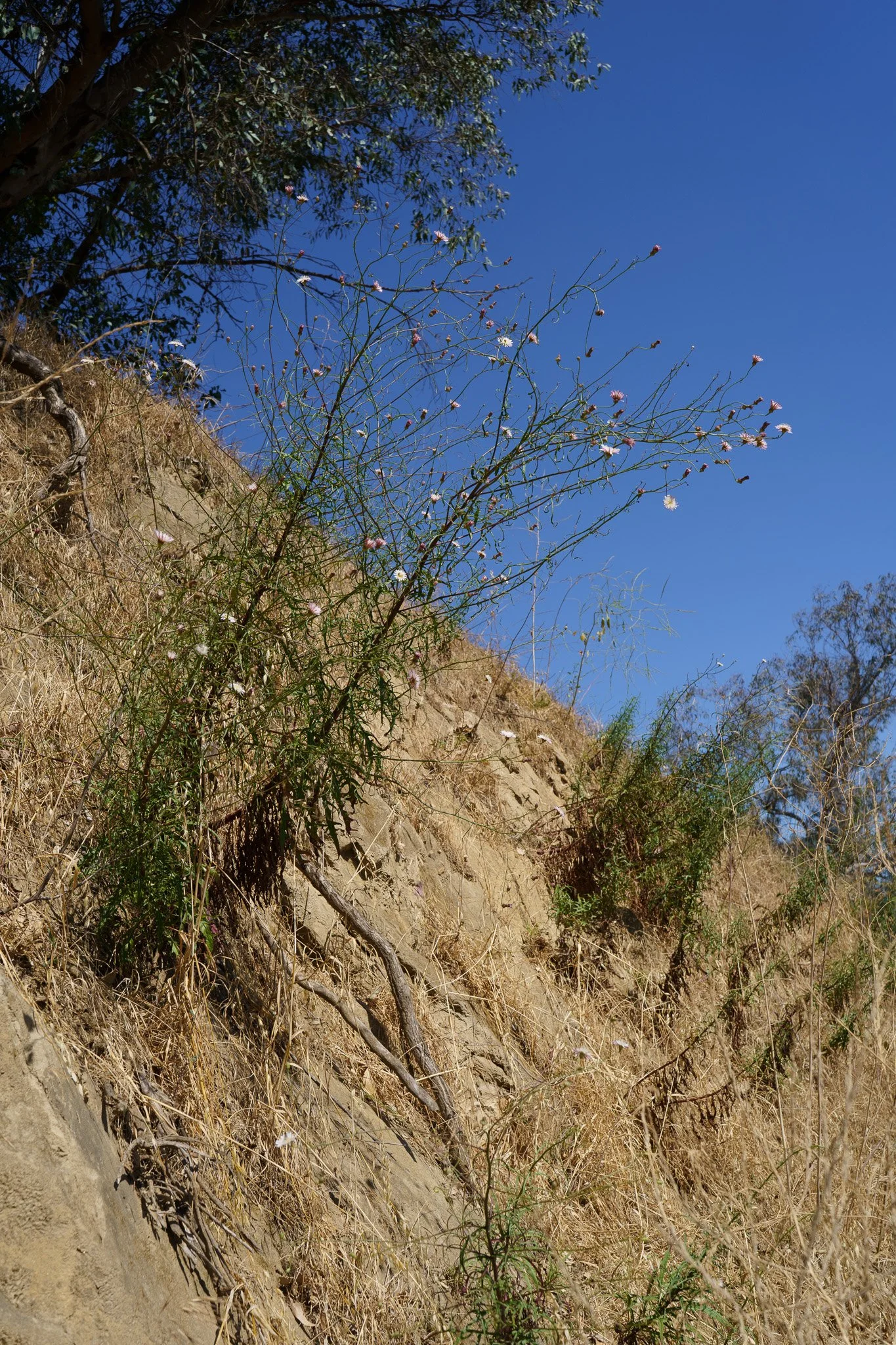
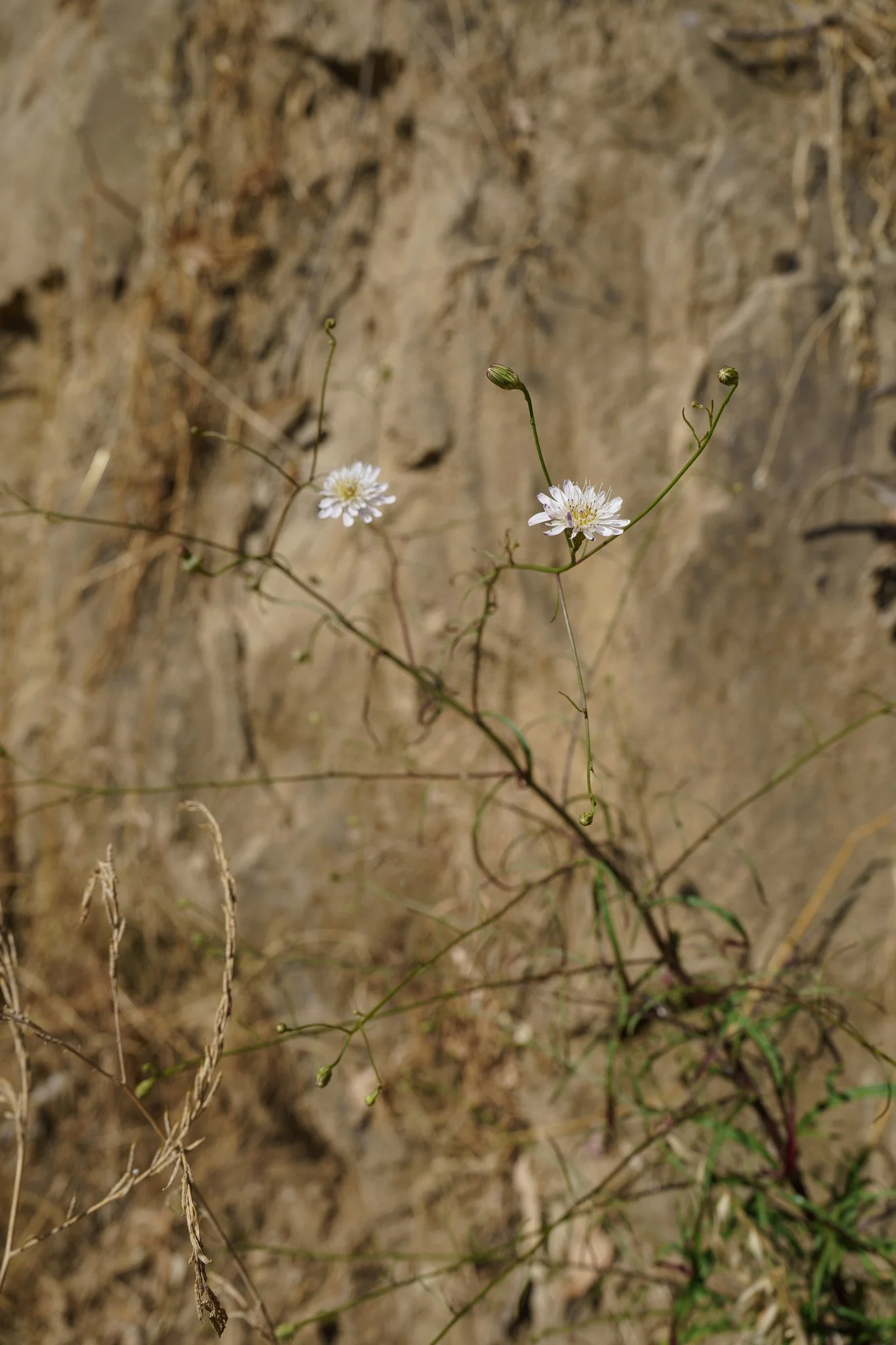
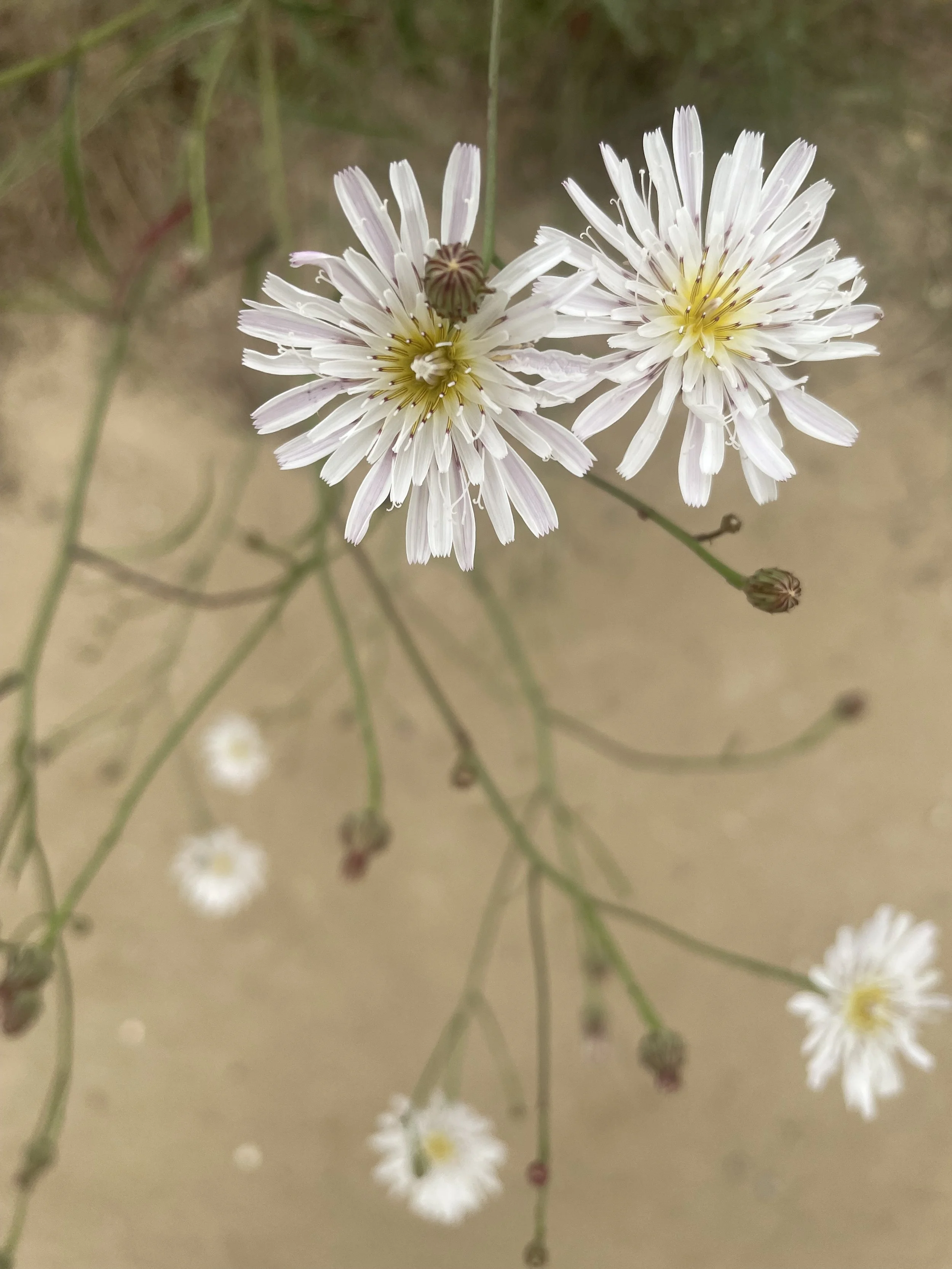
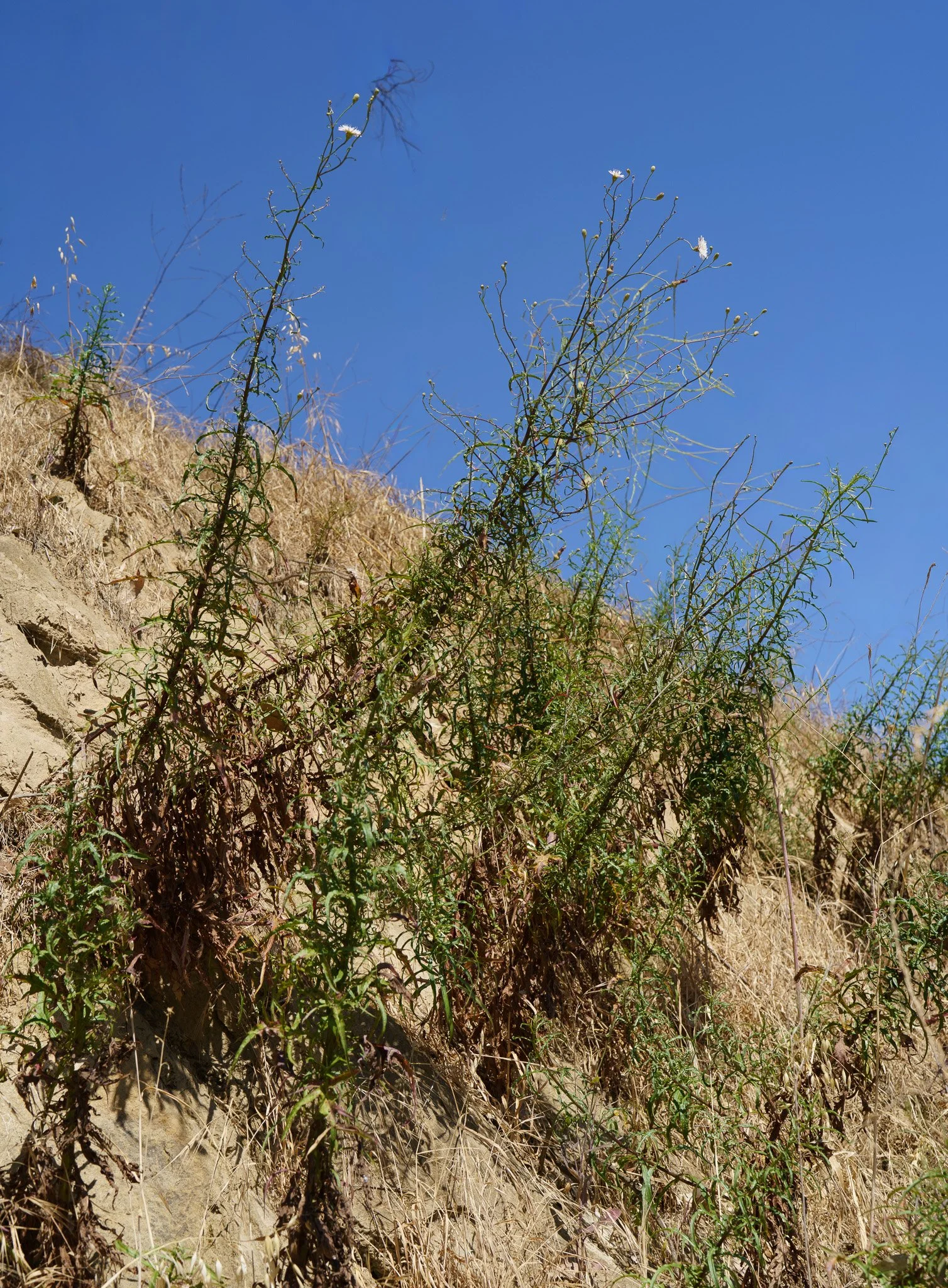
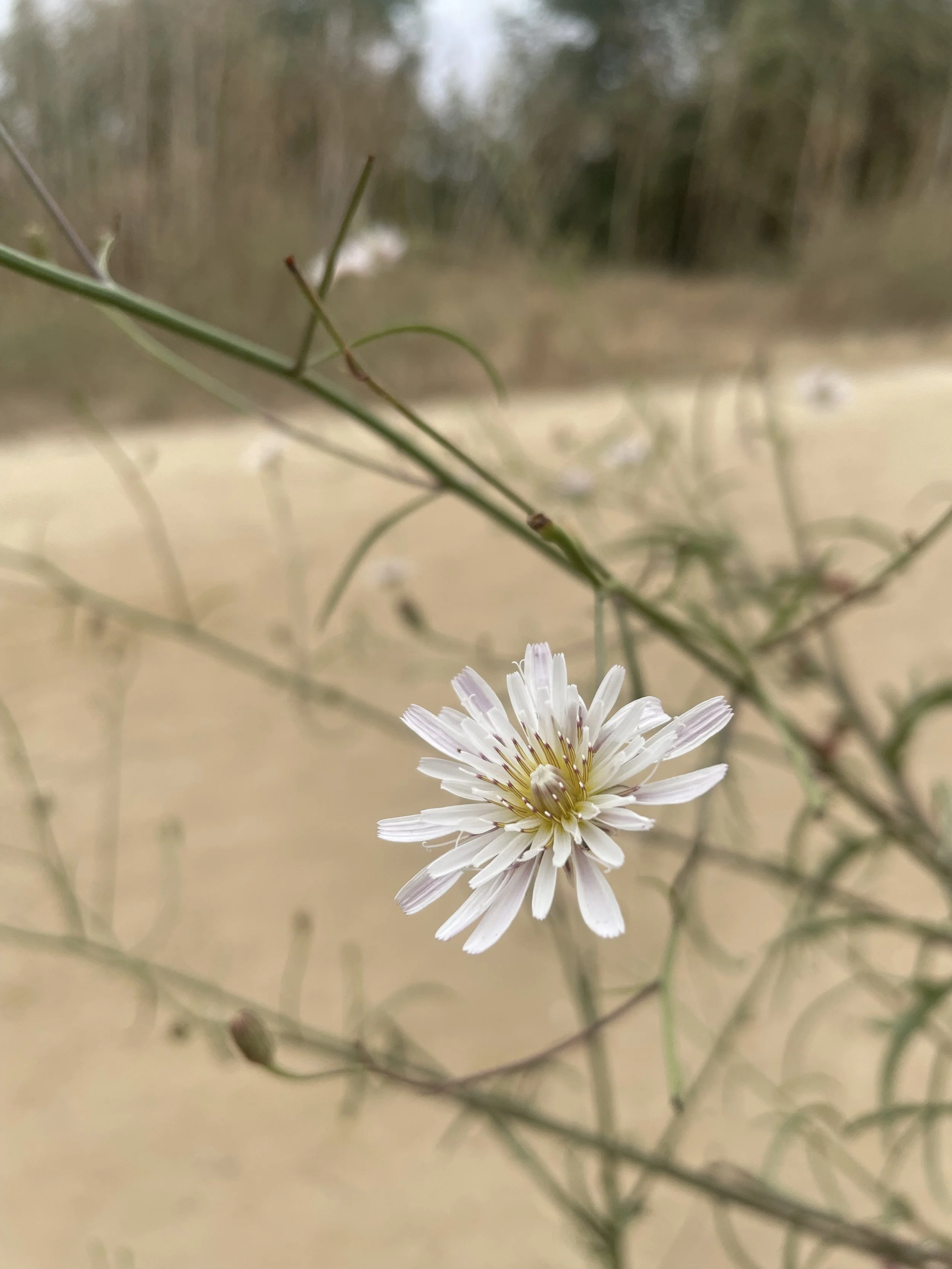
Cliff Aster
Malacothrix saxatilis
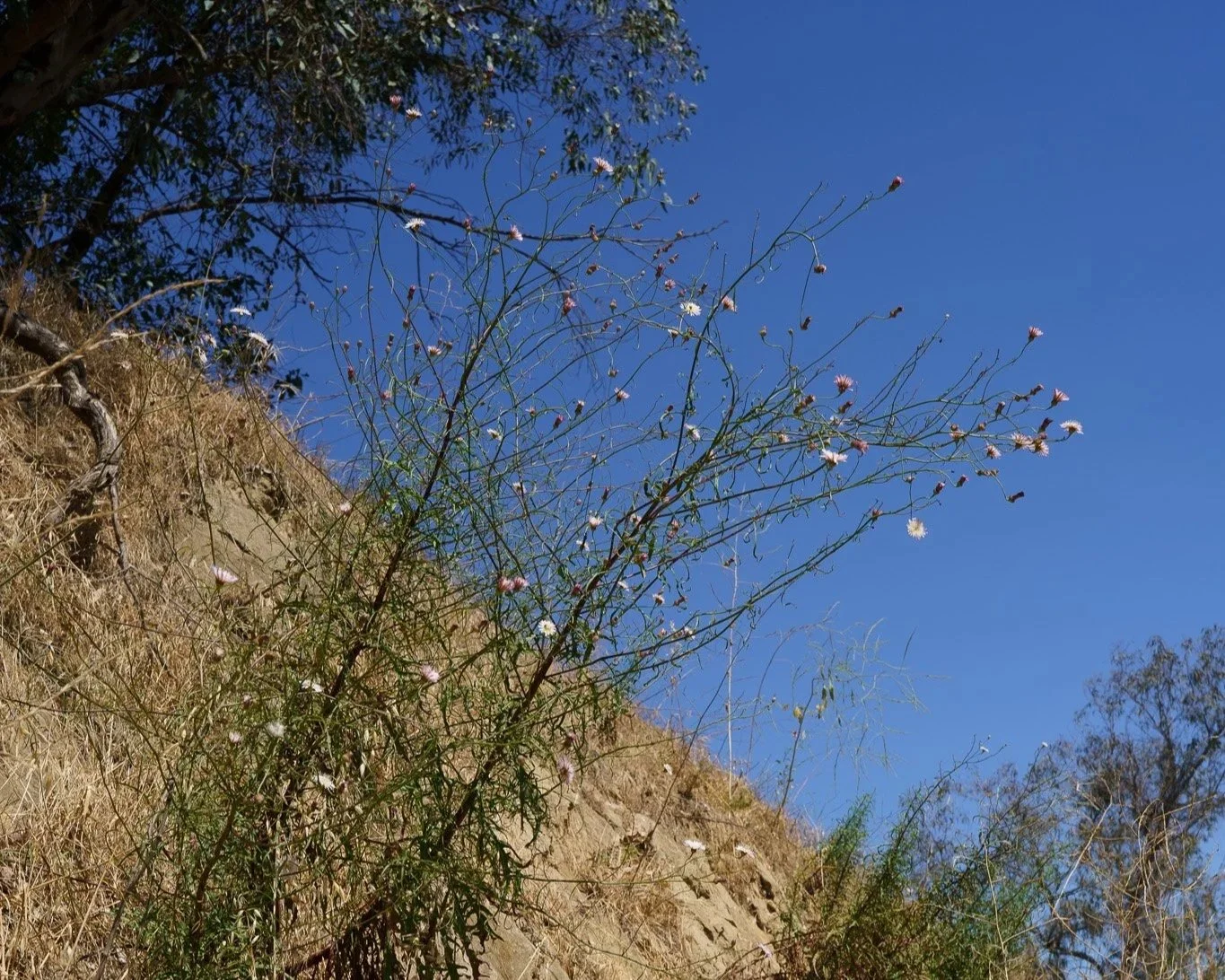
One of our favorites here at FoEP. Many can be found on the backside (North facing slope) of the West Loop Trail. Cliff aster is a California native perennial herb found in coastal and desert regions in rocky habitats, typically growing in exposed areas with sparse vegetation. Flowering from April to October, its white ray-like flowers, are often striped with with pink or rose on the underside. It can sporadically flower all year round in Elysian Park’s chaparral habitat.
Summer Blooming: March - October
Autumn Blooming
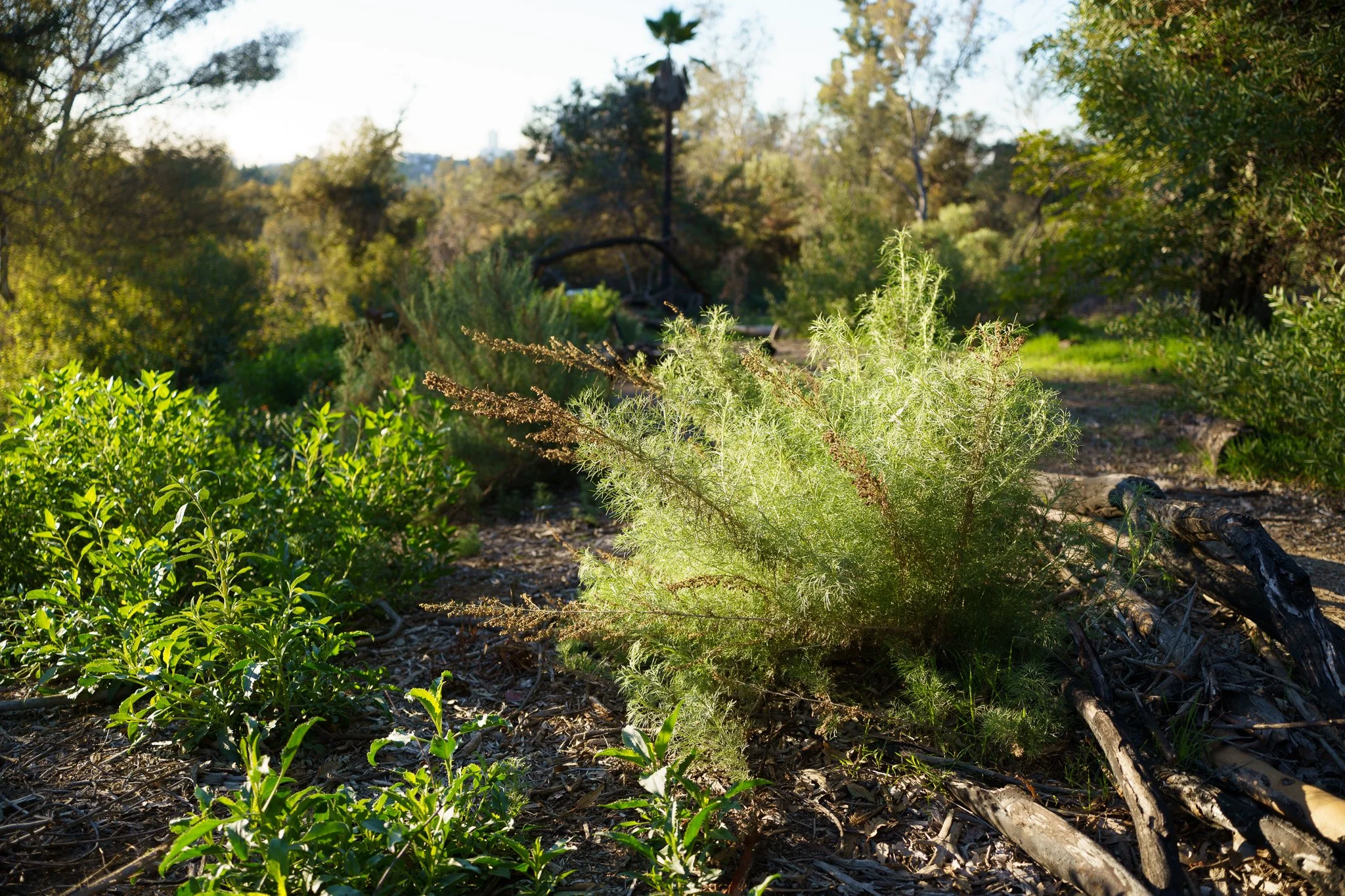
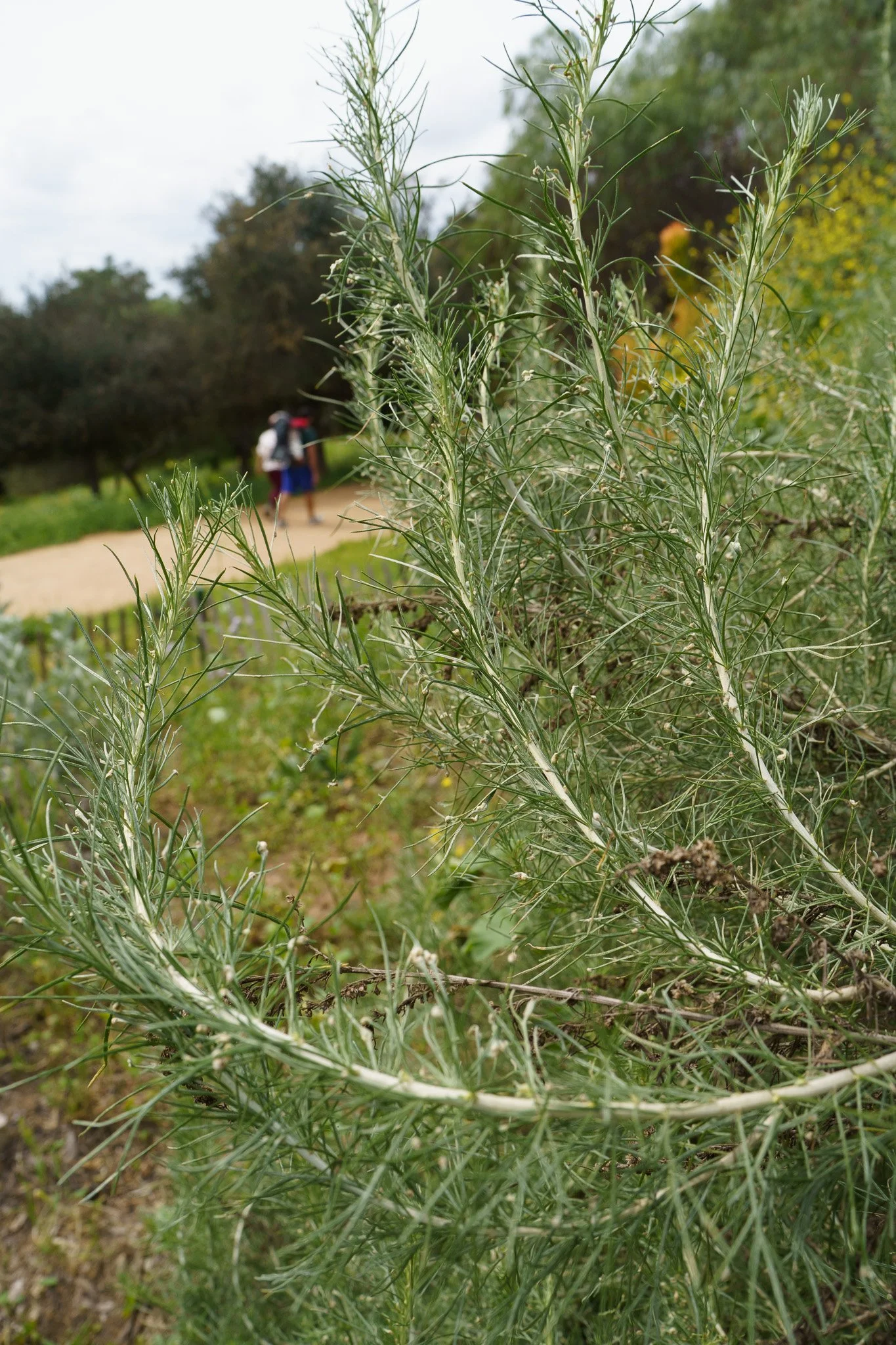
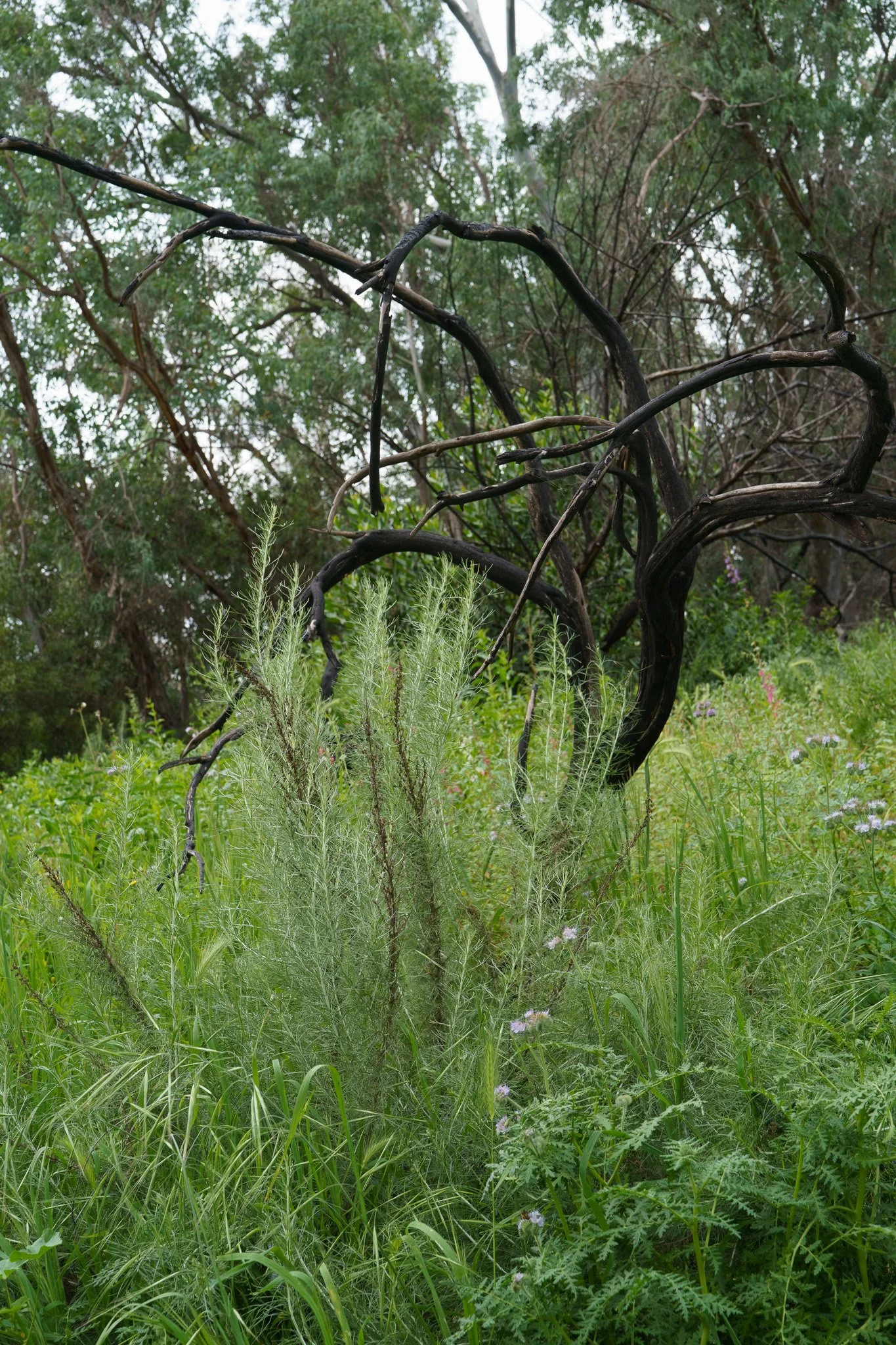
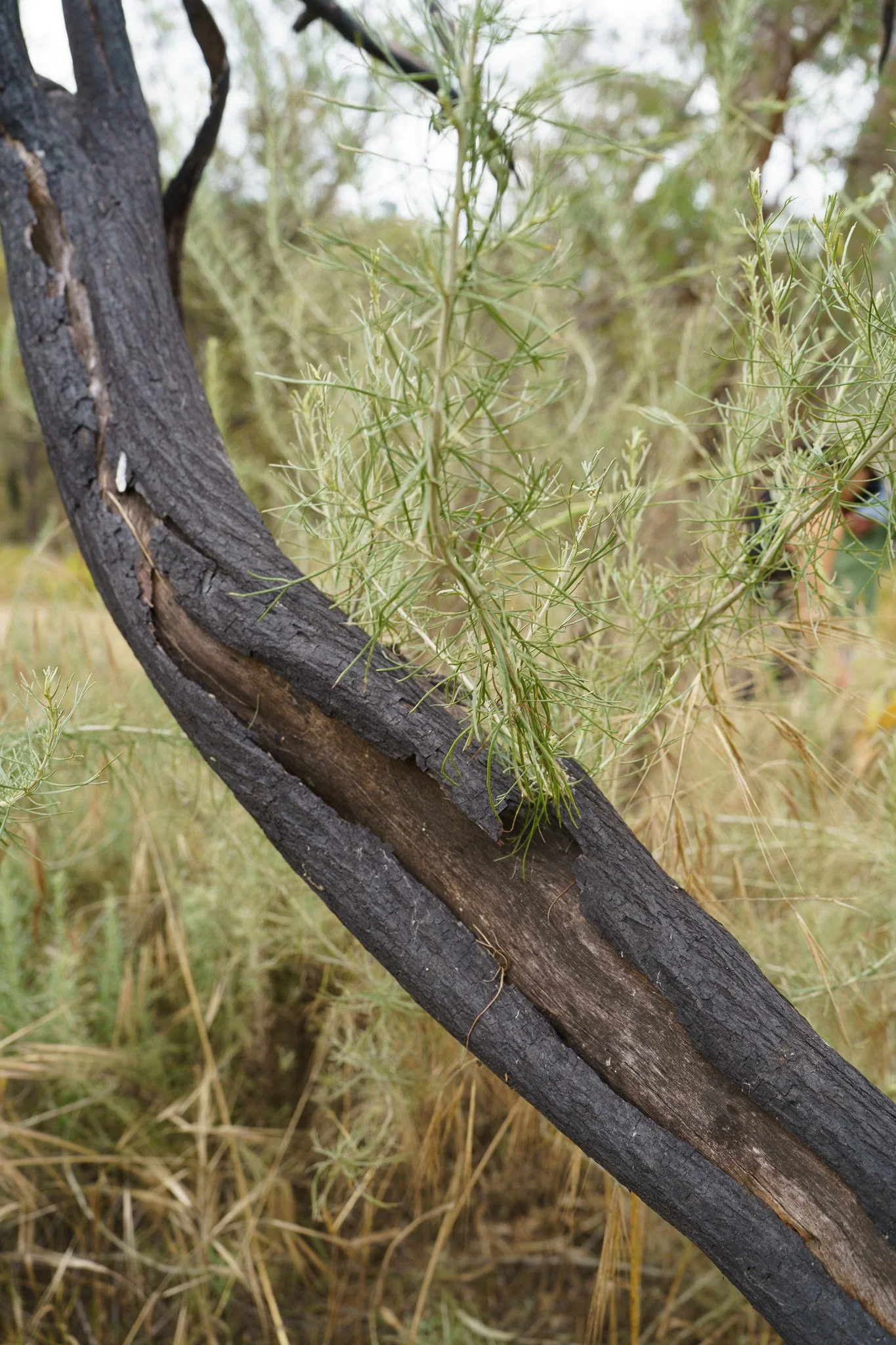
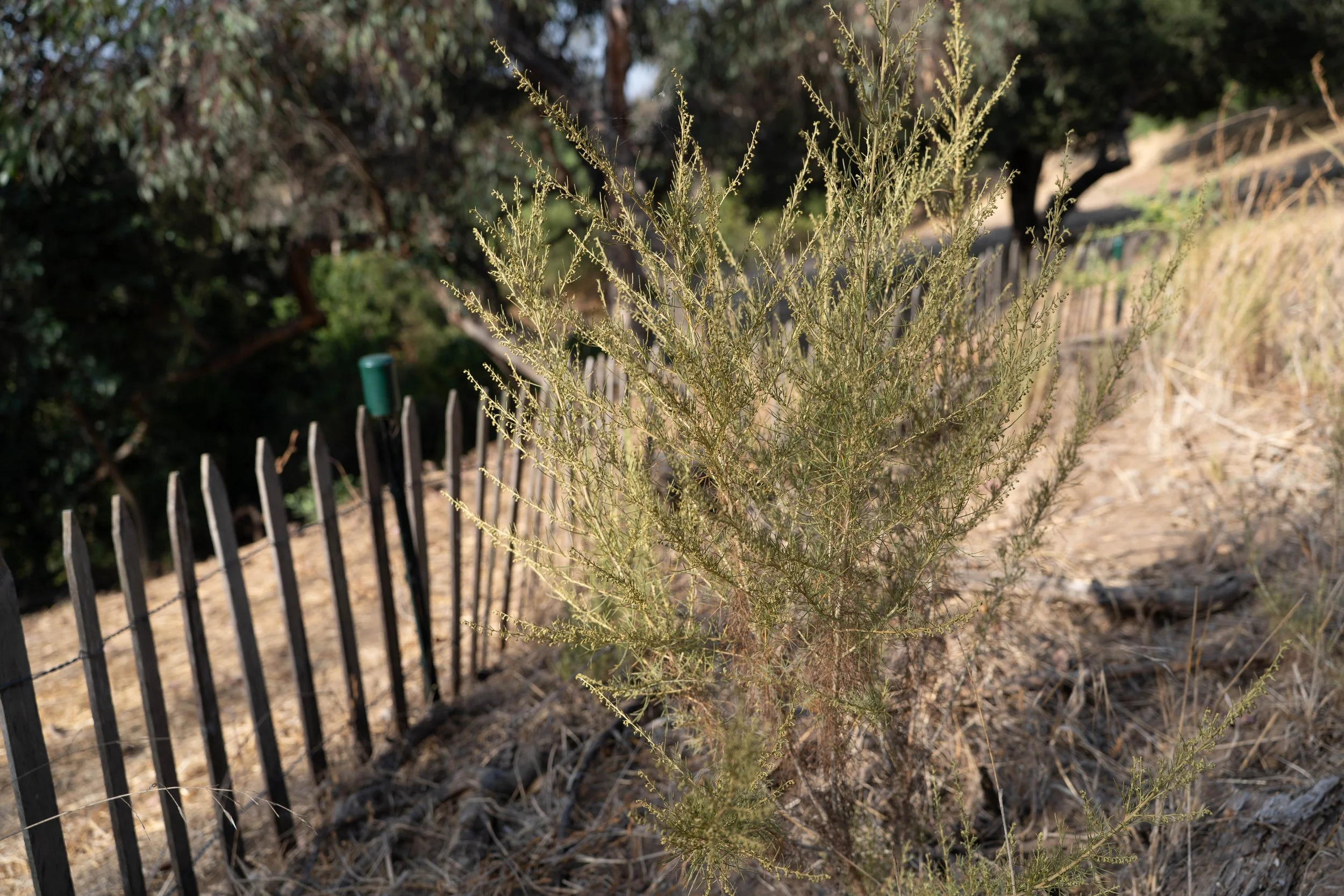
California Sagebrush
Artemisia californica
“Cowboy cologne” has aromatic oils that can be used as a natural deodorant. The strong aroma was known to repel fleas and keeps gophers from eating its underground roots. These oily terpenoids are flamable but it has evolved to resprout quickly after a fire. Its flowers are inconspicuous and sparse.
Not a real sage but a member of the sunflower family. Historic medicinal uses included treating pain, wounds, asthma, menstrual cramps, childbirth and menopause symptoms.
Fall Blooming: August - November